The Workbench
Big League Chew Series 2: Six Boxes and a Holo Chase
The gum-pouch cartoons return alongside photographic card designs, with Hobby, Jumbo, Breaker, Mega, Blaster and Value formats.
We update this release guide as verified product details develop.
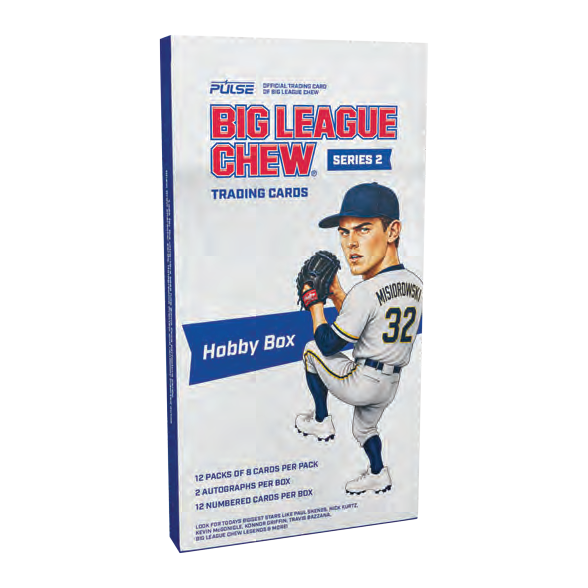
Big League Chew Series 2 keeps the gum-pouch artwork and expands the opening choices. Pulse’s follow-up mixes illustrated baseball characters, photographic player cards and autograph designs across six formats. Hobby and Jumbo are both twelve-pack boxes, but their card counts and advertised autograph targets are different; the eight-card Breaker format takes another route entirely.
The edition name matters here. Pulse’s sheet brands this release 2026 Pulse × Big League Chew Series 2, while GTS markets it as a 2027 product. It is the upcoming Series 2, separate from the first Big League Chew release.
The dates remain unsettled: GTS targets March 17, 2027, while Columbia’s calendar estimates March 26, 2027 for Blaster, Breaker, Hobby, Jumbo and Mega. All Sports Marketing places Series 2 on February 17 without stating a calendar year. None is a settled manufacturer release day.
Six boxes, with different autograph targets
The seven-page Pulse sell sheet separates the configurations as follows. Its autograph language is “look for,” so the figures below are advertised targets rather than a guarantee for every box.
| Format | Pack configuration | Total cards | Advertised autograph target |
|---|---|---|---|
| Hobby | 12 packs × 8 cards | 96 | Look for 2 |
| Jumbo | 12 packs × 12 cards | 144 | Look for 4 |
| Breaker | 1 pack × 8 cards | 8 | Look for 4 |
| Mega | 8 packs × 8 cards | 64 | Look for 1 |
| Blaster | 6 packs × 8 cards | 48 | Randomly inserted |
| Value | 12 packs × 12 cards | 144 | Randomly inserted |
Hobby advertises two numbered cards per pack, or 24 across the twelve packs. Jumbo advertises one per pack, for twelve. Mega lists eight numbered cards, Blaster six and Value twelve. The smaller Hobby card count therefore comes with the larger stated numbered-card count.
The Breaker sheet describes its eight-card pack as eight numbered cards and advertises four autographs; GTS’s product text separates four autographs and four numbered cards. The pack still totals eight cards. That wording difference needs clarification before treating the two categories as separate, additional quantities.
Cartoons built around the gum flavours
The illustrated designs lean directly into Big League Chew’s flavour identities. Travis Bazzana appears on a Swingin’ Sour Apple design; Nolan McLean gets Slammin’ Strawberry. The colour choices and cartoon treatment connect the player cards to the gum packaging, rather than simply adding the brand name over a standard baseball photograph.
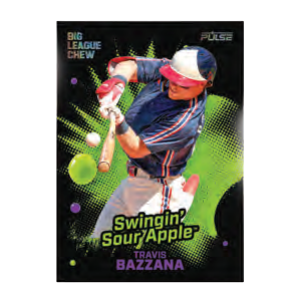
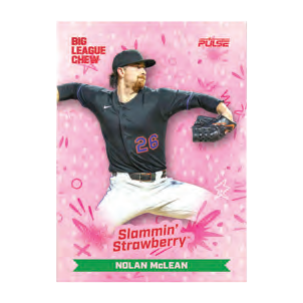
James Wood and Dwight Evans also appear in the illustrated preview artwork. Putting current players and an older-generation name into the same visual language gives Series 2 room beyond a single prospect class.
Photographic designs and the Holo chase
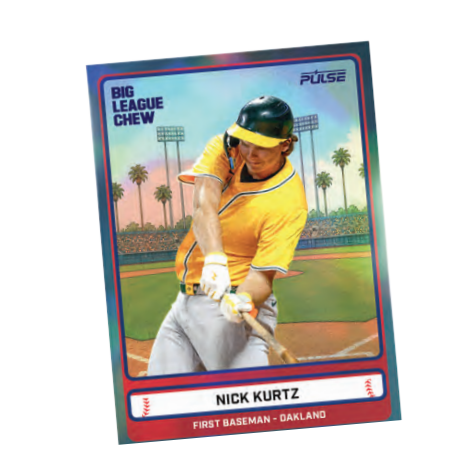
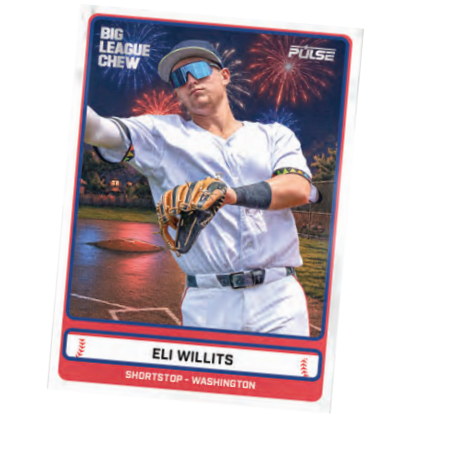
Nick Kurtz and Eli Willits appear in bordered photographic designs, providing a different look from the cartoon cards. Pulse also advertises new holographic chases, described as Holo in the distributor preview. Exact insertion odds have not been announced.
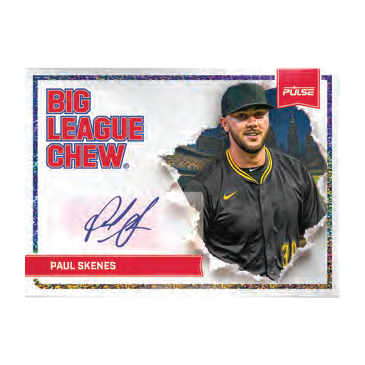
The autograph mockups include Roman Anthony, Konnor Griffin and a horizontal Paul Skenes design. They show how signatures fit into the planned layouts; those images should be kept distinct from the separately printed confirmed-player list.
The printed player list
Pulse’s sheet names Andruw Jones, Chipper Jones, David Ortiz, Mark Grace and Rollie Fingers, alongside younger players and prospects including Jacob Misiorowski, Jesús Made, Kevin McGonigle, Roch Cholowsky, Seth Hernandez, A.J. Ewing, Anthony Eyanson and Andrew Fischer.
The remaining printed names are Carlos Lagrange, Eli Willits, Franklin Arias, Grady Emerson, Gage Wood, Josuar Gonzalez and Vahn Lackey. That is a twenty-name confirmed-player list, rather than a complete card-number checklist or a promise that every pictured autograph design will appear unchanged.

Pulse has not announced box prices in the preview. For now, the meaningful format differences are clear: Hobby emphasizes numbered cards, Jumbo combines a longer opening with a four-autograph target, and Breaker concentrates its advertised autograph content into eight cards. The final checklist and a resolved release date are the next details this same guide will follow.