The Workbench
Domantas Sabonis Rookie Cards: What Collectors Should Know
How to identify and compare Domantas Sabonis’s 2016–17 base rookies, numbered parallels, autographs, memorabilia cards, and one-of-ones.
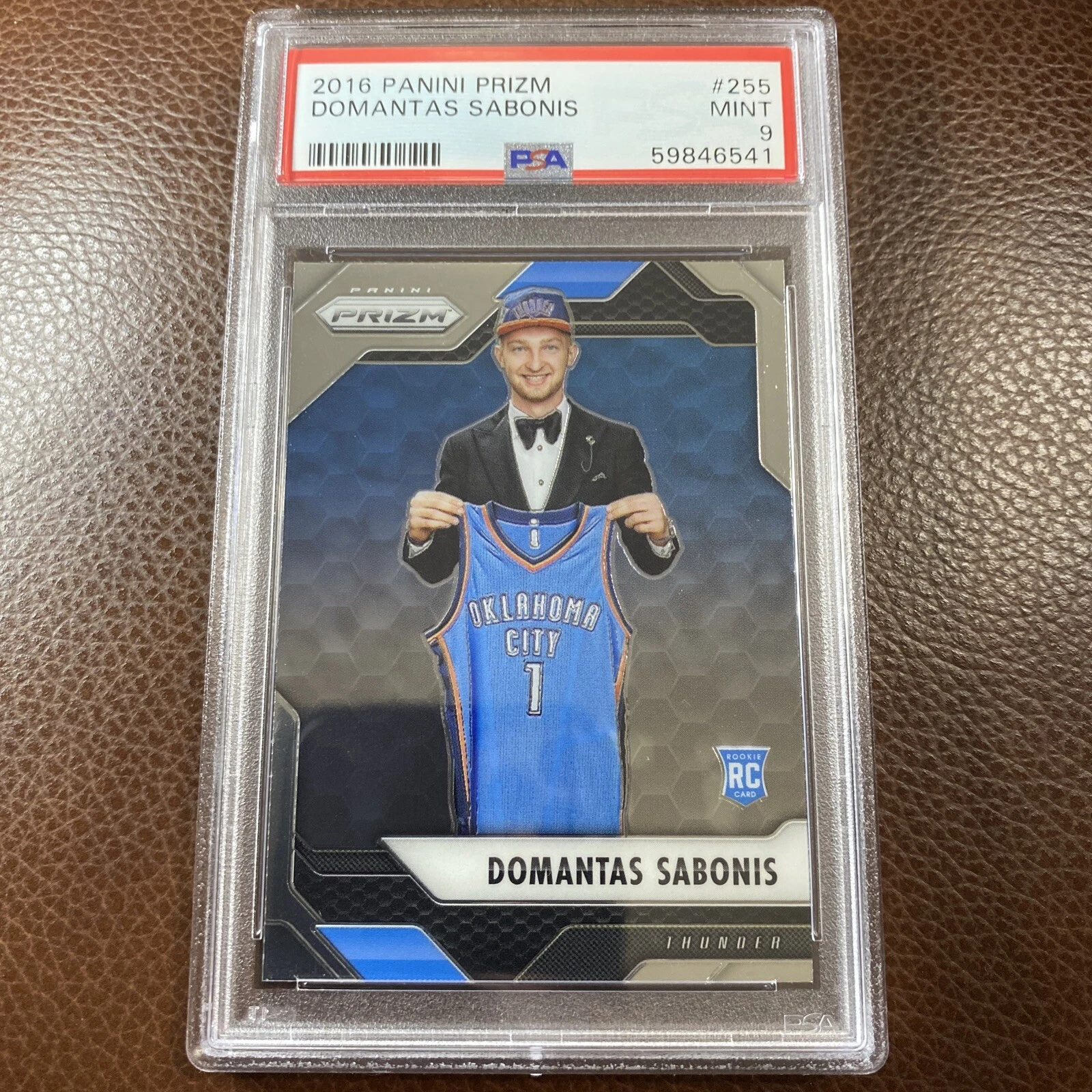
Domantas Sabonis's 2016–17 rookie cards give a collector several satisfying ways to define a PC: a familiar base rookie, a favorite parallel finish, a signed card, a memorabilia piece, or a one-of-one with a very particular story. The right choice is not automatically the scarcest card. It is the version whose set, design, format, and condition make you want to keep looking at it.
Hammy's own 2016–17 Panini Flawless Rookie Auto Emerald Gold Proof 1/1 sits at the scarce end of that range. It combines a rookie-year autograph, the Flawless name, and a one-copy parallel. That is one path through Sabonis's rookie cards, rather than a template every collection needs to follow.
Start with the exact 2016–17 card identity
The season designation is the first anchor for a Sabonis rookie-card search. Then narrow the card down by manufacturer, product, card number, and checklist section. Those details matter because a base rookie, a parallel, and an autograph subset can use different designs and different numbering even when they come from the same release.
Build the full name before comparing two cards or opening a sales search. Product and card number establish the foundation; the subset, parallel name, serial numbering, autograph format, and memorabilia designation identify the version. A listing that says only “Sabonis rookie” can point to many different cards. A listing that gives the complete identity lets a collector decide if it is the exact version they mean to pursue.
Front and back photographs are part of that identification work. The front shows the design, player image, finish, and visible serial stamp. The reverse can clarify the card number, subset, and memorabilia wording. Keeping those elements together avoids treating a card with a similar photo or color as the same issue.
Base rookies and parallels: choose the look you want to own
A base rookie belongs to a set's main checklist. It can be a natural first Sabonis rookie because its appeal is easy to understand: a specific photograph, a recognizable set design, and a clear place in the rookie-year release. Some collectors want one representative card. Others enjoy building a run across several products, using the base cards as the foundation before choosing a few more specialized pieces.
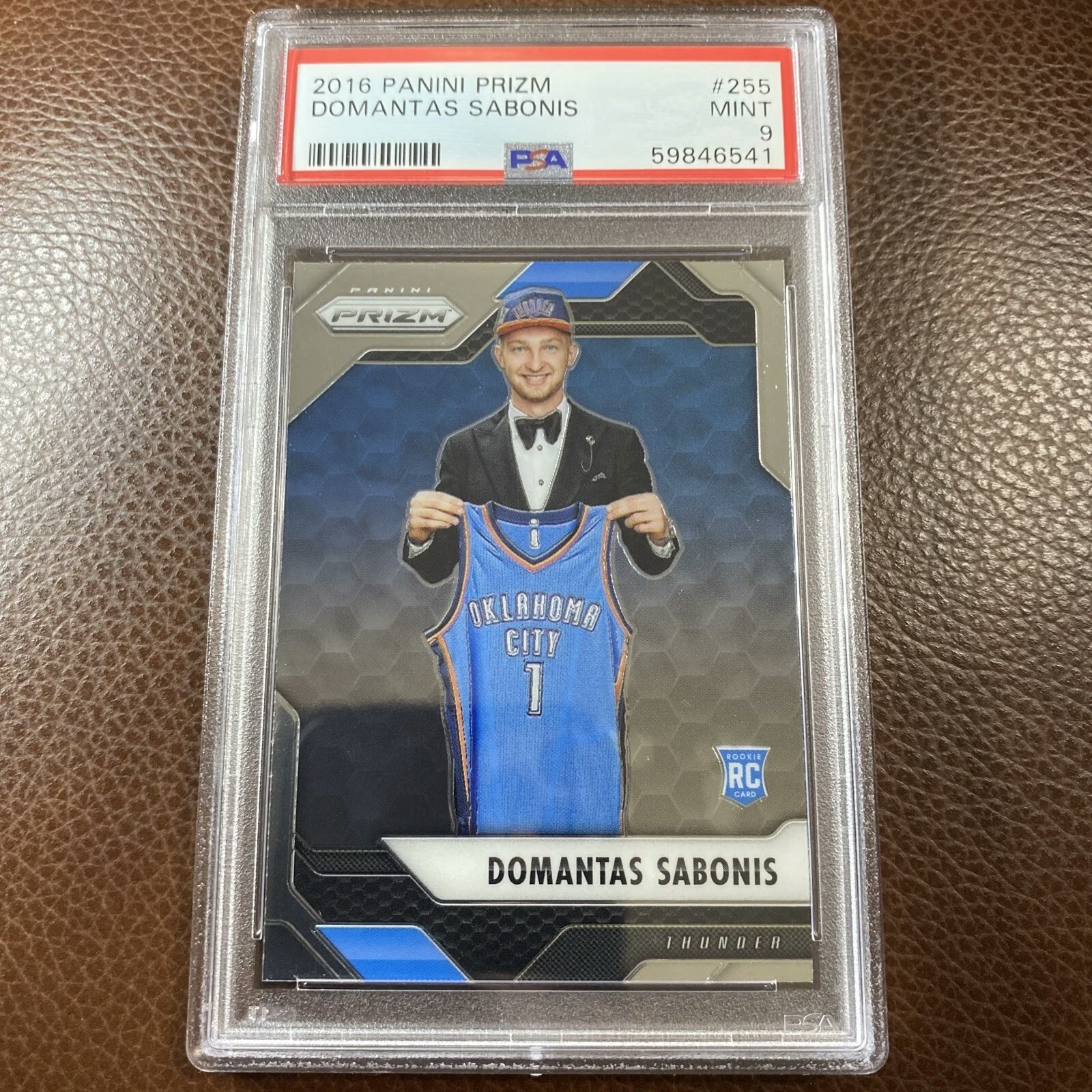
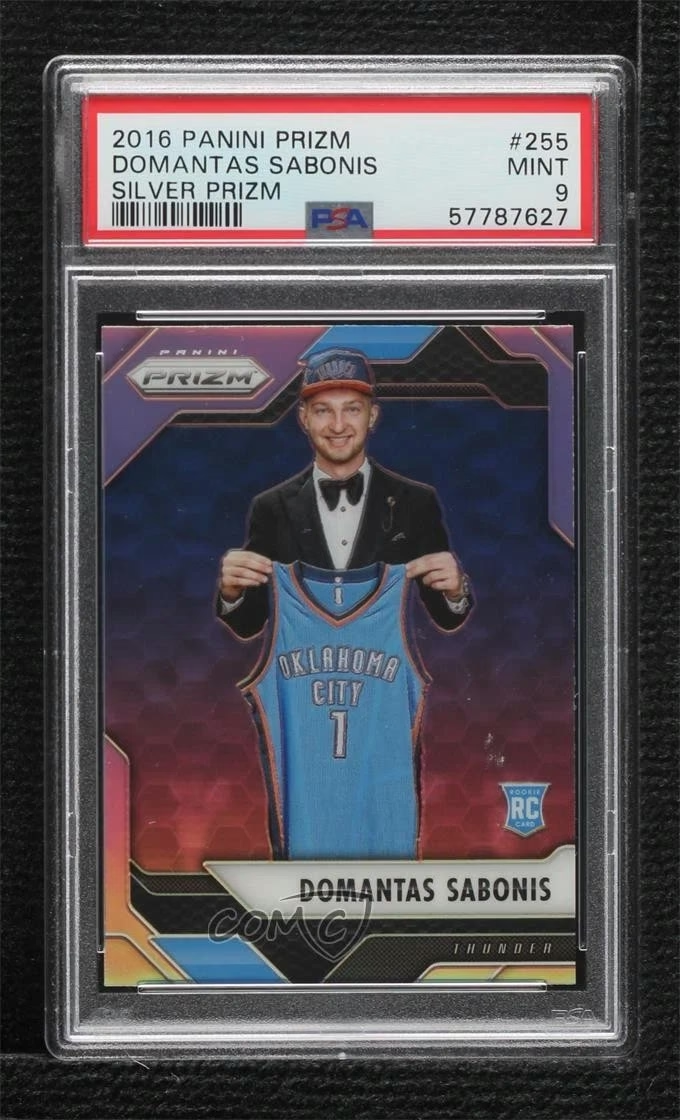
The pictured 2016–17 Panini Prizm #255 base and Silver Prizm versions show how a variation can change the presentation while keeping the same player image and card number. That is often the appeal of a parallel chase: it lets a collector stay with a design they enjoy while selecting a different finish or level of scarcity.
A parallel changes a base or subset card through a named color, finish, pattern, or other variation. A serial stamp records the individual copy number and the size of its numbered run. A /25 version has a smaller run than a /99 in the same parallel family, but the number is only one part of the decision. Color, surface treatment, and the way the card looks in hand can matter just as much to a collector choosing a card for a display or a focused player run.
When searching, include both the parallel name and serial stamp where applicable. That makes it easier to separate a base card from a similarly named version and to compare cards on equal terms.
Our parallels guide covers colors, short prints, rainbows and the different kinds of one-of-ones.
Autographs and memorabilia add a different kind of presence
A rookie autograph brings Sabonis's signature to a card from the start of his NBA career. Some collectors prefer an on-card signature; others are drawn to a particular design that uses a signed label. Neither format makes every example interchangeable. Look at the signing area, ink, placement, and surrounding layout. Those details shape whether an autograph feels integrated into the card or simply added to it.
A named autograph subset can also have its own parallel run, so record the subset along with the card number and any parallel designation. That small bit of discipline is especially useful when comparing a signed card with another card that shares the same product name but not the same format.
A patch autograph combines a signature with an embedded piece of material. Memorabilia cards also exist without signatures. Large windows, multicolor material, and balanced layouts give collectors different visual routes to the player, while a compact autograph card can make the signature the whole point of the design.
Read the memorabilia statement on the reverse to understand the source of the material. When comparing copies, examine the photographs around a thick card's edges and the memorabilia window as carefully as you would the signature. Those are meaningful parts of the card's presentation, not background details.
One-of-ones reward precision
A card stamped 1/1 is the sole numbered copy of its defined version. Named foil parallels, autograph parallels, memorabilia cards, proofs and printing plates give collectors several distinct forms of one-of-one to pursue.
Their construction is part of the appeal. A finished autograph card presents differently from a printing plate, and each has its own place in a collection. The important habit is to identify the set, subset, and version precisely, so the card's uniqueness is understood on its own terms rather than reduced to the 1/1 stamp.
What makes one Sabonis rookie the right one
- Player and set: the connection to Sabonis and the products a collector enjoys.
- Scarcity: the print run of the exact parallel.
- Eye appeal: color, photograph, design balance and autograph or patch presentation.
- Condition: the card's corners, edges, surface and any grading information.
- Market context: recent sales of comparable cards and the available choices at the time.
These factors work together. A favorite design can lead the decision, while condition and comparable sales help set a budget. It is also useful to decide what role the card will play before shopping: a single representative rookie, a centerpiece autograph, a parallel run, or a one-of-one target. That keeps the search focused without turning it into a race for every available variation.
Hammy's Flawless Emerald Gold Proof 1/1
Hammy owns the 2016–17 Panini Flawless Domantas Sabonis Rookie Auto Emerald Gold Proof 1/1. It is raw and ungraded, with RA-DOS printed on the back and 1/1 numbering.
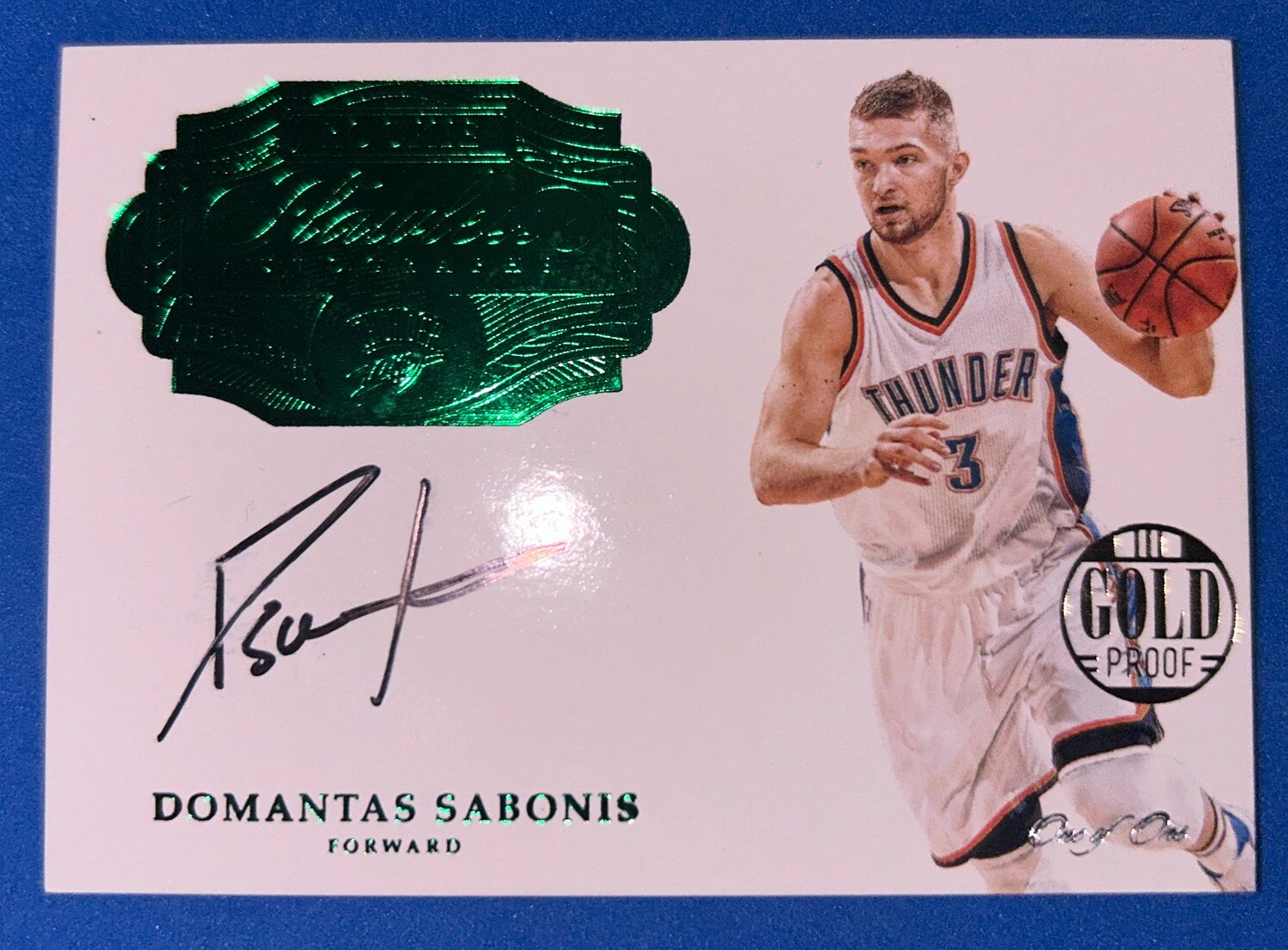
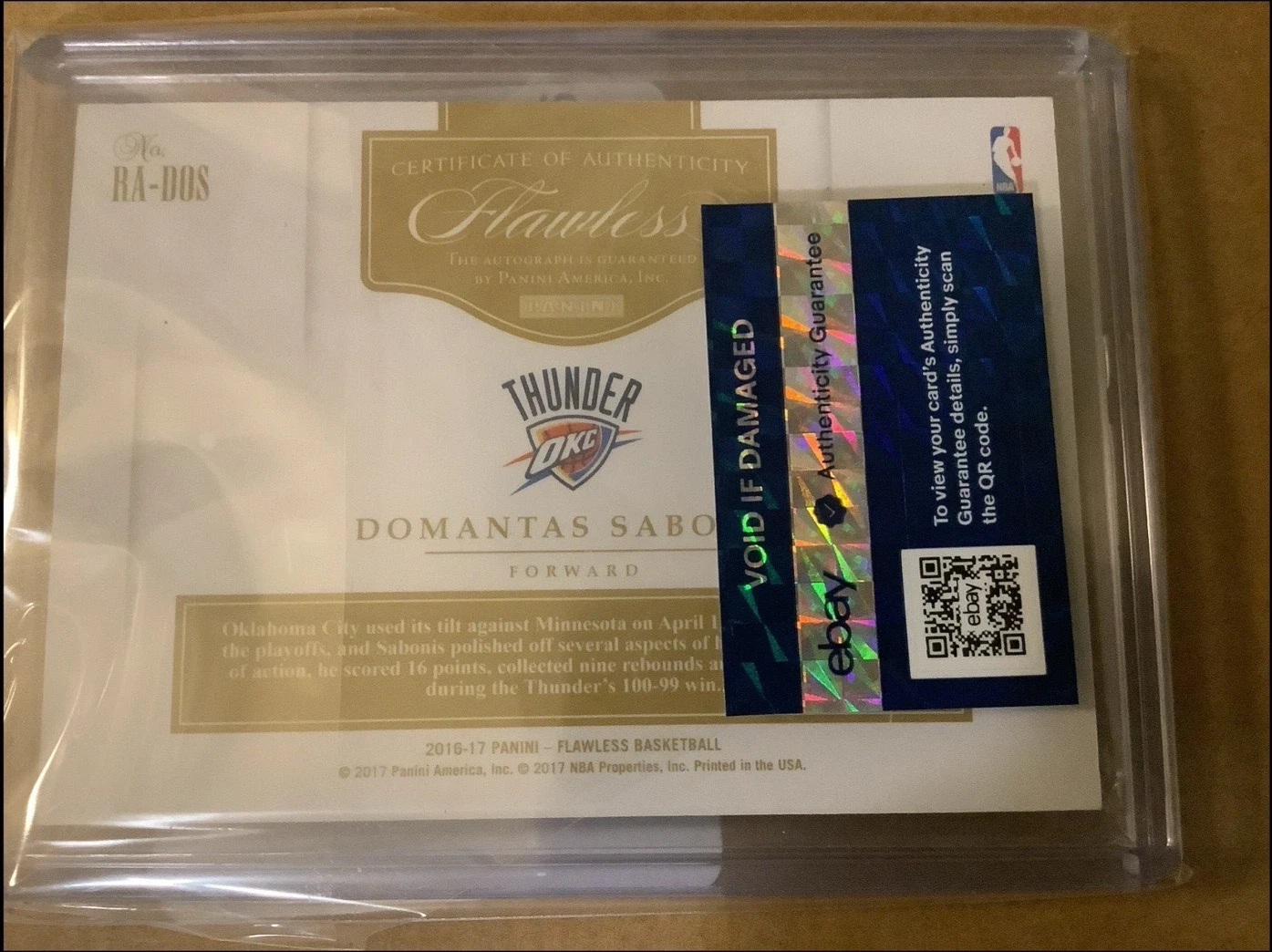
Flawless, the rookie-year autograph, and Emerald Gold Proof designation make this a distinctive Sabonis collectible. The exact front and back photographs show the card's specific identity; the product page carries its current condition description and buying terms. As with any raw card, it is ungraded, so collectors should use those high-resolution photographs to judge the copy for themselves rather than assume a numerical grade.
Current availability: Available on eBay.
Correction, September 4, 2026: An earlier version gave an incorrect card number and outdated availability. The back photograph confirms RA-DOS; the availability link shows the current listing.
Compare cards like for like
The product, card number, subset, and parallel identify the Sabonis rookie being compared. Signature format, memorabilia, and condition distinguish individual copies. Photographs show those details on raw cards, while graded cards also carry the grader's assessment. A comparison works best when it keeps those differences visible instead of grouping every Sabonis rookie or every Flawless card together.
A completed sale of the exact version is the strongest starting point for price context. For a 1/1, nearby parallels or similar Sabonis autographs can broaden the comparison, with differences in print run, autograph format, and condition kept in view. An available listing is a chance to buy a particular card, not proof of what comparable cards have sold for.
Our sold-comps guide explains how to build a dated range from those records.
Hammy's take: Sabonis's rookie year has room for a clean base-card start, a design-led parallel chase, a signature-first collection, or a premium one-of-one centerpiece. Pick the card type that makes the collection feel more like yours, then use the full card identity and condition details to make each addition count.
Shop this guide on eBay
Hammy earns from qualifying purchases through these eBay links. Buy on eBay from the seller shown in each listing.
Explore on eBay
Targeted searches for the cards and releases Hammy covers. Search results may include other formats or variants; match the listing to the card or box you want.
eBay search · Single card
2016-17 Domantas Sabonis
Search on eBay