The Workbench
Sports Card Parallels Explained: Colors, Serial Numbers, Short Prints, and 1/1s
A practical guide to identifying sports card parallels, reading serial numbers, understanding short prints and one-of-ones, and building a rainbow.
The same player and photograph can appear on a base card, a colored parallel, a short print, a serial-numbered version, and a one-of-one. They can look closely related in a listing thumbnail, but they are separate cards. Getting the exact identity right is what lets a collector build a clean player run, understand a card’s place in a set, and compare the right sales.
The useful habit is simple: name the card before judging the card. PSA’s identification guidance starts with the year, manufacturer, set, player, card number, and parallel where applicable. Add the serial stamp, insert or autograph subset, and any configuration detail that appears on the card or checklist. That full record turns “blue rookie” into a card another collector can actually find.
Same player and same picture do not mean the same card. Match the year, product, card number, parallel name, and serial stamp.
Start with the base card
The base card is the standard version in a product’s main set. It establishes the player, card number, photograph, and core design that related parallels often follow.
Imagine card #42 of a point guard: the ordinary #42 is the base card. A blue foil #42, gold wave #42, and black 1/1 #42 may use the same photograph and layout, yet each has its own finish and checklist identity. The base card is not a lesser version by definition. It is the familiar design many collectors want in a player, team, set, or rookie collection; a parallel offers a different visual finish, a defined scarcity point, or both.

What makes a card a parallel
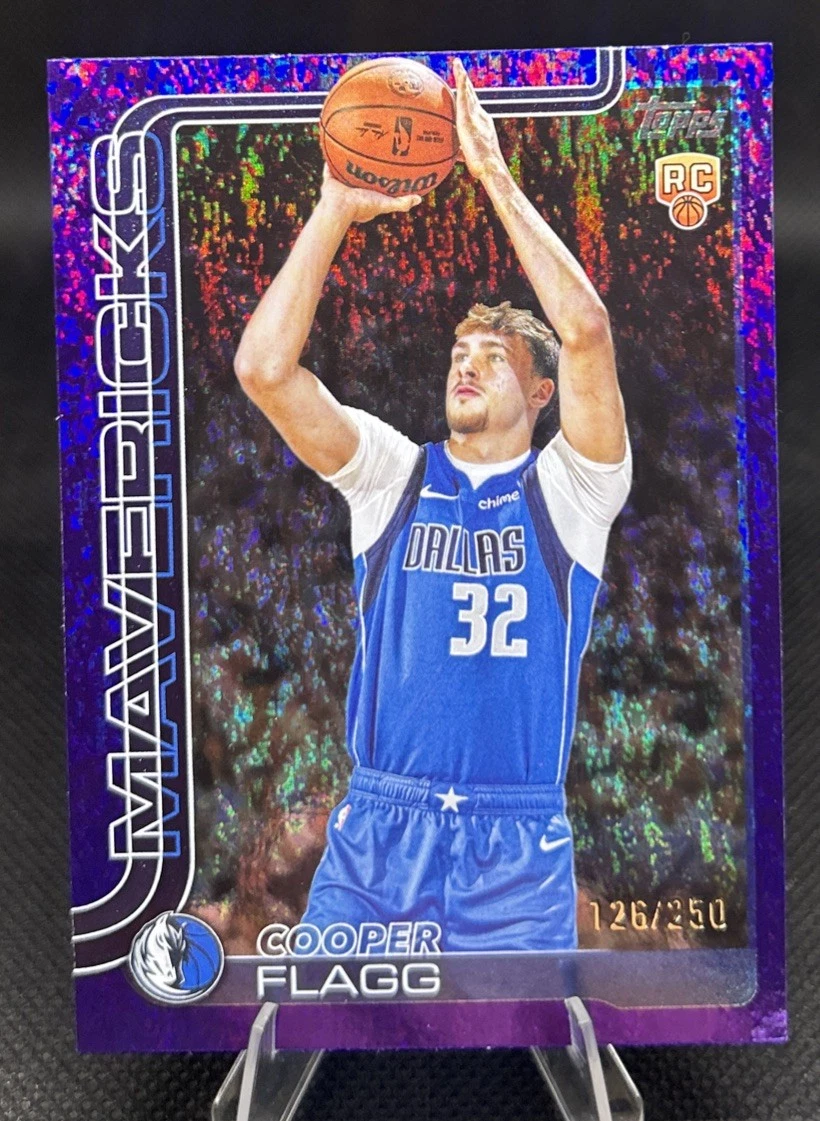
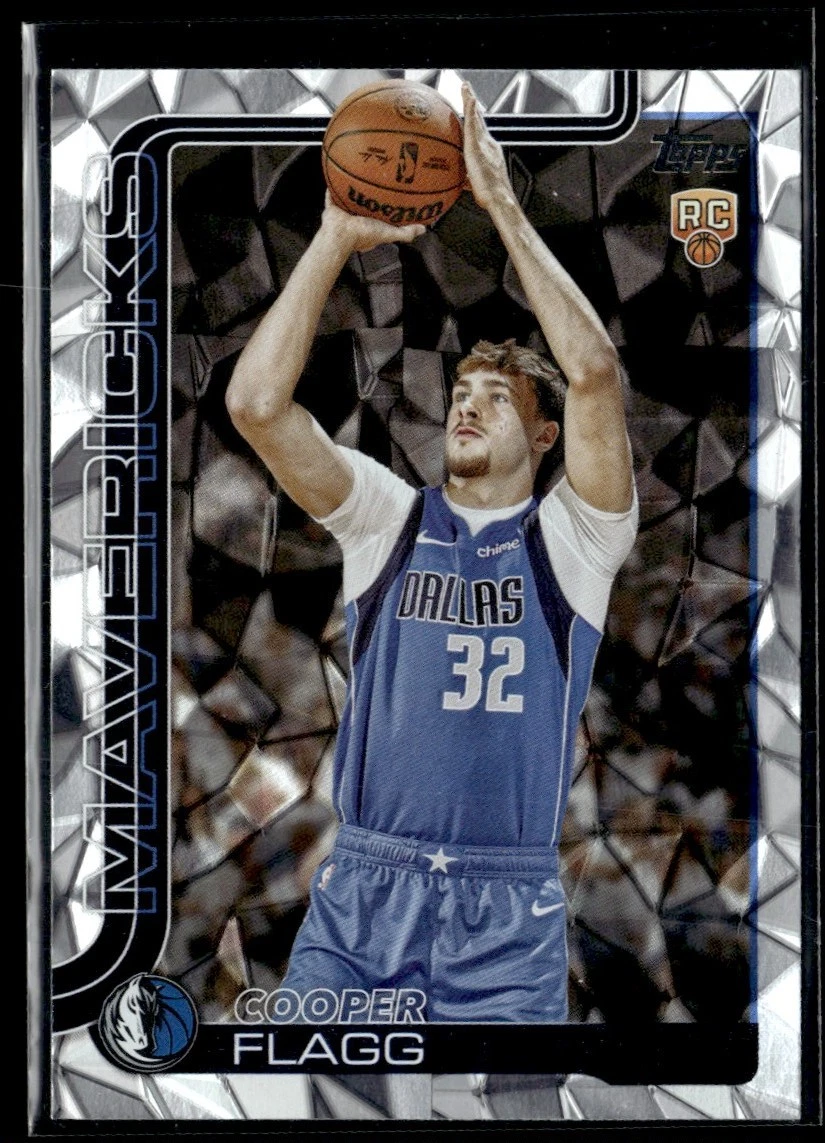
A parallel usually preserves the recognizable structure of a base card or insert while changing a physical feature. That difference may be a border color, foil treatment, repeating pattern, stock, material, image, serial stamp, or availability in a particular box configuration.
Names are product-specific. “Gold,” “silver,” “wave,” “shimmer,” and similar words can describe very different cards from one release to another. A numbered color in one product may be unnumbered in another, and a reflective surface does not automatically make a card a Refractor, Prizm, or Holo. Use the exact name assigned to the card rather than a visual shortcut.
| What you see | What to record | What it establishes |
|---|---|---|
| A color, foil, or pattern change | The exact parallel name | The particular version to search and collect |
A stamp such as 17/99 | The full serial number | Copy 17 of the stated 99-card run for that version |
| A special image or card-back detail | The variation or subset name | A different checklist identity, not simply another color |
| “Hobby,” “retail,” or another format cue | The eligible configuration | Where that version was distributed, if identified for the release |
The front and back deserve equal attention. Fine print, a small serial stamp, a parallel code, or a different photograph can be the detail that separates one card from another. Save clear front-and-back photographs with the full identification in your collection record.
Read serial numbers without over-reading them
A stamp such as 17/99 gives two direct facts: 17 identifies that individual copy, and 99 is the stated total for that exact numbered version. The /99 does not describe every card of that player, every color in the set, or every autograph and insert in the product.
Collectors often enjoy bookends—1/99 and 99/99—or a copy whose numerator matches a player’s jersey number. Those details can make a particular copy more satisfying to own, especially in a player collection. They do not change the card’s basic identity: it remains the same named parallel within the same numbered run.
Photograph the stamp clearly before you buy, sell, submit, or log a card. A busy foil surface can hide it, and a marketplace title may omit it. If the number matters to your collecting goal, a clear image of the stamp is better than an assumption drawn from the listing title.
Numbered cards, unnumbered parallels, and short prints
Serial-numbered and unnumbered parallels belong in the same collecting conversation, but they answer different questions. A serial stamp gives a stated run for that named version. An unnumbered card may still be a distinct parallel, a configuration exclusive, or a difficult pull; without a printed total, the card itself does not supply an exact production number.
Pack odds describe pull frequency, not automatically a complete print run. A “one per eight packs” notation tells you how often a card was inserted under the stated odds. Turning that into a production total would also require dependable information about the relevant pack count and distribution. Keep the two ideas separate in a want list and when discussing rarity.
Short print (SP) and super short print (SSP) are release-level labels for cards inserted less frequently than the regular cards around them. They can apply to base-set cards, image variations, inserts, or other checklist groups. Neither term supplies one universal number. The useful collector question is: what does SP or SSP mean in this exact product, and what does the release information say about that card?
Refractors, Prizms, Holos, and finish names
Refractor, Prizm, Holo, Optic, Mosaic, Wave, Shimmer, and Scope are product or parallel language, not interchangeable nicknames for every shiny card. Exact terminology produces better searches, more useful saved alerts, and cleaner binder labels.
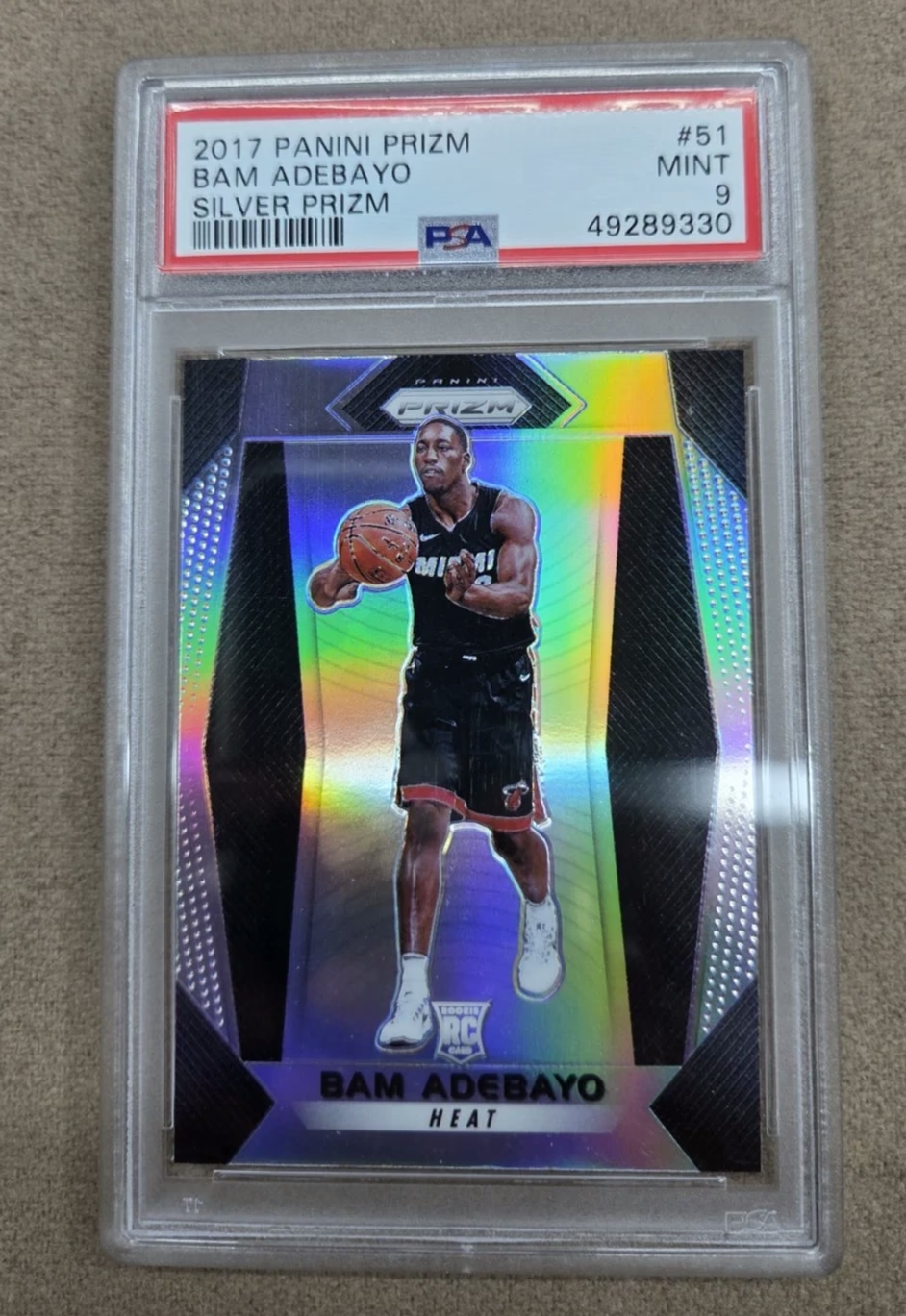
A silver-looking card might be a base chrome card, an unnumbered parallel, or a named silver version. Compare both sides with clear photographs of identified copies and the release’s checklist when available. The card number, logo treatment, back text, and surface pattern can matter as much as the color seen at an angle.
Build a rainbow with clear boundaries
A rainbow is a collector-built run of related versions of one card. For one collector, that may mean the base card plus the color parallels. For another, it may include retail and hobby versions, image variations, autographs, printing plates, and one-of-ones. Decide what “complete” means before the chase begins.
Start with an exact product, card number, and checklist entry. Then split the project into branches: base parallels, insert parallels, autograph parallels, and printing plates or proofs. A checklist can keep cards with similar names from being counted twice—or from being mistaken for one another. Track each card’s full name, serial total where present, and the actual copy you own.
This approach keeps a rainbow enjoyable instead of vague. A team-color run, a favorite foil family, or a numbered sequence can stand on its own as a finished collecting project. The appeal is in seeing related designs together, not in treating every card that shares a player name as an automatic requirement.
What a 1/1 actually means
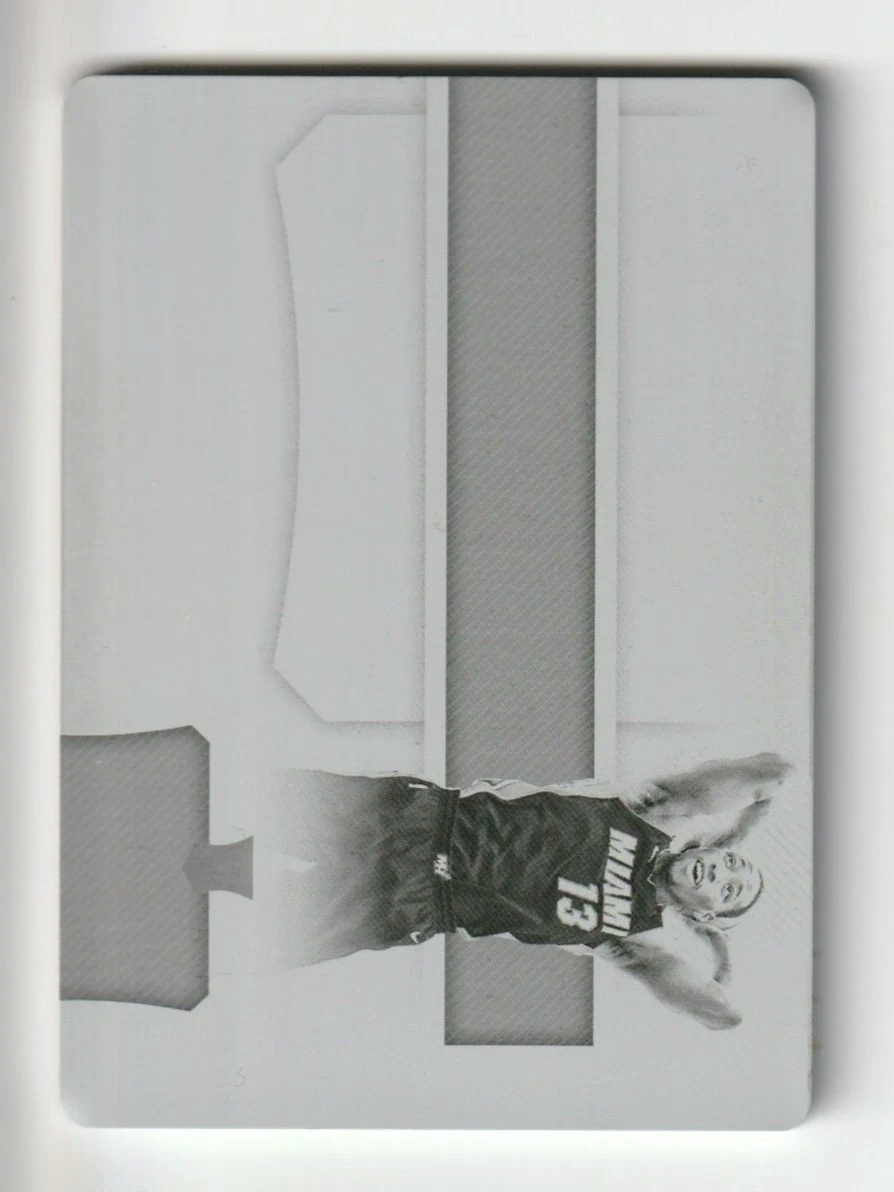
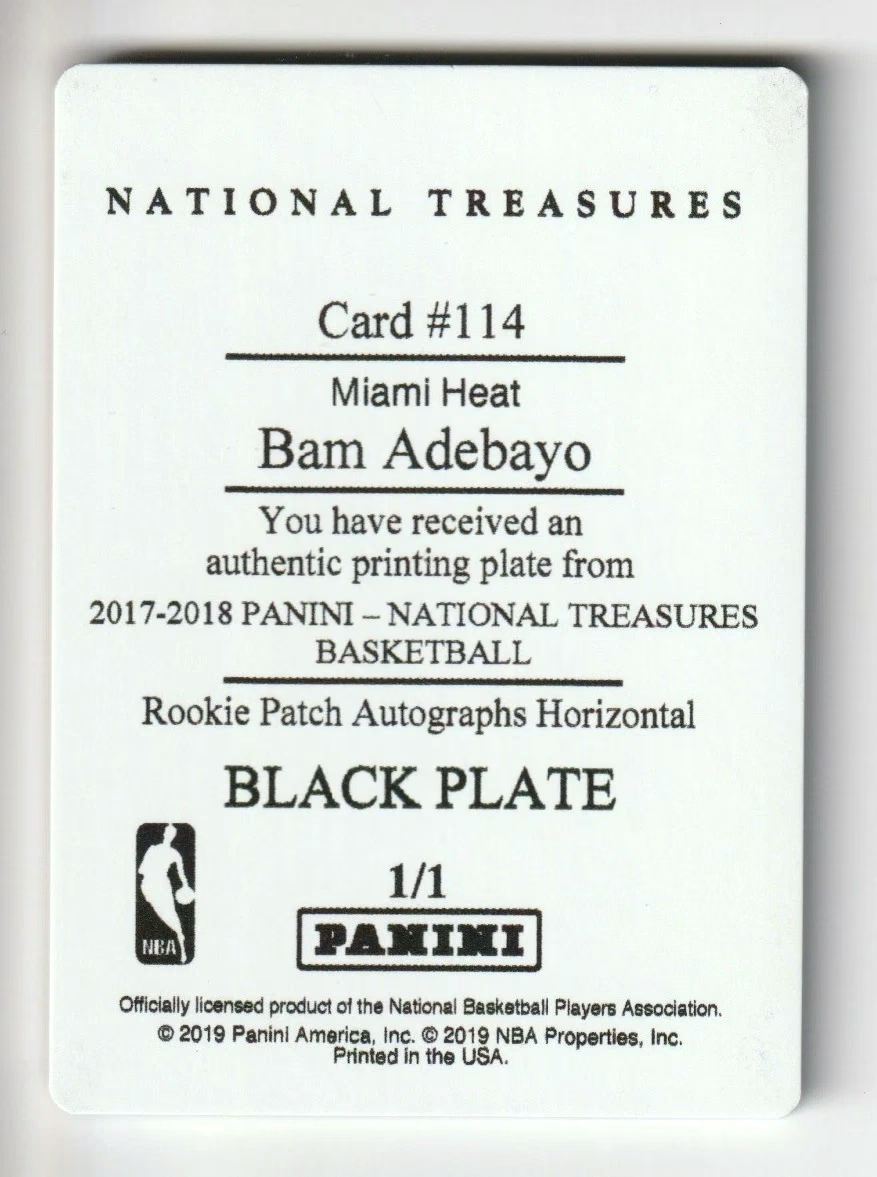
A card stamped 1/1 is the only numbered copy of that exact version. It is a distinctive target, but its identity still matters. A one-of-one color parallel, autograph parallel, printing plate, proof, or special insert can all exist for the same player in the same product because they are separate card types.
That is why one 1/1 can appeal differently from another. A finished color parallel may be prized for its design; a printing plate carries a different kind of production-story appeal; an autograph or memorabilia card adds another dimension to the collectible. The 1/1 stamp establishes the stated scarcity of that version. The set, design, card type, and player are what make the individual card compelling.
Price the exact card, not the color family
A /10 card has a smaller stated run than a /99 counterpart in the same family, but scarcity is only one part of a card’s appeal. Player interest, rookie or career context, the product, design, autograph or memorabilia content, condition, grade, and the number of collectors pursuing that version all shape the market.
When researching price, compare the exact parallel whenever possible. PSA recommends using the identifying details, including the parallel, when researching a card; that same precision matters in sold-comps work. Active listings show an asking price, while completed sales record an actual transaction. If you use a nearby parallel because the exact card has little sales history, name the difference rather than treating the two cards as identical. Our sold-comps workflow walks through that process.
A real Hammy example: the Sabonis 1/1
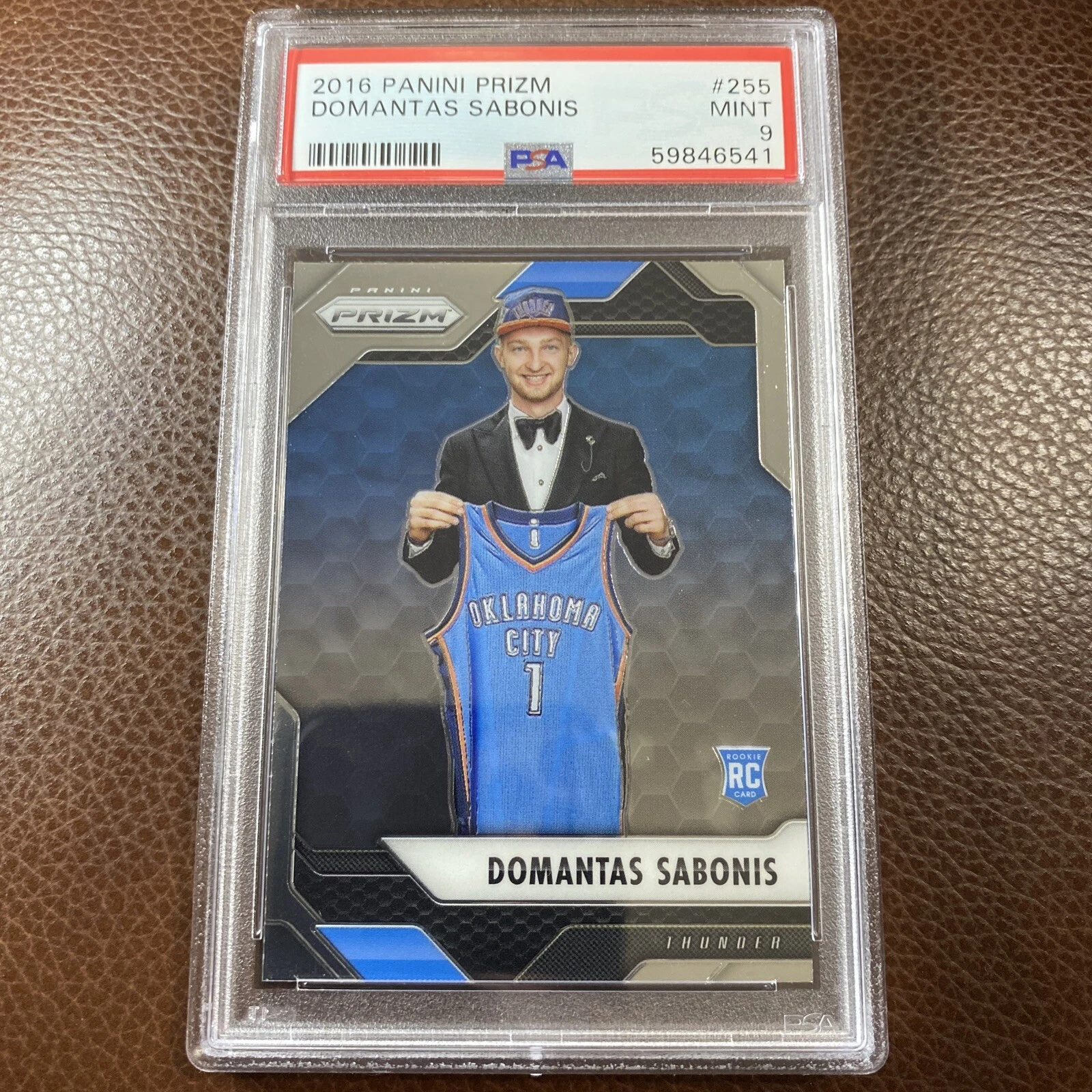
Hammy’s 2016–17 Panini Flawless Domantas Sabonis Rookie Auto Emerald Gold Proof 1/1 shows why a full card name matters.
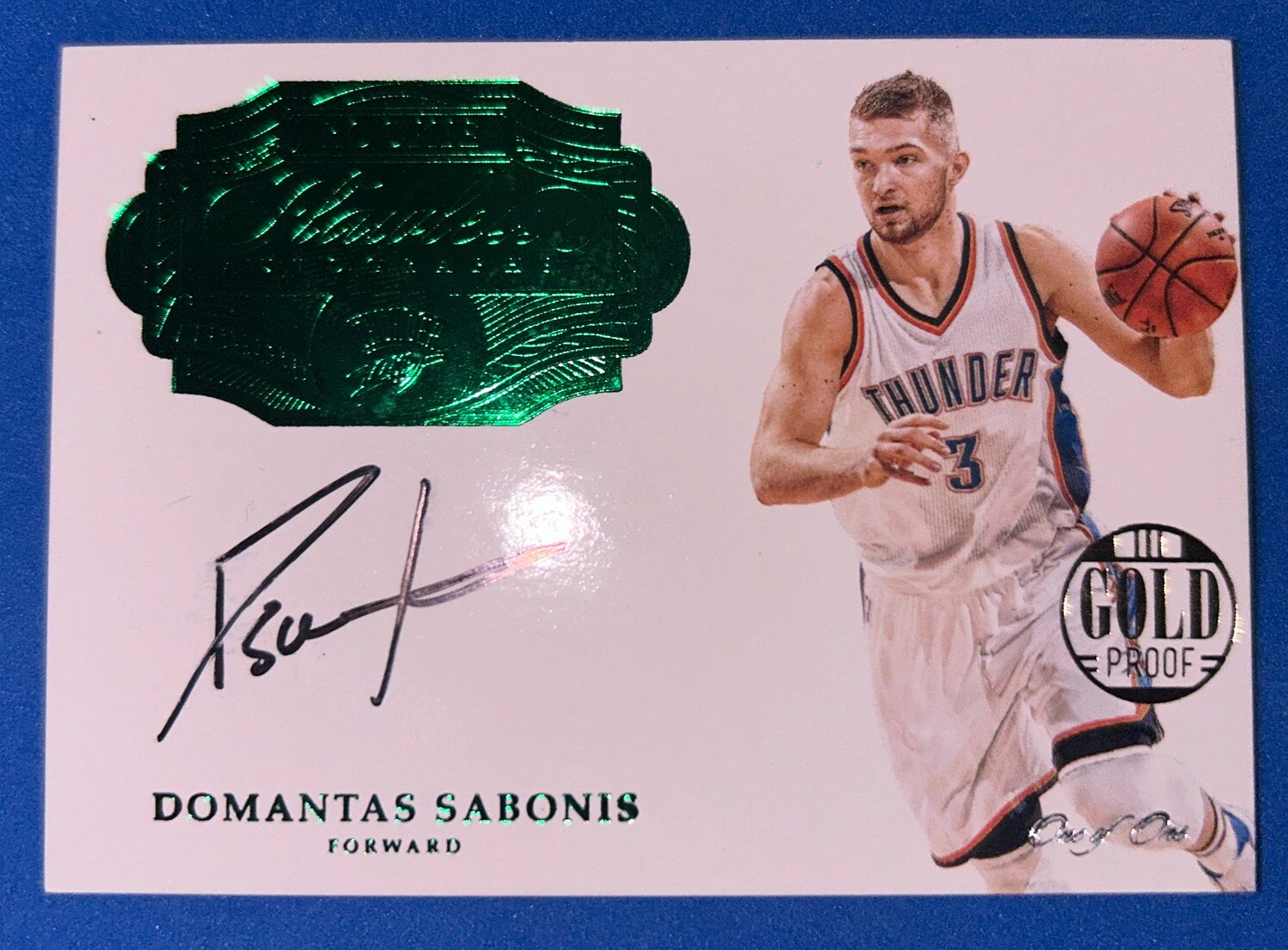
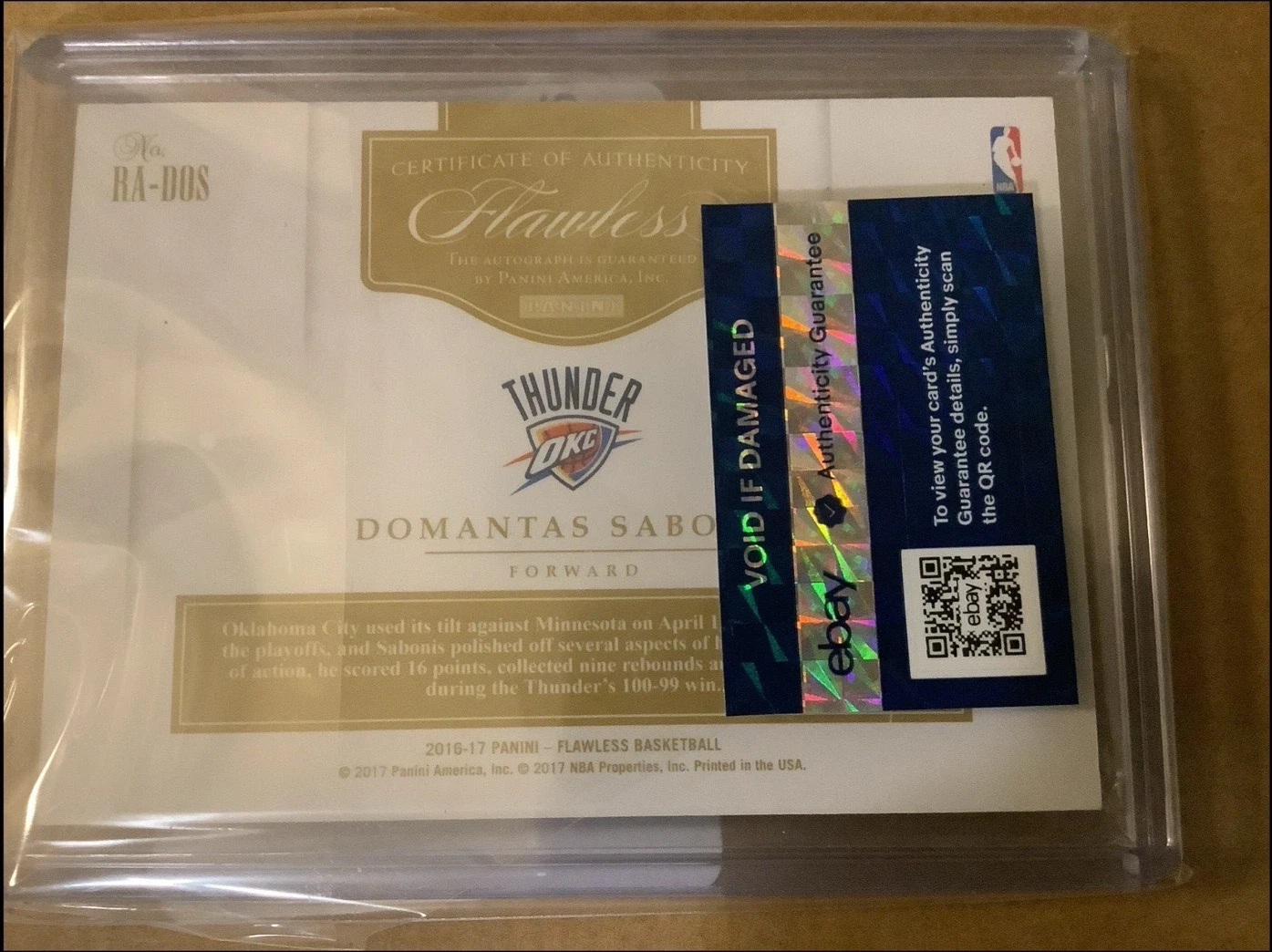
“Domantas Sabonis rookie” is too broad. Even “Sabonis Flawless autograph” leaves out the named parallel and one-of-one numbering. The full description includes the season, manufacturer, product, player, rookie autograph subset, Emerald Gold Proof designation, card number, and 1/1 stamp.
That description distinguishes the card from Sabonis base rookies, other Flawless autographs, other parallels, and other one-of-ones. Explore those collecting choices in our Sabonis rookie-card guide.
A practical identification routine
Before buying, listing, grading, or pricing a card, record the year and manufacturer, full product name, player, card number, set or subset, parallel name, and serial stamp. Inspect both sides. Then compare the card with the applicable checklist and clear photographs of identified copies. The same details help make grading submissions, collection records, and searches more accurate. PSA likewise lists year, manufacturer, set, player, card number, and parallel among the key card details to identify before research or submission. PSA’s guide is a useful starting point.
The collector payoff is clarity. You will know whether a card belongs in the rainbow you are building, whether a listing describes the version you want, and whether a sale is close enough to inform your research.
Frequently asked questions
Is every colored sports card a parallel?
No. Color can be part of a base design, an insert design, or a named parallel. Confirm the product, card number, and exact version before labeling it.
Does /10 mean only ten cards of that player exist?
It means that exact numbered version has a stated run of ten. The player can have other base cards, parallels, inserts, autographs, and card numbers in the same product.
Is a 1/1 always the most valuable version?
It is the scarcest possible numbered run for that exact version. The player, card type, design, condition, and collector demand still shape how the card is received.
Can an unnumbered parallel be difficult to find?
Yes. An unnumbered card can still be a distinct parallel or a configuration-specific version. Look for the product’s checklist and distribution details before making a claim about its production.
Do bookends and jersey numbers make a card different?
They identify a particular copy within the same numbered run. Many collectors enjoy those copies as a personal collecting detail, but the parallel and stated serial total remain the card’s core identity.
Reference
Build a parallel collection you enjoy
Start with a player and design you genuinely want to see together, then map the versions that fit your goal. A team-color match, a favorite foil pattern, or a numbered run can make a focused collection feel complete. Record each card’s exact name and numbering as it arrives, and the collection will remain as satisfying to study as it is to display.