The Workbench
2026 Topps Cosmic Chrome Baseball: Mars Attacks, Planetary Pursuit and Rookie Autos
Paul Skenes meets Mars Attacks, Ohtani gets the Cosmic Dust treatment, and the Planetary Pursuit chase stretches from the Sun to a very distant Pluto.
We update this release guide as verified product details develop.
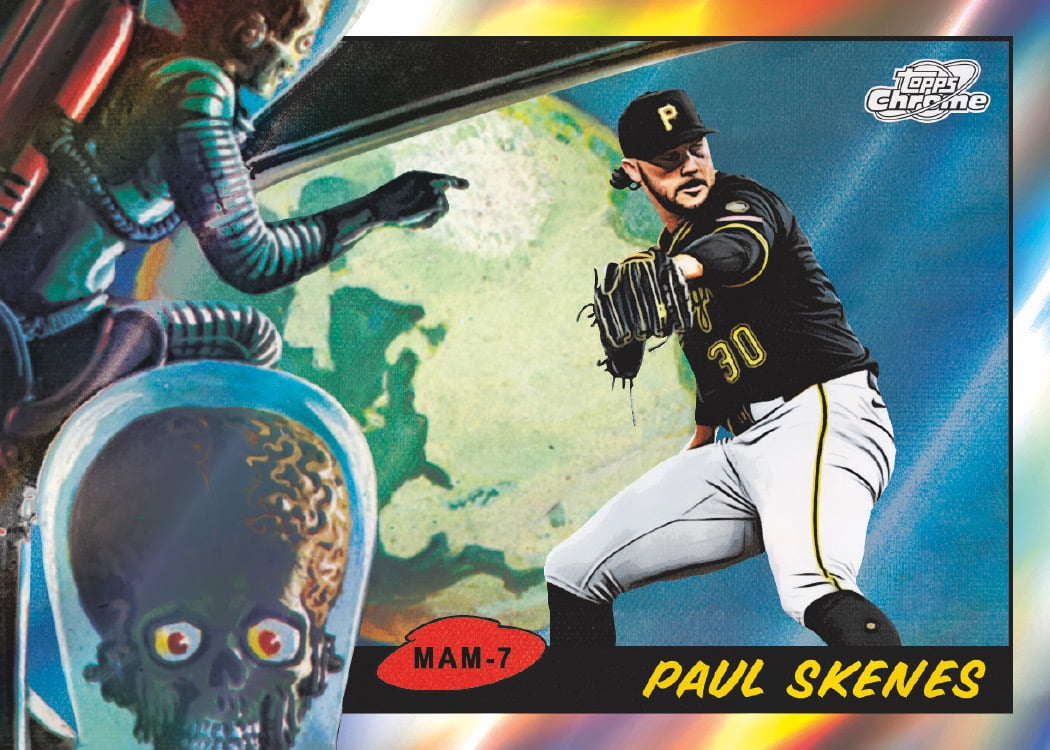
Paul Skenes has company on the mound, and it is considerably stranger than a catcher. His Mars Attacks MLB card puts the Pirates pitcher beside the bulbous-headed invaders of Topps' science-fiction series. The horizontal composition, illustrated finish and black name strip make it look like a baseball card that wandered into a monster-movie lobby. That is an excellent use of Cosmic Chrome's license to get weird.
2026 Topps Cosmic Chrome Baseball releases November 4, with a 200-card base checklist, new Mars Attacks MLB and Cosmic Dust inserts, returning Planetary Pursuit cards and several autograph families. There is plenty here for rookie collectors, but the designs are the main attraction. Topps' release preview supplies a particularly good first look.
Mars Attacks MLB and Cosmic Dust take different routes
Mars Attacks MLB is a ten-card set. Skenes is MAM-7; Roman Anthony and Jac Caglianone open the checklist, with Aaron Judge, Shohei Ohtani, Ronald Acuña Jr., Pete Crow-Armstrong, Konnor Griffin, JJ Wetherholt and Kevin McGonigle completing it. The players span established stars and rookies, while the alien artwork gives the set a strong identity of its own. Skenes' pitching motion works especially well against that looming Martian at the left edge.
Cosmic Dust takes a more explosive approach. Ohtani's swing fills the foreground while pink, green and yellow clouds burst behind him. The tall title occupies almost the entire lower third; the player remains immediately recognizable through all that color. Where Mars Attacks leans into a comic-book scene, Cosmic Dust turns a familiar baseball pose into a full-card spectacle.
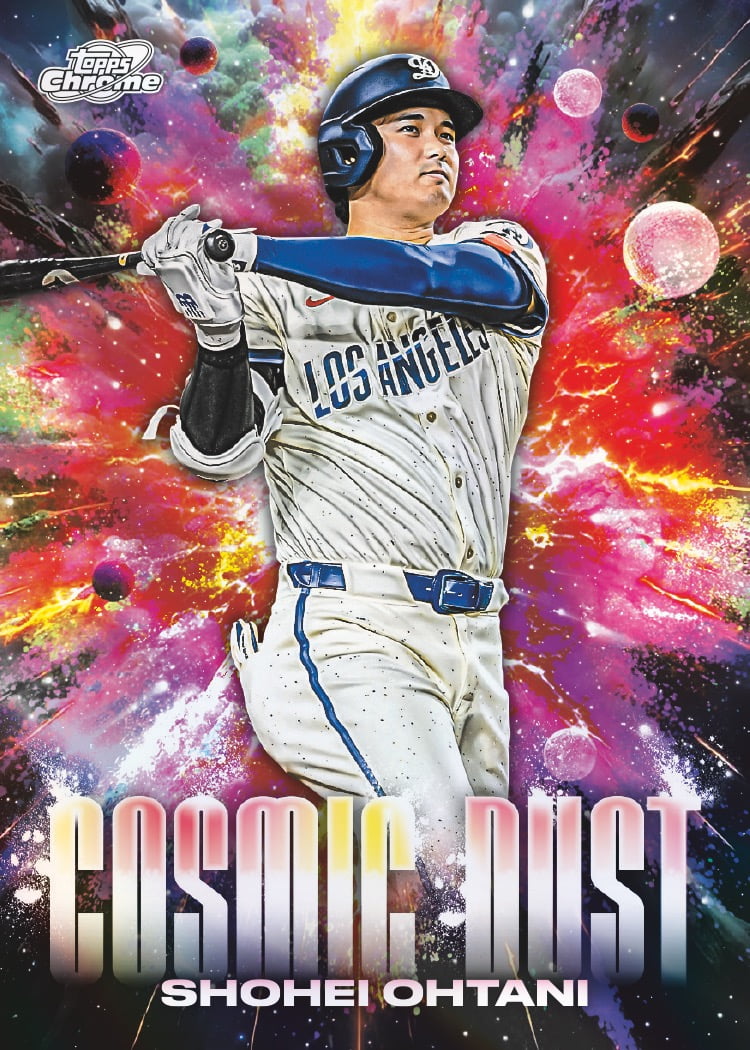
Both are substantial chases. Topps' Hobby pack odds put Cosmic Dust at 1:606 and Mars Attacks MLB at 1:1,513. Those rates cover each insert category across its subjects, not a particular Ohtani or Skenes card.
The base set gives rookies a loud entrance
The official checklist runs from Shohei Ohtani at No. 1 through Kyle Teel at No. 200. Jac Caglianone, Munetaka Murakami, Konnor Griffin, Roman Anthony and Jacob Misiorowski are among its rookie subjects. That makes the base run a meaningful part of the release alongside the scarcer inserts.
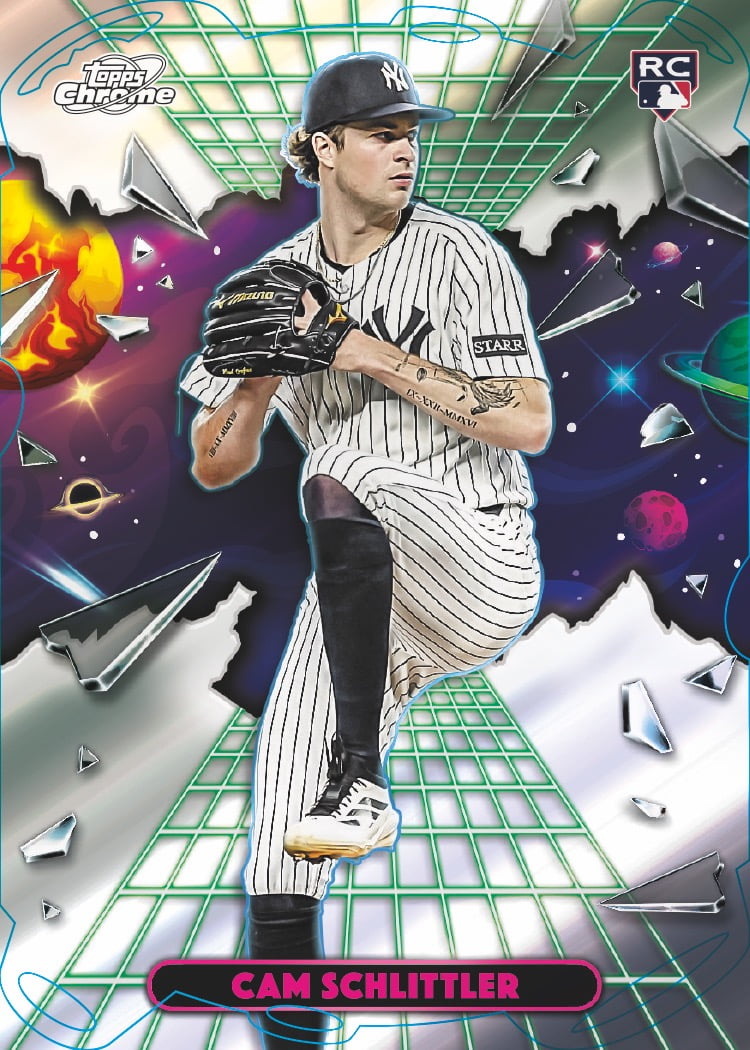
Cam Schlittler's preview shows the underlying design clearly: a green grid above and below the pitcher, silver shards around the edges, and a torn opening onto a purple planetary background. His pinstripes remain crisp enough to anchor all that movement. The black nameplate with its bright outline keeps the card legible rather than letting the background swallow the player.
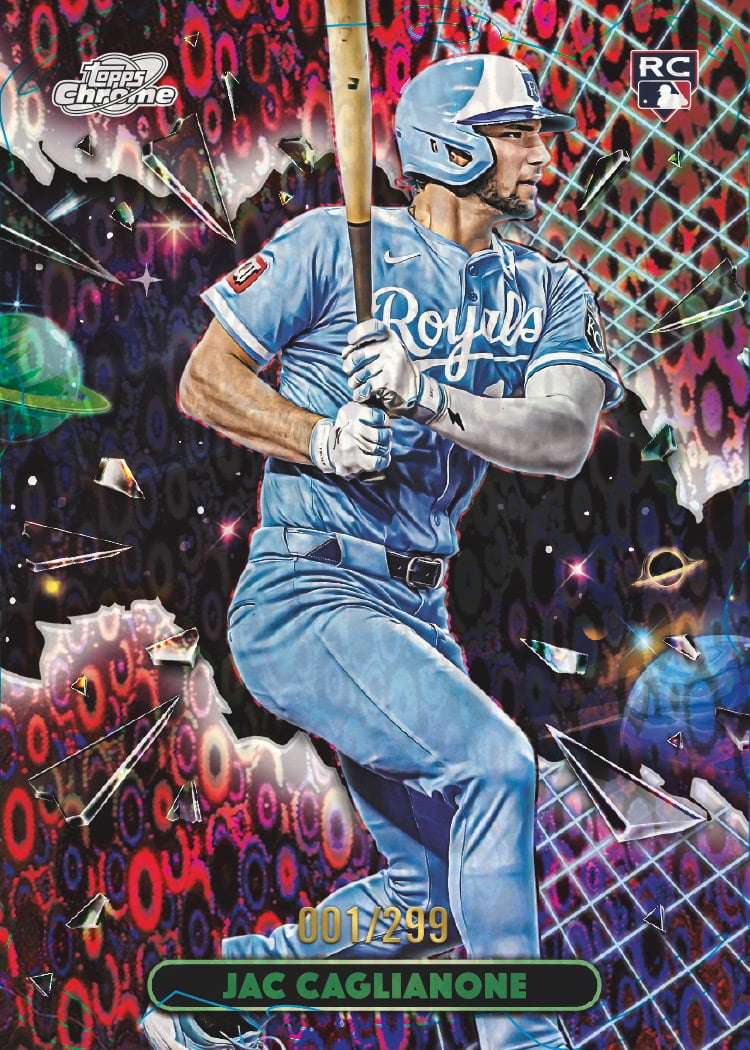
The Magenta Cosmos Refractor gives Caglianone a much busier treatment, adding dense magenta rings around his powder-blue Royals uniform. Its /299 numbering is visible on the preview. Collectors drawn to the cleaner Schlittler composition and those who want maximum color have distinctly different looks to choose from within the same design.
Planetary Pursuit makes the destination matter
Planetary Pursuit gives ten players a ten-card route through the Sun, eight planets and Pluto. The resulting 100-card checklist includes Judge, Ohtani, Juan Soto, Bobby Witt Jr. and Skenes alongside Anthony, Murakami, Griffin, McGonigle and Wetherholt. A player collection here has its own progression, with the celestial body changing the entire background rather than just the border color.
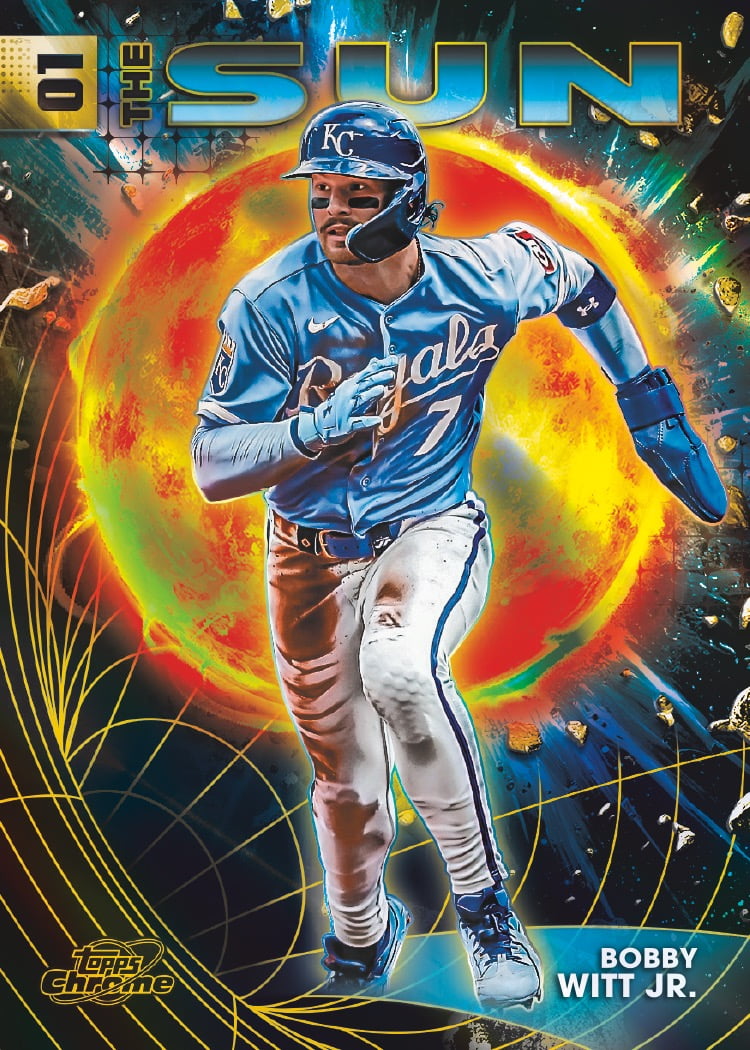
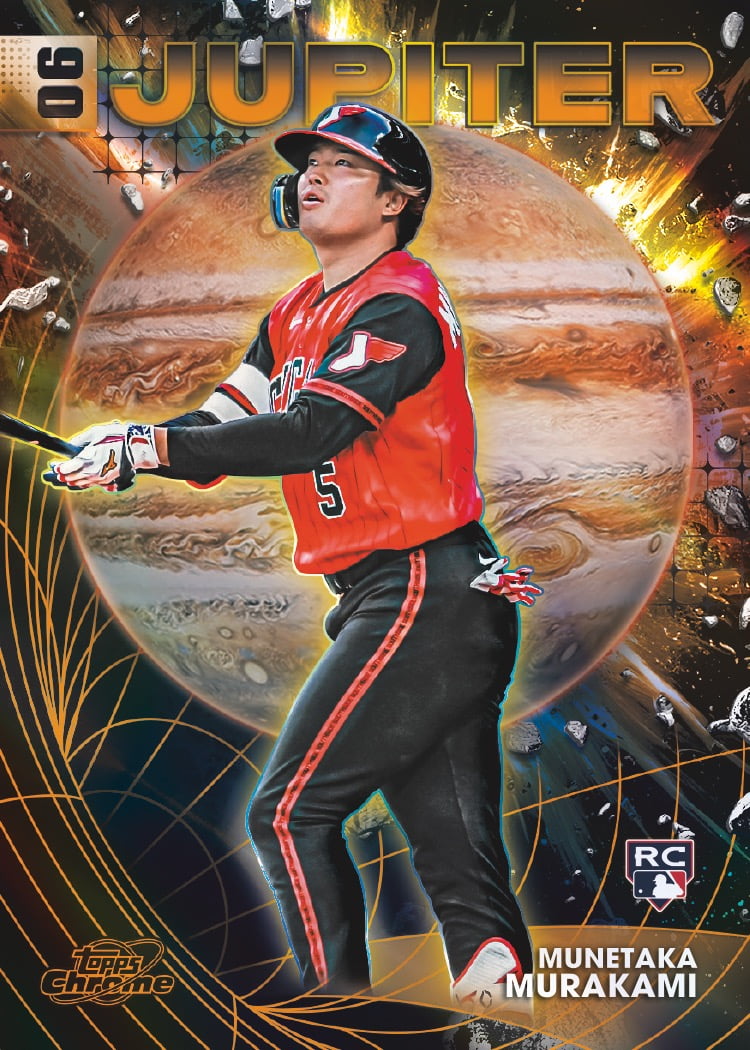
Witt's Sun card uses an orange solar disc as a halo around the running figure. Murakami's Jupiter preview replaces that blaze with the planet's broad, banded surface, while keeping the gold orbital lines and large destination label. Together they show why this chase works visually: each stop changes the atmosphere of the card.
The odds sheet also makes the difficulty curve unusually clear. Sun starts at 1:120 packs, Earth moves to 1:1,200, Jupiter to 1:4,800 and Pluto to 1:28,000. Those category rates match in the Hobby and Lunar columns. Pluto's published rate is roughly 233 times rarer than the Sun's; neither rate describes the odds of a specific player.
Rookie autographs have two very different frames
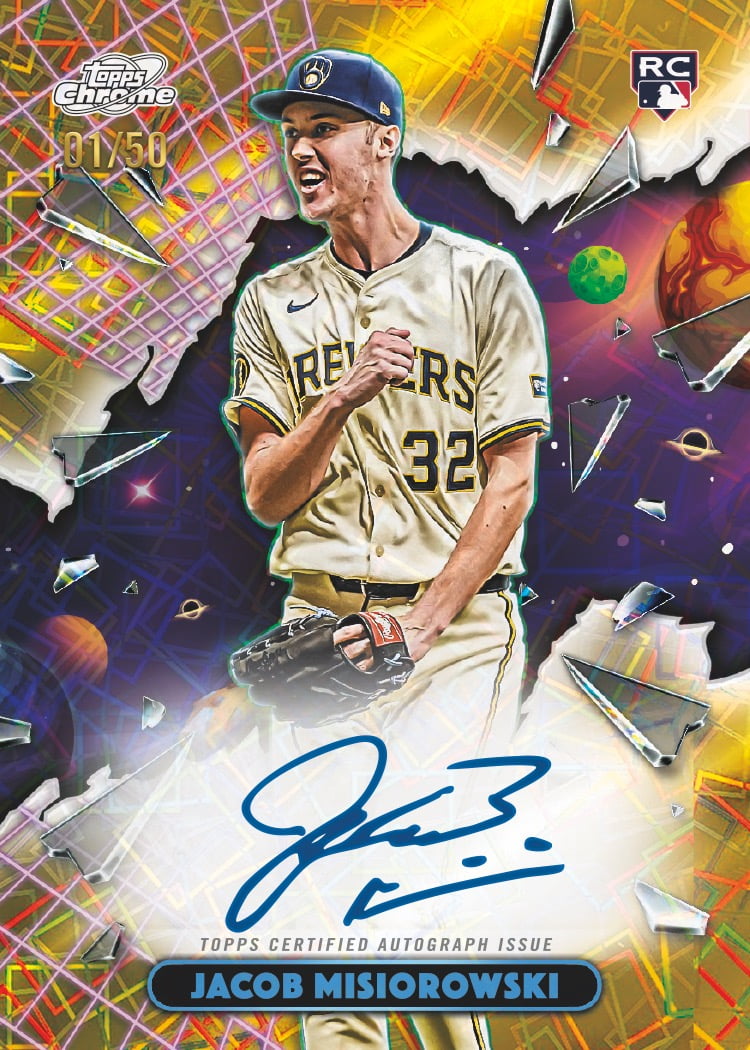
Jacob Misiorowski's Gold Interstellar autograph preview keeps the fractured base design, adds a gold grid and opens a pale signing area beneath his glove. The blue signature has room to stand out, and the /50 stamp sits near the top left rather than competing with it.
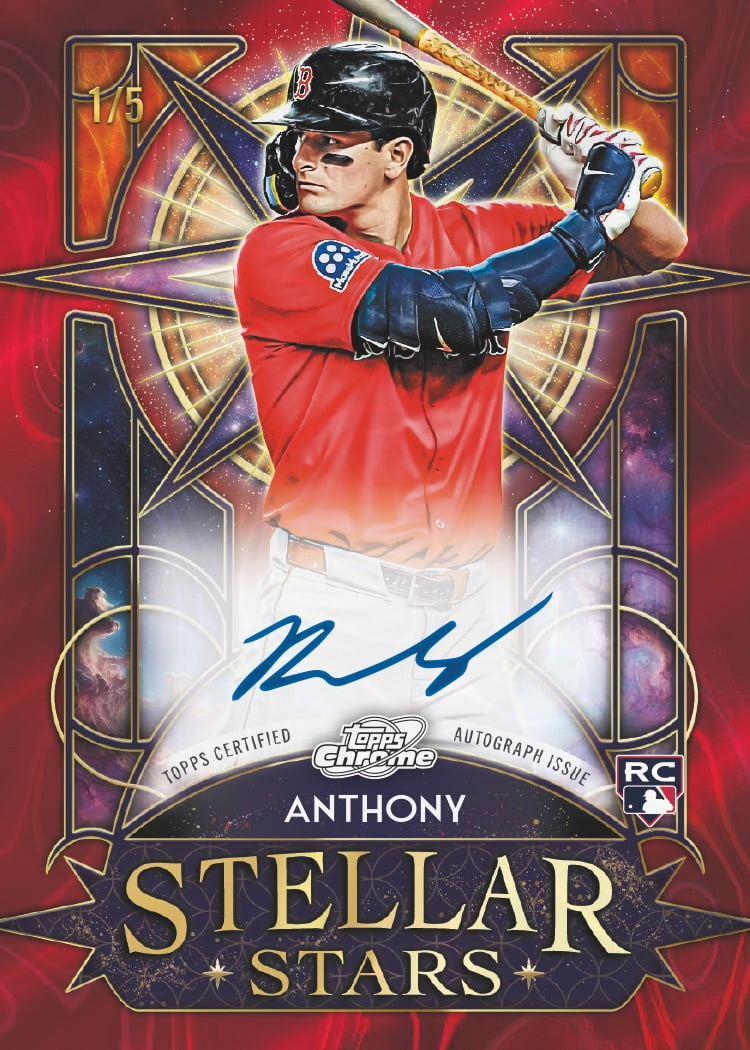
Roman Anthony's Stellar Stars autograph moves in a different direction. The Red Flare /5 preview builds a symmetrical gold-edged frame around his batting stance, with a large star behind him and a pale band for the signature. His red jersey fits the surrounding red design particularly well. Of the two layouts, this is the more formal portrait; Misiorowski's feels closer to an action card with an autograph added to the scene.
The checklist also pairs players in Star Clusters Dual Autographs: Ohtani with Ichiro, Jeter with Mariano Rivera, and Mike Trout with Albert Pujols. Those combinations give the autograph lineup another collecting angle beyond the rookie chase—two signatures connected by a team or baseball history on the same card.
Forces of the Diamond brings Jeter into the picture
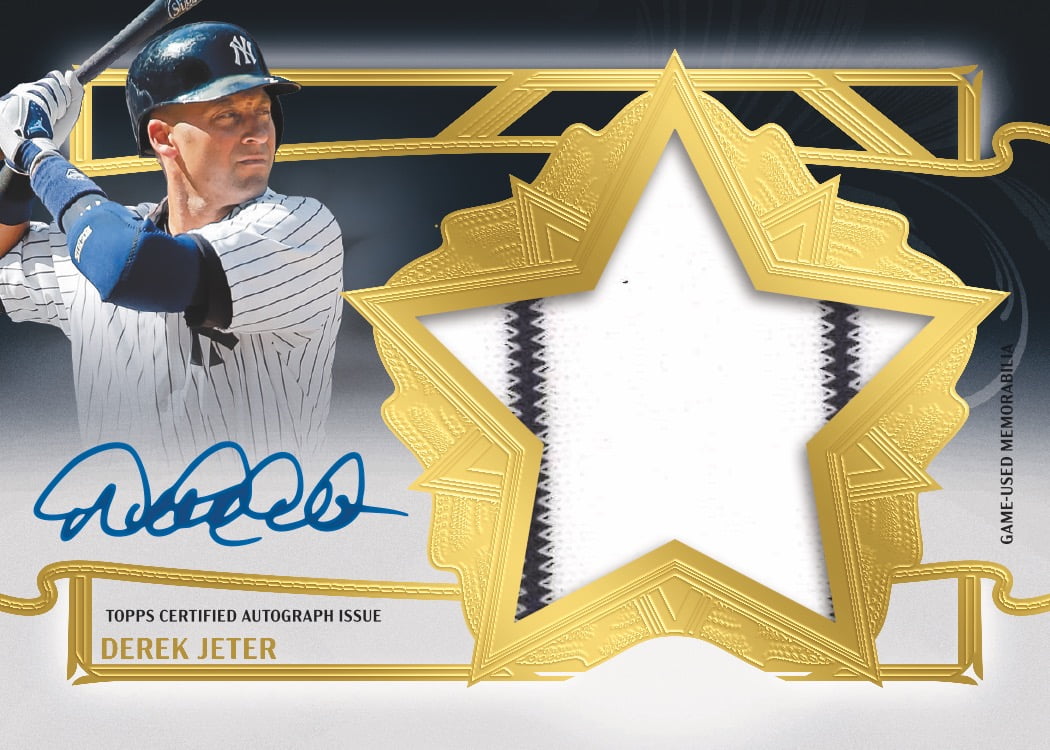
Derek Jeter's Forces of the Diamond preview surrounds his throwing motion with faceted silver diamonds, a blue outline and a large metallic title. The geometry makes this one feel more structured than Cosmic Dust, while the space background keeps it recognizably Cosmic Chrome. It is a strong design for a retired star whose familiar pinstripes already do much of the visual work.
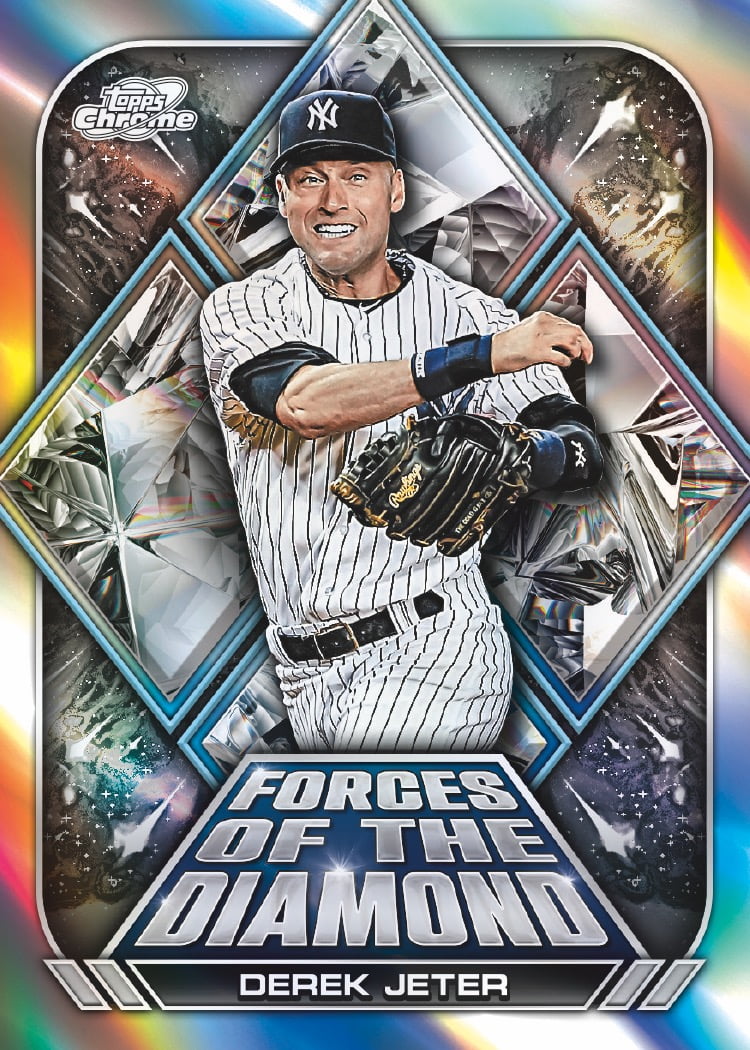
At 1:8 Hobby packs for the standard insert, Forces of the Diamond is also a much more approachable part of the product than Mars Attacks or Cosmic Dust. That spread matters to the opening experience: Cosmic Chrome has regular inserts with elaborate designs as well as the long-shot cards that dominate the preview conversation.
Hobby packs and the Lunar distinction
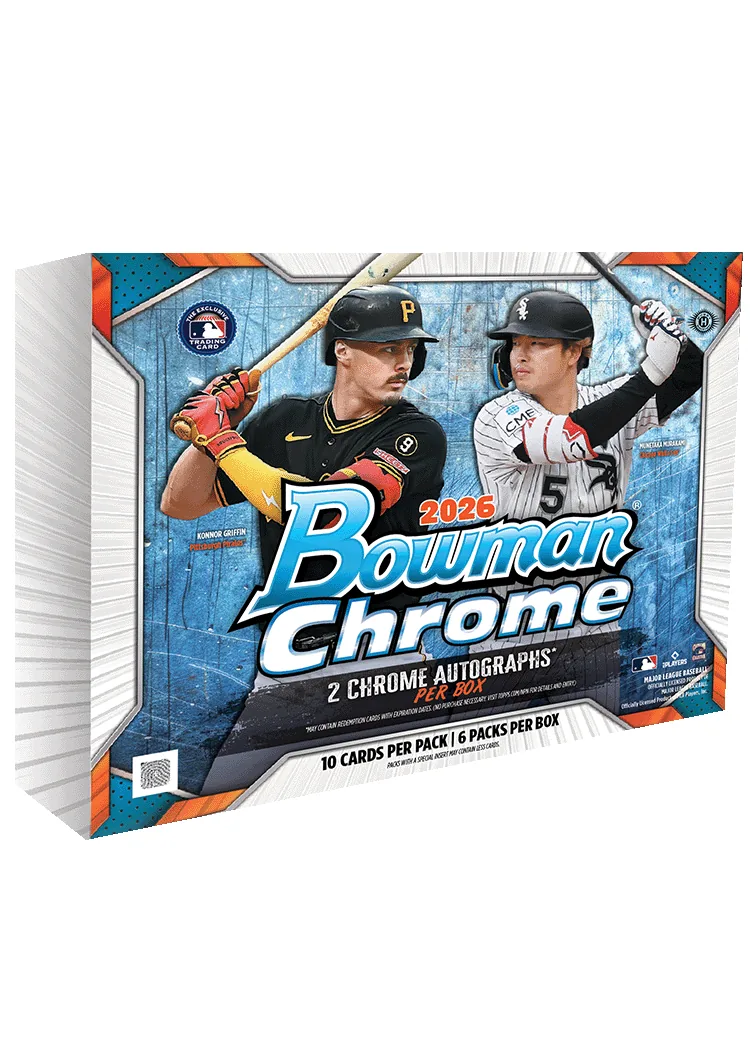
A Hobby box contains 20 four-card packs, or 80 cards. Topps' direct preorder is sold out ahead of the November 4 release. The box advertises randomly inserted autographs rather than a guaranteed autograph in every box.
The separate Lunar column matters when comparing formats. Base Lunar Eclipse Refractors appear at 1:2 Lunar packs, with no corresponding Hobby entry. The autograph menu differs too: Topps lists a Lunar Eclipse Cosmic Chrome autograph parallel at 1:37 Lunar packs, while the standard Cosmic Chrome Autograph Variation appears at 1:136 Hobby packs. These are different card versions, so the two numbers are not a like-for-like comparison of overall autograph frequency.
For this release, the most compelling choices are already visible: Skenes' wonderfully odd Mars Attacks scene, Ohtani's color-saturated Cosmic Dust, the ten-stage Planetary Pursuit player runs and the contrasting rookie autograph layouts. Cosmic Chrome gives each of those ideas enough visual character to make the cards feel like separate pursuits within one set.

Shop this guide on eBay
Hammy earns from qualifying purchases through these eBay links. Buy on eBay from the seller shown in each listing.
Explore on eBay
Targeted searches for the cards and releases Hammy covers. Search results may include other formats or variants; match the listing to the card or box you want.
eBay search · Sealed wax