The Workbench
2026 Topps MLB × KAWS: KAWS Creations and Autographs
The most compelling cards in Topps MLB × KAWS let the player photograph and the artist's visual language share the frame.
We update this release guide as verified product details develop.
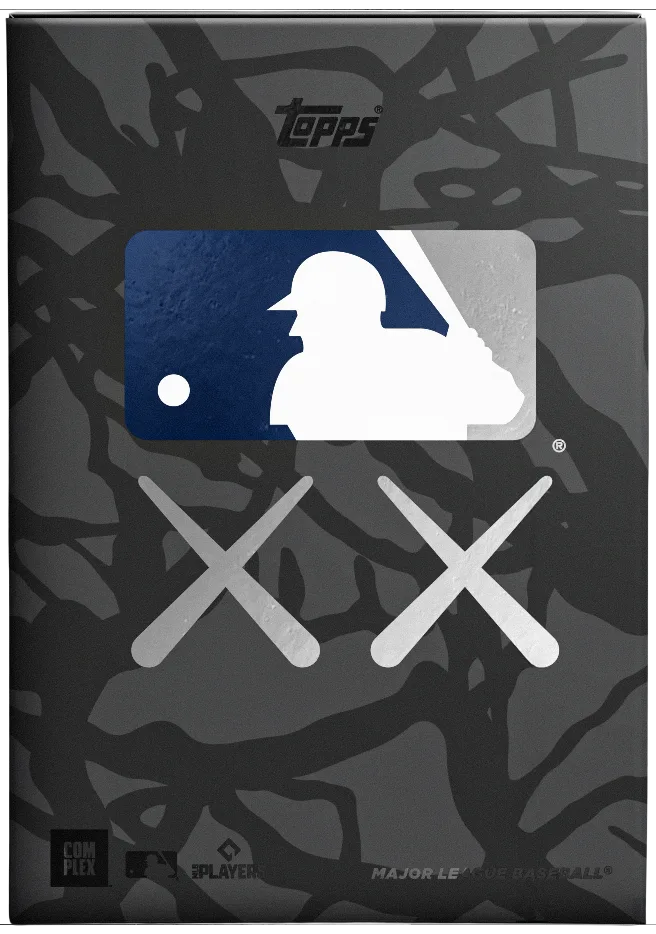
The appeal of 2026 Topps MLB × KAWS is right on the front of the card. The player photograph remains readable, but it is surrounded by blocks of color, looping forms and the crossed-eye motif associated with KAWS. That balance matters. An artist collaboration can overwhelm a baseball card when the design treats the player as an afterthought; the previewed cards work because the action image still gives each one a clear baseball identity.
Aaron Judge readies his bat. Cam Schlittler delivers in pinstripes. Shohei Ohtani finishes a swing against a far more immersive treatment. Those examples show a release with a few different visual gears rather than one repeated border applied to every subject. For collectors drawn to player cards as much as art objects, that distinction is the reason to look closely at the individual cards instead of treating the collaboration as a logo-driven novelty.
The base design keeps baseball at the center
Cam Schlittler's preview is the clearest introduction to the base-card approach. A narrow white frame holds the photograph while the outer field carries the color and linework. The player name, team context and RC mark have room to do their jobs without being swallowed by the design. It is a lively card, but its visual hierarchy is orderly: baseball image first, player identification second, artwork all around it.
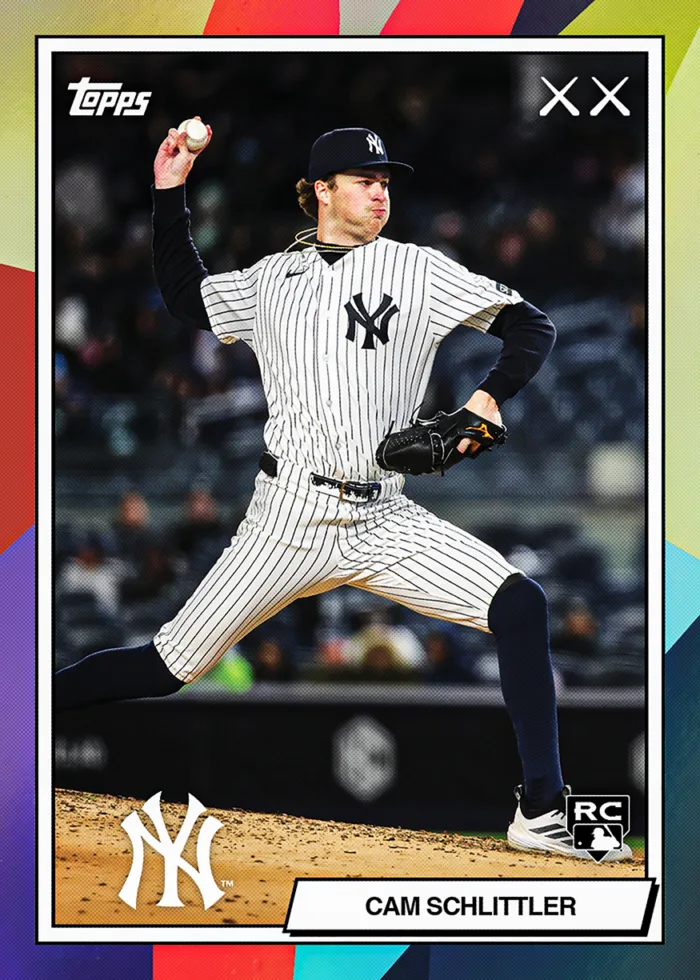
That separation is what gives the card staying power. The artwork does not merely sit in a small corner as a badge of participation, and it does not turn the action photograph into background texture. The frame sets up a conversation between the two. From a few feet away, the color is the first thing a display case will register. Up close, the pitching image and the small card details keep it rooted in the habits of a conventional baseball-card collection.
For a Schlittler collector, the RC mark is especially important to the card's identity, but the same layout provides a useful way to think about the whole release. The strongest base cards should be the ones where the player image and the border arrive with equal force. A favorite player in an ordinary crop may be less memorable here than a photograph with motion, open space and a clear silhouette for the artwork to play against.
This is also why the collaboration reads differently from a standard color parallel. The color is not a finish applied after the fact; it is part of the card's composition. The player photograph is still the subject, while the surrounding visual language supplies an unmistakable setting for it.
KAWS Creations takes the artwork into the scene
The Ohtani KAWS Creations preview goes further. Instead of keeping the artist's work mostly at the edges, it carries sweeping shapes through the stadium background behind the batter. Ohtani's follow-through stays legible, but the image feels less like a photograph in a designed frame and more like a baseball moment placed inside a complete piece of artwork.
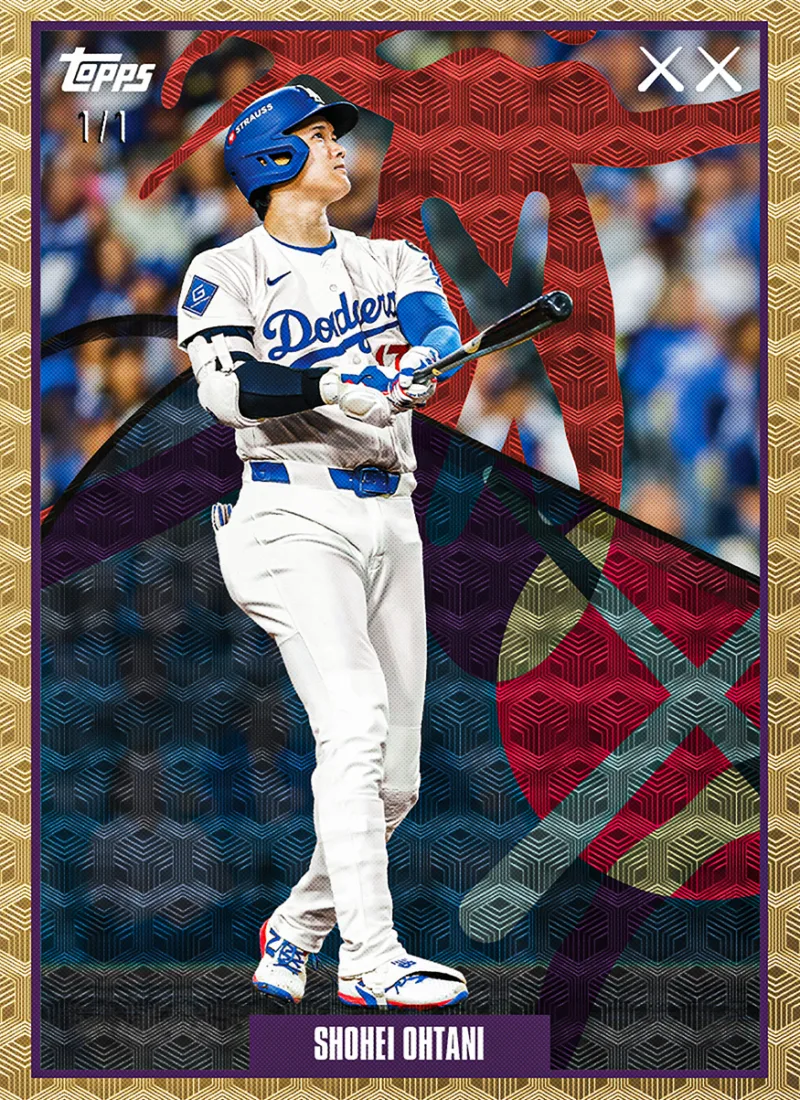
That makes KAWS Creations the most interesting visual lane in the previews. The player is not being covered up for the sake of a louder card. The treatment changes the atmosphere around the swing, leaving the stance, uniform and action readable while giving the stadium a different energy. It is a more ambitious use of the collaboration than a border change, and it creates a clear reason for a collector who already owns an Ohtani card to want this version for its own identity.
The distinction between the Schlittler and Ohtani examples is useful when choosing favorites. The base design rewards collectors who want the familiar structure of a player card with an unusual setting. KAWS Creations rewards collectors who want the artwork to take a more active role in the image. Neither approach displaces the other; they make different cases for the same collaboration.
Judge's autograph preview gives the signature room to matter
An autograph card succeeds when the signature has a natural place to live. Judge's preview places the blue ink below the batting photograph, where it can be seen immediately without cutting across the action or getting lost in the multicolored border. The card has a built-in focal point: first the hitter, then the autograph, then the KAWS treatment that ties the composition together.
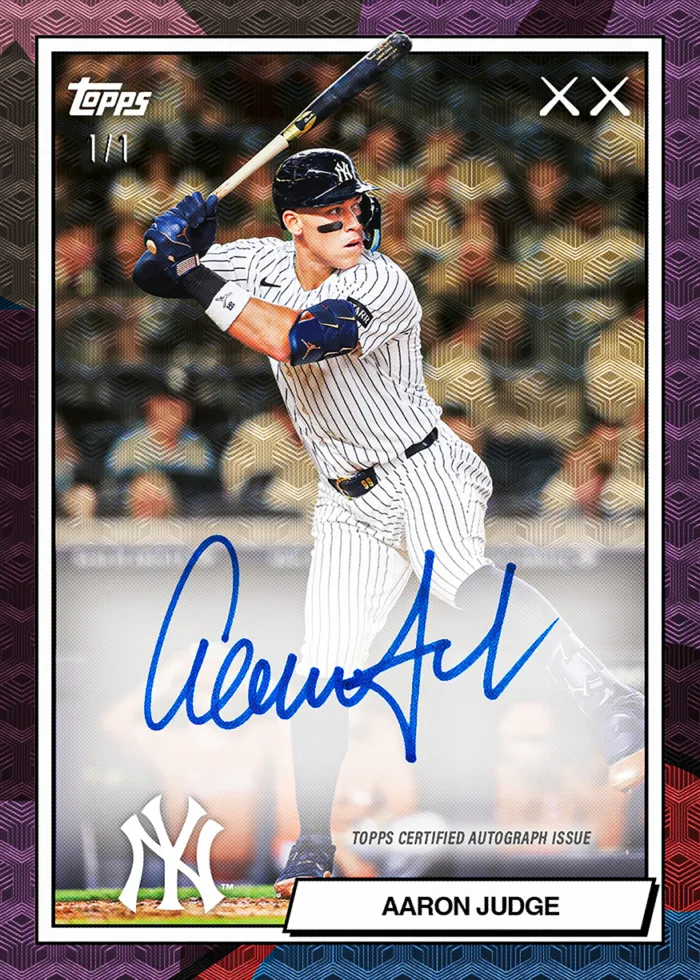
That layout is more satisfying than an autograph squeezed into an unused corner. The signature reads as a feature of the card rather than an interruption to it, and the open lower area gives the ink contrast against the rest of the design. It is a good example of the collaboration's best habit: each element has its own space, so the card can be expressive without becoming visually crowded.
For Judge collectors, the appeal is not simply that the card contains a signature. The pairing of a large batting image, visible ink and a distinctive surrounding design gives it a specific place beside more traditional autograph cards. It offers a different visual memory of the player rather than a variation that needs a checklist entry to explain itself.
The Companion preview follows a different collecting path
The Companion autograph preview shifts the attention away from an MLB action photograph and toward KAWS' own character imagery. Its central signing area makes the artist's signature part of the presentation, while the colorful figure and graphic elements carry the rest of the card. That is a different collecting proposition from a Judge or Ohtani card with KAWS design work around it.
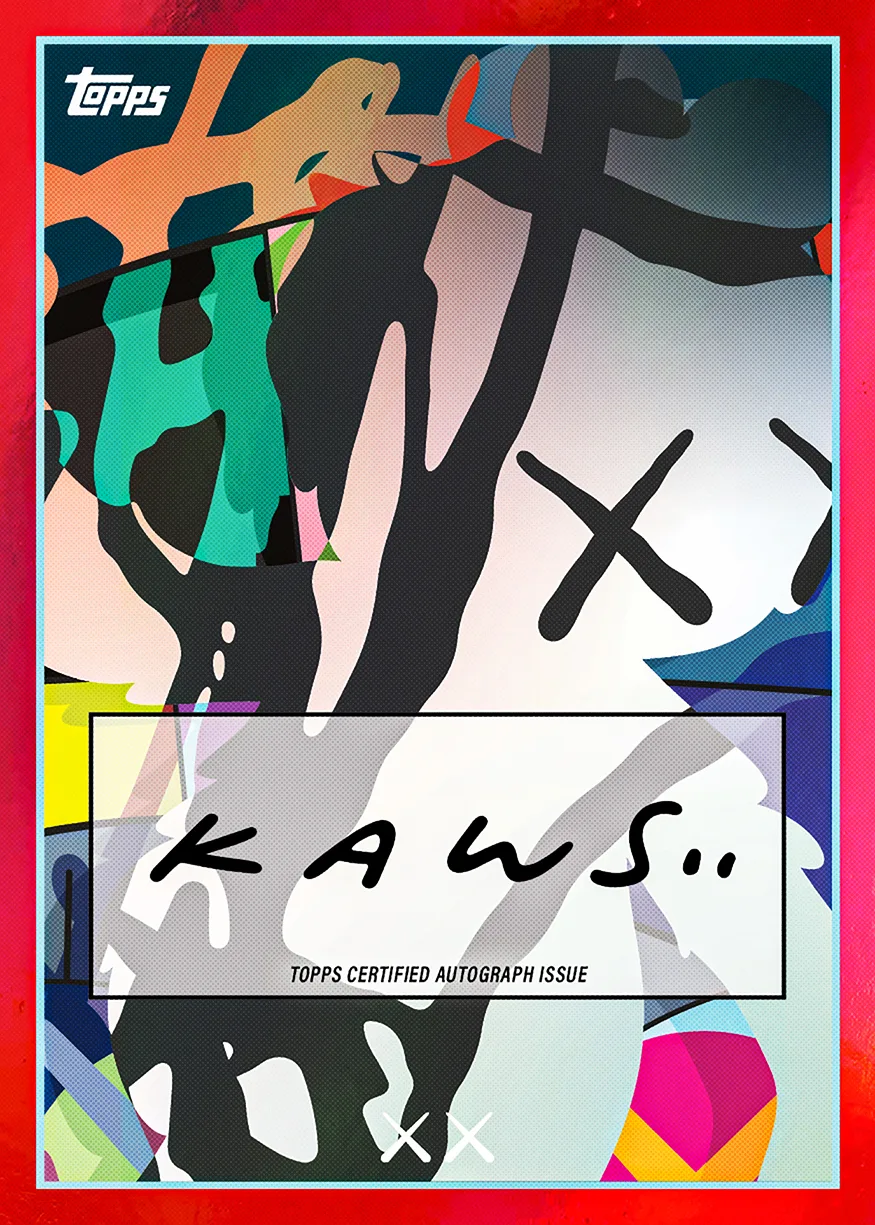
For a baseball-first collection, the player cards are likely to be the natural starting point. For a collector interested in the collaboration itself, the Companion image gives the artist more of the frame and makes the signature central to the card's identity. The two approaches belong together, but they should not be mistaken for the same kind of chase: one extends a player collection through a distinct visual treatment, while the other puts the artist's work at the center.
The best cards in this release will be the ones that make that choice easy. Schlittler's base preview shows how the border can make a familiar player card feel new. Ohtani's KAWS Creations image shows the artwork taking over the setting without losing the swing. Judge's autograph preview gives the ink proper room, and the Companion card gives the collaboration an artist-forward counterpart. Together, those previews make a strong case for choosing the card that best matches the part of the project a collector actually wants to display.
Shop this guide on eBay
Hammy earns from qualifying purchases through these eBay links. Buy on eBay from the seller shown in each listing.
Explore on eBay
Targeted searches for the cards and releases Hammy covers. Search results may include other formats or variants; match the listing to the card or box you want.
eBay search · Sealed wax
2026 Topps MLB x KAWS
Search on eBay