The Workbench
We Went 0-for-4 on Topps EQL: How a $1,799 Box Becomes a Secondary-Market Commodity
Two buyers, four Topps EQL entries and zero selections. Here is what the $1,799.99 Topps Chrome Updates Basketball Sapphire draw meant for collectors seeking the box after the release.
We had the money. We still could not buy the boxes.
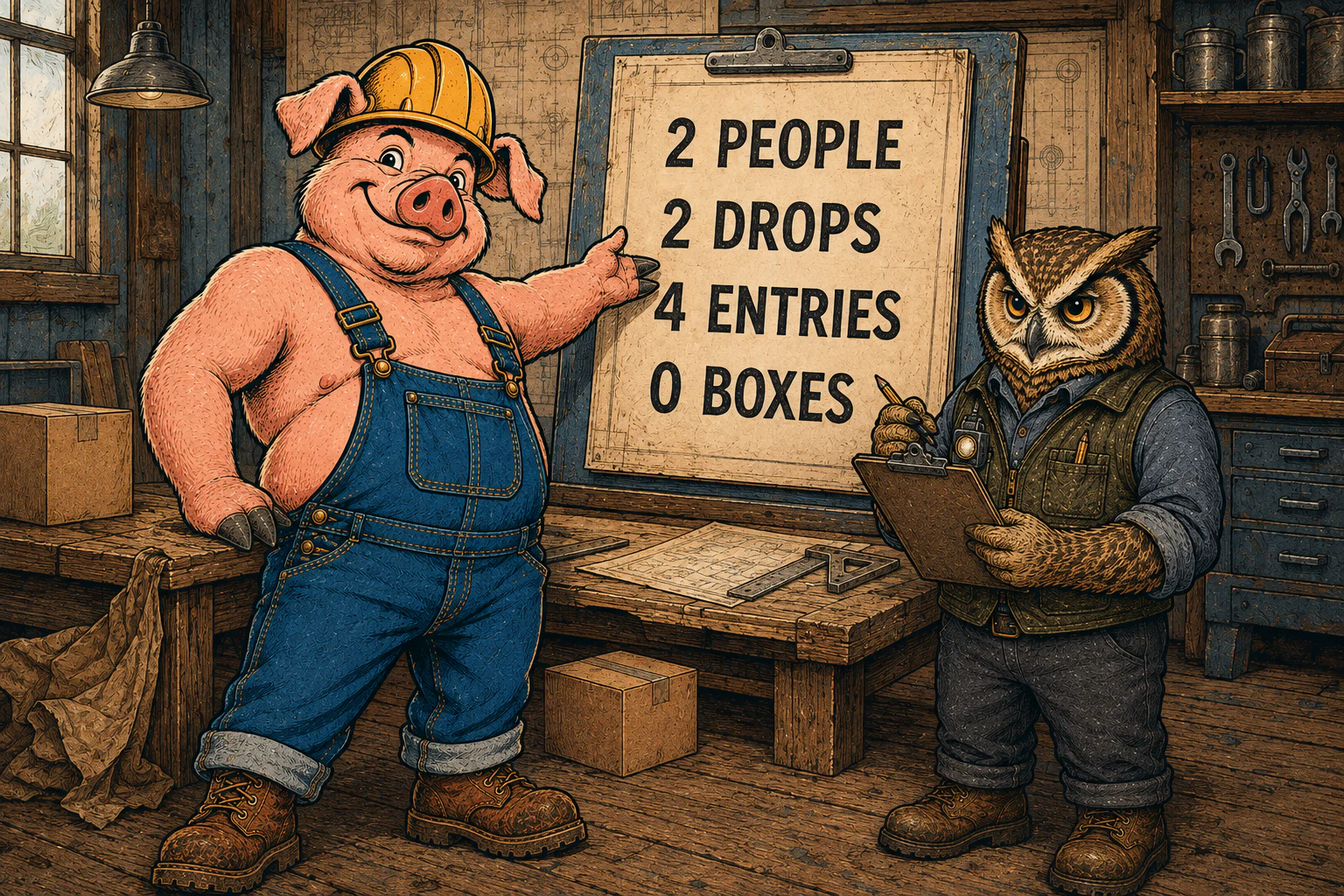
Two people each entered the Topps EQL draw for the 2025-26 Topps Chrome Black Basketball Hobby Box at $359.99. Neither was selected. The same two people each entered for the 2025-26 Topps Chrome Updates Basketball Sapphire Edition at $1,799.99. Neither was selected.
Two people, two separate Topps EQL releases, four legitimate entries, zero selections.
That is the collector reality behind a sought-after draw: wanting a sealed box and having the retail price available do not create a checkout opportunity. Once the draw closes, the next chance to own that exact product is through a selected buyer who decides to sell.
What our 0-for-4 result means
One participant’s account records both unsuccessful entries: Chrome Black at $359.99 and Chrome Updates Sapphire at $1,799.99.
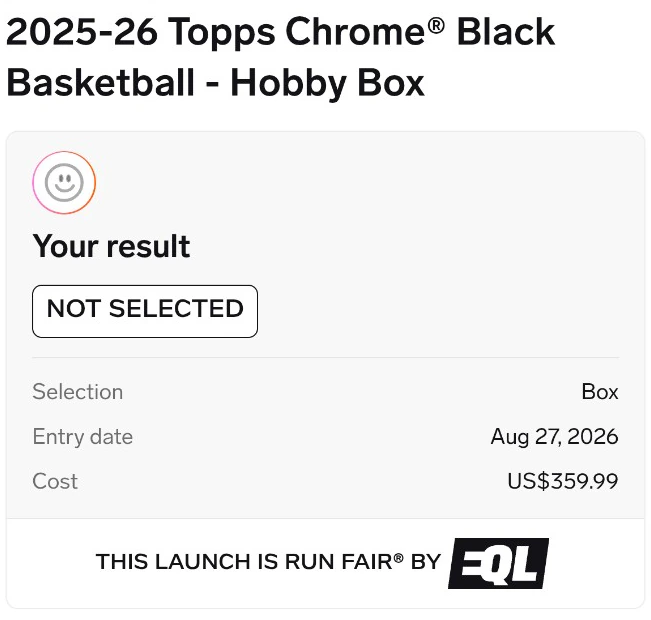
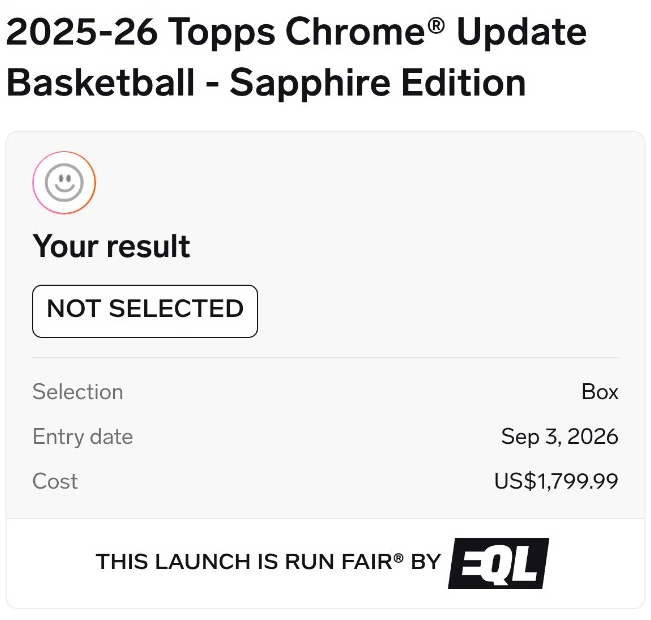
Our record is a small collector story, not a selection-rate study. It does show the distinction that matters when a release uses EQL: an entry is a fair chance to buy, not a reservation of a box.
Topps presented both releases as free-entry launches, with one entry per person and bot restrictions. The Chrome Black Hobby Box page listed a four-box customer maximum; the Sapphire page listed a two-box maximum. Those limits define what a selected customer may buy, not how many entries will be selected.
EQL describes its platform as the system that runs the launch while the retailer controls the product, inventory, timing and launch rules. For a draw, EQL says entries are assessed for quality, assigned an arbitrary number and ranked; inventory and payment processing determine how far down the list selections can go. A person who is not selected is not charged. That structure replaces the usual fastest-checkout contest with a chance-based allocation, but it cannot make limited inventory available to every collector who wants it. EQL’s fan guide
For collectors, the cleanest takeaway is simple: enter once with accurate account, address and payment details, then treat the result as a result. Building a budget around a box before selection can make a loss feel like a promise broken. It was never a purchased box.
The Sapphire box collectors were trying to buy
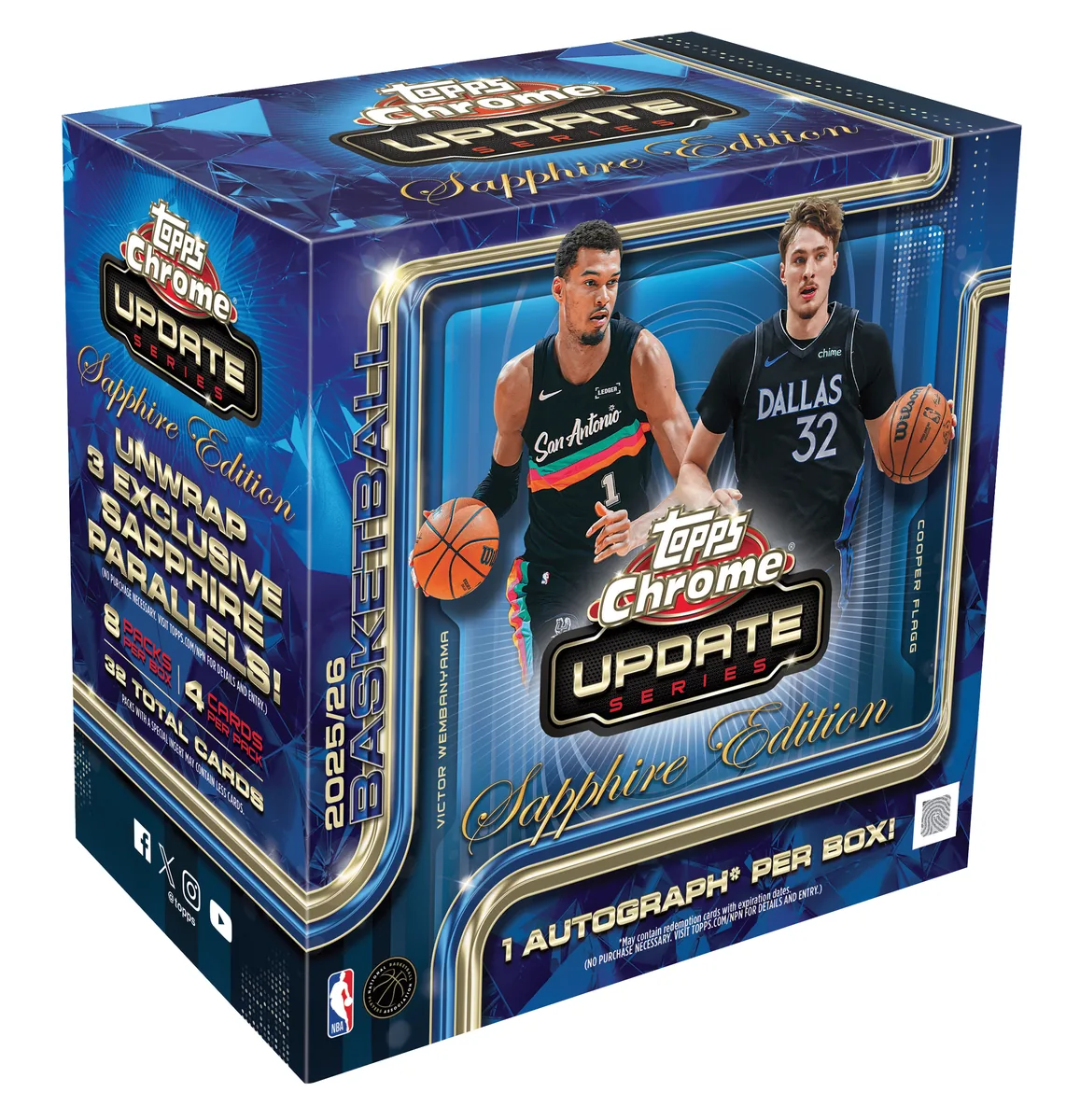
The 2025-26 Topps Chrome Updates Basketball Sapphire Edition was offered by Topps at $1,799.99 per box. Its configuration is eight packs of four cards, for 32 cards per box, with one autograph per box. Topps’ Sapphire launch page
That is a compact, high-cost opening: a collector is buying a concentrated Sapphire configuration rather than a large stack of base cards. Topps identifies Sapphire versions of Topps Chrome Autographs, Havoc Marks, 1980-81 Autographs and Future Stars Autographs among the autograph possibilities. Its release materials also point collectors to the product checklist and odds sheet, including Gold Sapphire and Padparadscha 1 of 1 variants.
The appeal is not an abstract scarcity label. It is the particular mix of a Sapphire finish, a 32-card box, and an autograph built into the configuration. That makes the exact name on a resale listing important. A box of 2025-26 Topps Chrome Black Basketball is a different product; so is a non-Sapphire Topps Chrome Updates Basketball box. A similar-sounding title is not a substitute for the same configuration.
The $359.99 Chrome Black release reinforces the point. It was a different box with two packs of six cards and one encased autograph per box. Topps highlighted its dark chromium presentation, the Black Lightning, Nocturnal and Home Court insert names, and an autograph roster that includes rookie and veteran subjects. That can be an attractive basketball product in its own right, but it does not answer the question of what a Sapphire box should cost or offer. Topps’ Chrome Black launch page
When the draw becomes a secondary market
After a draw, each selected buyer holds a choice: open the box, keep it sealed, or sell it. Only the boxes their owners offer for sale become available to collectors who were not selected. The product has not changed—there are still eight four-card packs and one autograph in a Sapphire box—but access to it has.
That makes sealed Sapphire boxes commodity-like. Two unopened boxes of the exact same release are readily comparable, while practical details still separate one offer from another: whether the box is in hand, the seller’s track record, the condition of the seal and packaging, shipping terms, and the protections attached to the transaction. Those details influence the total cost and the confidence a buyer can have in the offer; they do not turn a different configuration into the same box.
The secondary market is also where the retail figure stops being the only number in the conversation. A buyer and seller may agree on a price above or below the original Topps offering. That agreement reflects the availability of listed boxes and what collectors are willing to pay at that moment. It does not change the printed configuration or guarantee the cards inside will return the purchase cost.
For sellers, the difference between an original purchase price and a resale price is not the same as profit. Shipping, insurance, packing, taxes and marketplace fees can all matter. eBay says selling costs depend on what is sold, the listing setup, seller performance and Store status, and that fees are deducted from sale proceeds. eBay’s selling-fee overview
How to shop the box after EQL
Start by matching the full product identity: 2025-26 Topps Chrome Updates Basketball Sapphire Edition, not merely “Topps Sapphire” or “Chrome Updates.” Confirm that the listing is for a sealed box, read whether it is in hand or a preorder, and check the stated packing and shipping terms. A preorder adds the separate question of whether the seller will receive and fulfill the box they are offering.
Then compare completed sales of that exact box when they are available. A current asking price is an invitation to negotiate or buy; it is not proof that another collector paid that amount. Match the year, product, Sapphire edition, box configuration, condition and transaction state before treating a sale as useful context. Our card-value guide has a practical method for comparing sold listings rather than mixing similar products together.
Finally, calculate the full cost before deciding. Sales tax, shipping, insurance and payment or import charges can change the real total. If the box is the specific Sapphire configuration you want to open, display or keep sealed, that total is the figure to weigh against your collecting budget. The hobby-box-versus-blaster guide is useful context for how a concentrated hobby-style configuration differs from a lower-cost retail opening.
Hammy Puller buys and resells collectibles too. Our shop operates in the same collector market: people trade money, time and access for cards and sealed products they want to own. An EQL result may close the retail door, but it does not end the collector’s choice. It makes the product match, the terms and the total cost matter more.
Sources
- Hammy Puller EQL result screenshots: August 27, 2026 Chrome Black entry at $359.99 and September 3, 2026 Chrome Updates Sapphire entry at $1,799.99, both shown above as not selected
- Topps/EQL Chrome Black launch page: price, limit and box configuration
- Topps/EQL Sapphire launch page: price, limit, configuration, checklist and odds
- EQL: how a draw works
- eBay selling-fee overview