The Workbench

2025-26 Topps Chrome Updates Basketball Sapphire: $1,799.99 Box, Checklist and EQL Drop

2025-26 Topps Chrome Updates Basketball Sapphire guide: $1,799.99 price, Sept. 3 release date, 32-card box, autograph checklist, odds and EQL details.

Topps Chrome UpdatesBasketball cardsSapphireSealed wax
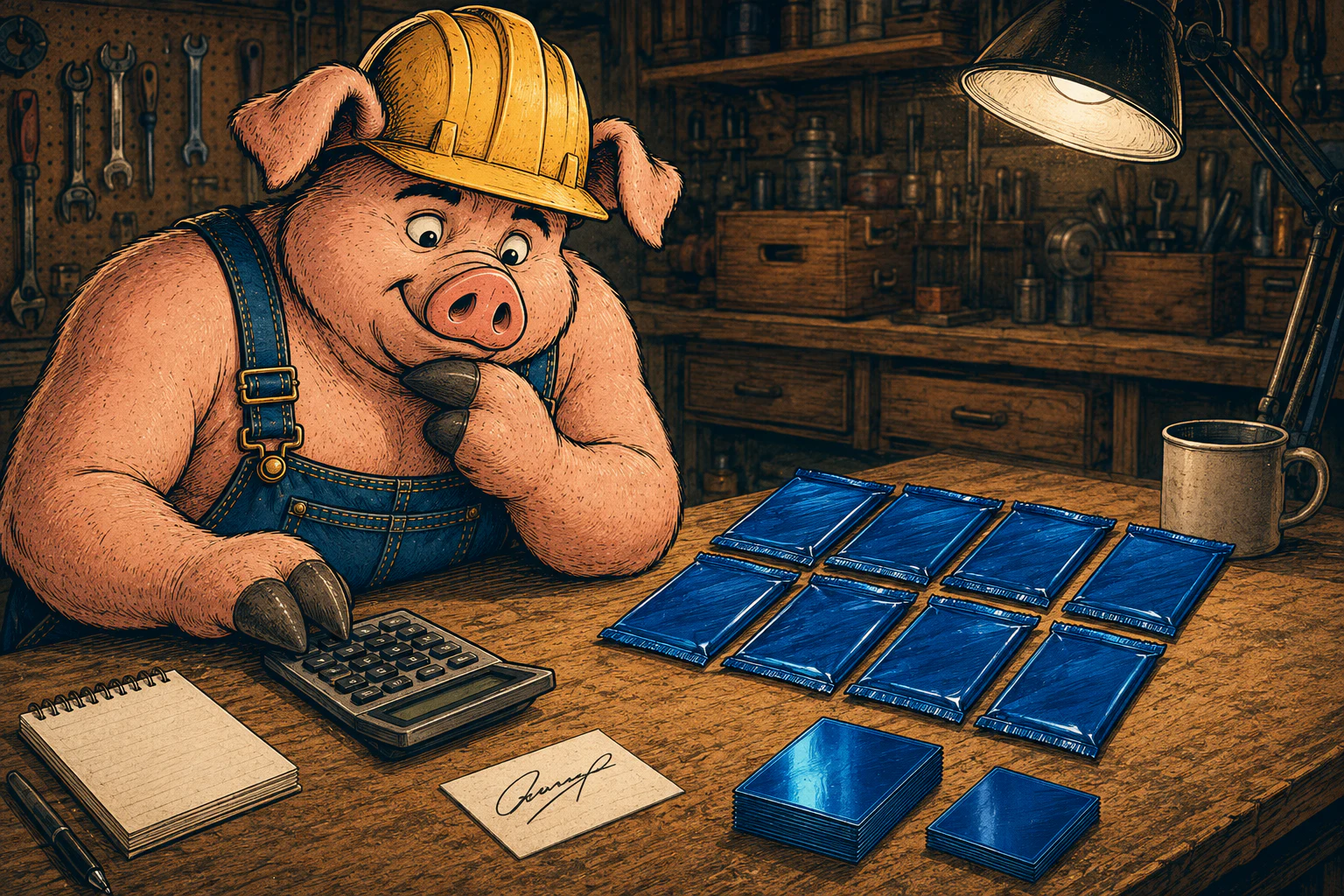
Original Hammy Puller editorial illustration of Hammy comparing eight fictional sapphire-blue card packs with a calculator at his workbench; no Topps product artwork is shown.

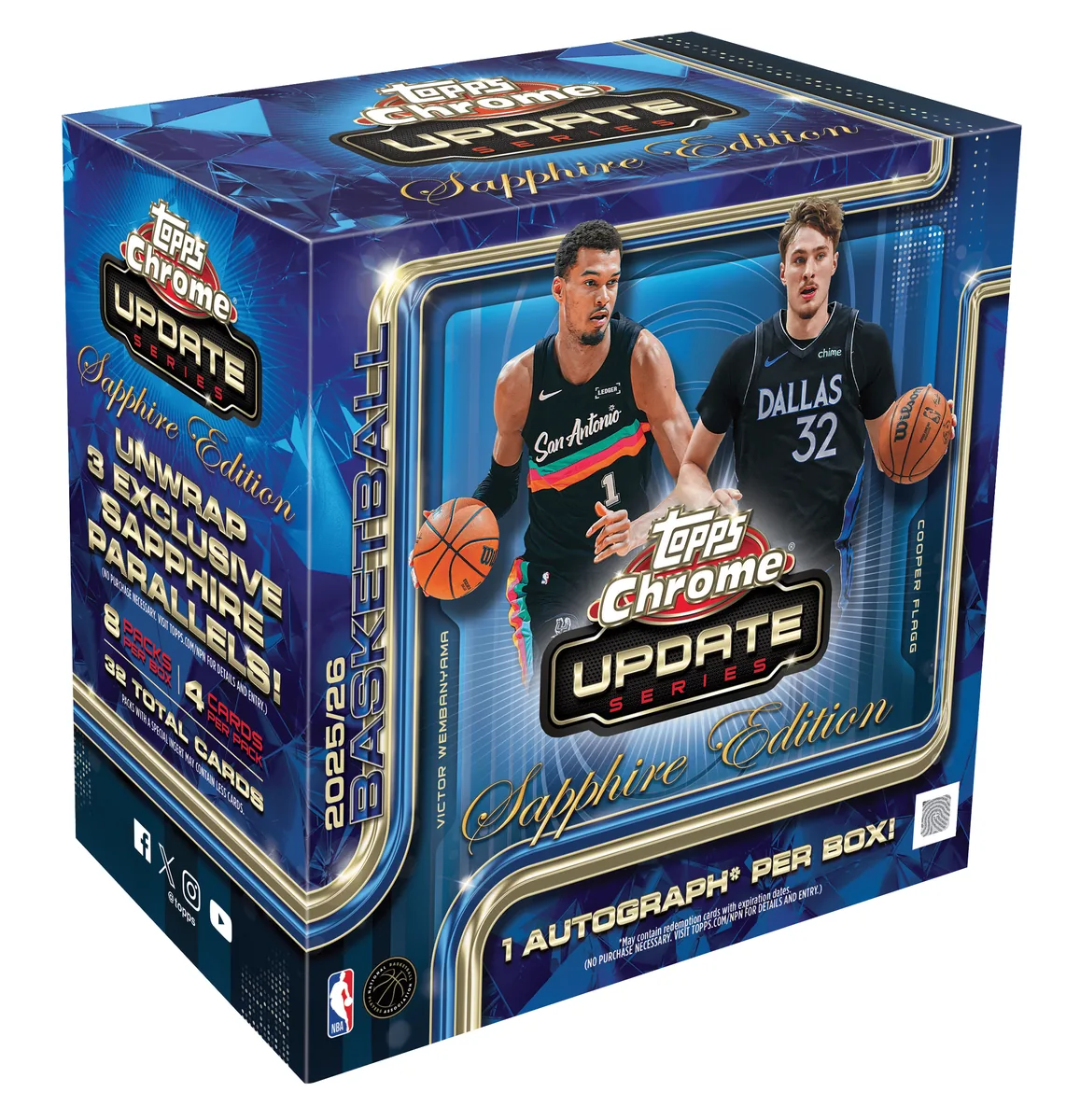
Topps released 2025-26 Topps Chrome Updates Basketball Sapphire Edition on September 3, 2026, through an EQL launch. The Topps price was $1,799.99 per box, with a limit of two boxes per customer.

Kyle and Ralph each entered today’s EQL release and neither was selected. They are real people, not Hammy or another editorial mascot, and their two misses do not establish the draw’s selection odds. It also means Hammy does not currently have this Sapphire box available in the shop. This page is an editorial breakdown of the release, not a product listing or an offer to sell it.

The central tradeoff is simple: $1,799.99 buys 32 cards and one guaranteed autograph. This is a high-cost, low-card-count rip built around checklist access, Sapphire parallels and the chance of a major hit—not volume or predictable resale value.

Official release: View the Topps product page.

Quick answers: price, release date and box configuration

  • Release date: September 3, 2026
  • Topps launch time: 12 p.m. Eastern
  • Release method: Topps/EQL draw
  • Topps price: $1,799.99 per box
  • Purchase limit: two boxes per customer
  • Packs per box: eight
  • Cards per pack: four
  • Cards per box: 32
  • Guaranteed content: one autograph per box
  • Official documents: Topps published both a Sapphire checklist and an odds sheet

Those are manufacturer facts from the Topps/EQL launch page. They describe the configuration. They do not promise a particular player, parallel, grade or resale value.

How many cards are in a Sapphire box?

There are 32 cards in one box: eight packs multiplied by four cards per pack.

At the $1,799.99 Topps price, that works out to approximately $56.25 per card before tax, shipping or any other applicable charge. Cost per card is not a valuation method—one rare card can matter far more than several base cards—but it makes the concentration of the purchase easy to see.

The guaranteed autograph is part of those 32 cards, not an additional thirty-third card. A buyer is therefore paying for a short opening with one known card type and 31 other cards drawn from the release’s eligible base, parallel and insert content. The guarantee says autograph, not star autograph, rookie autograph, low-numbered autograph or autograph worth a particular amount.

This is more concentrated than the usual “hobby versus retail” comparison. Our hobby-box-versus-blaster guide explains why configuration-specific guarantees matter more than the label on a box. Here, the configuration is unusually small and the cash at risk is unusually large.

What is on the official Sapphire checklist?

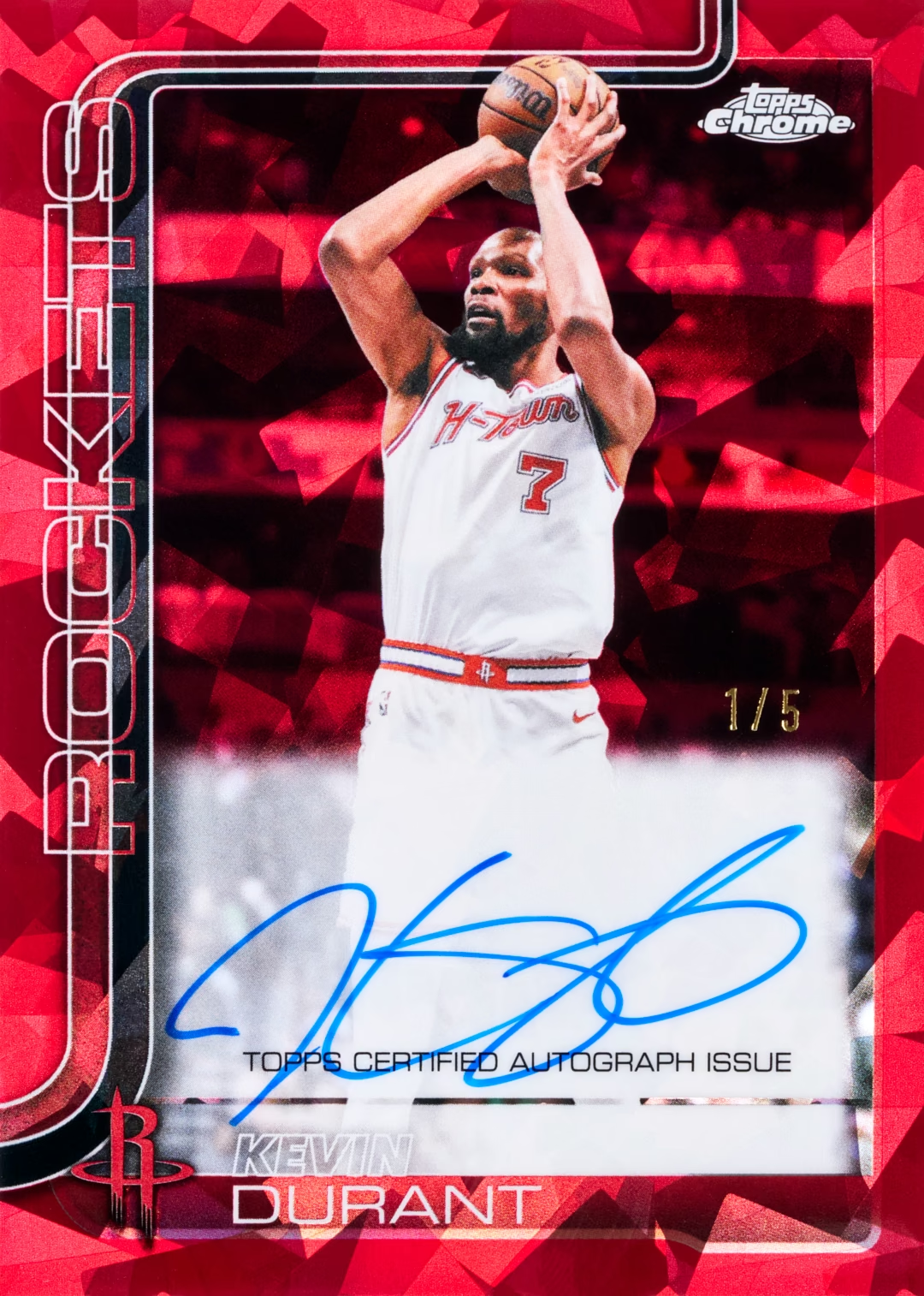
The official Topps Sapphire checklist lists a 200-card base set, followed by Sapphire Selections and Infinite Sapphire inserts and four autograph families.

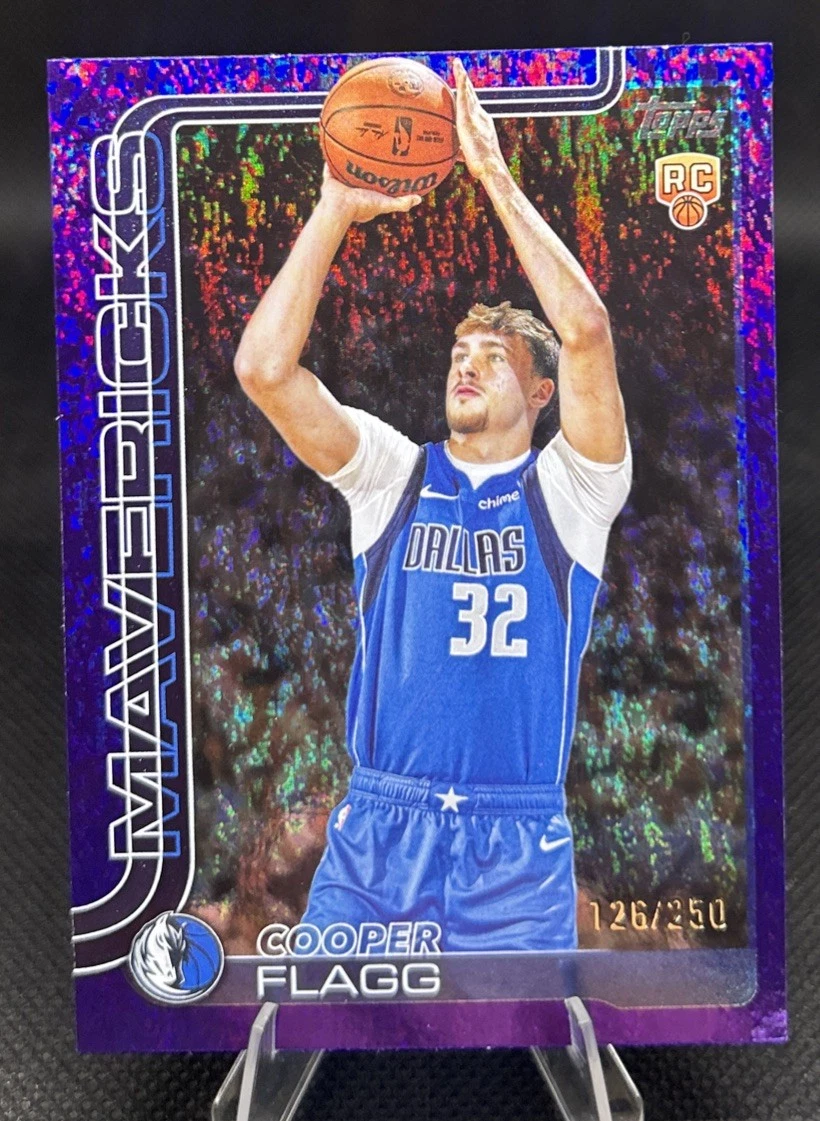
The base checklist mixes established stars, legends and 2025-26 rookies. The autograph lists also span rookies, current players and retired names. That breadth creates appealing possibilities, but it also creates a wide range of possible outcomes from the one-autograph guarantee.

A name appearing on the checklist means the card is eligible to exist in the product. It does not establish how many copies of that player were produced beyond any stated serial numbering, and it does not mean that player will appear in a particular box. Topps’ checklist itself warns that intended configuration and actual contents can vary.

What autographs can you pull?

Topps highlights four Sapphire autograph families:

  • Topps Chrome Autographs
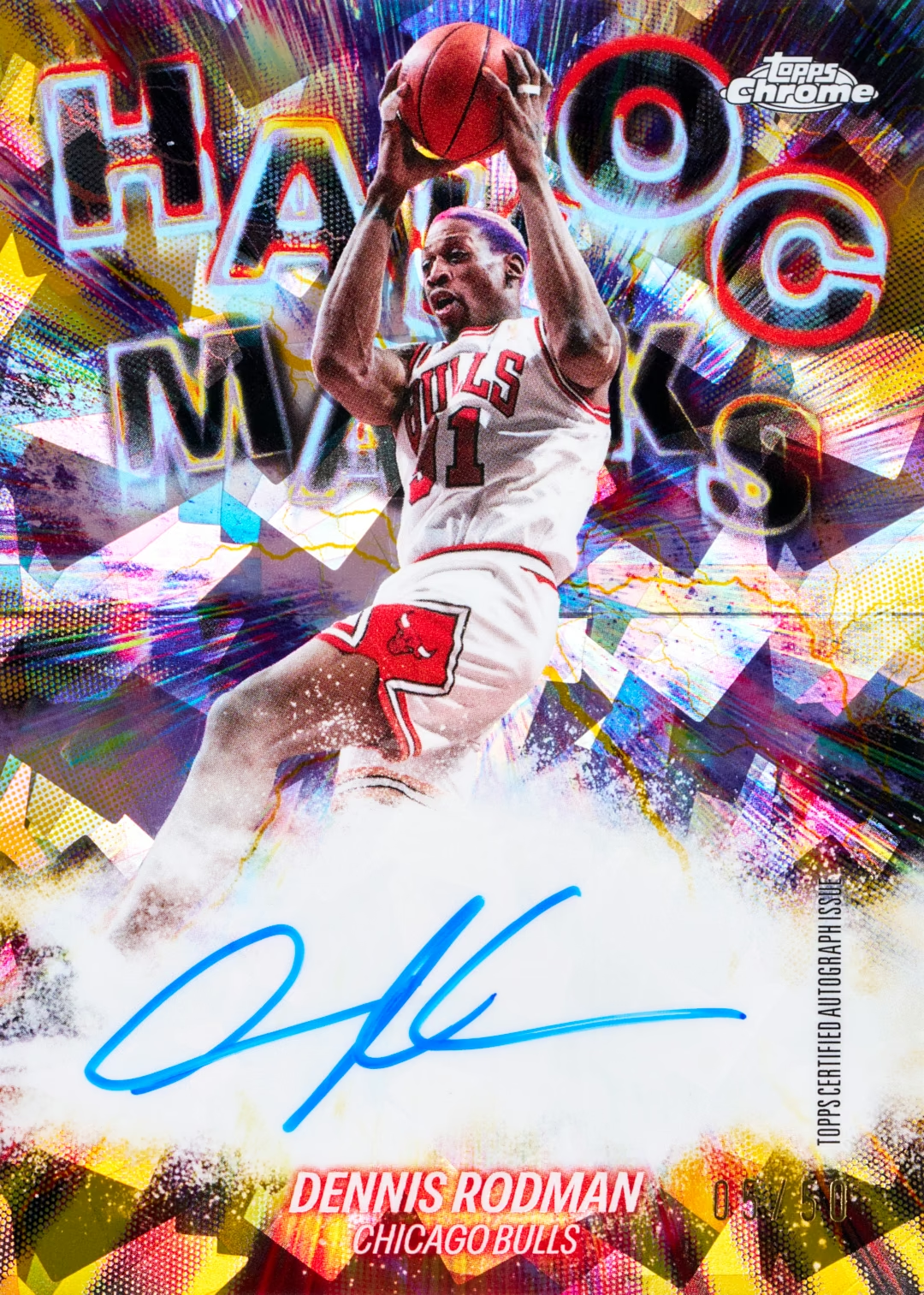
  • Havoc Marks
  • 1980-81 Topps Basketball Autographs
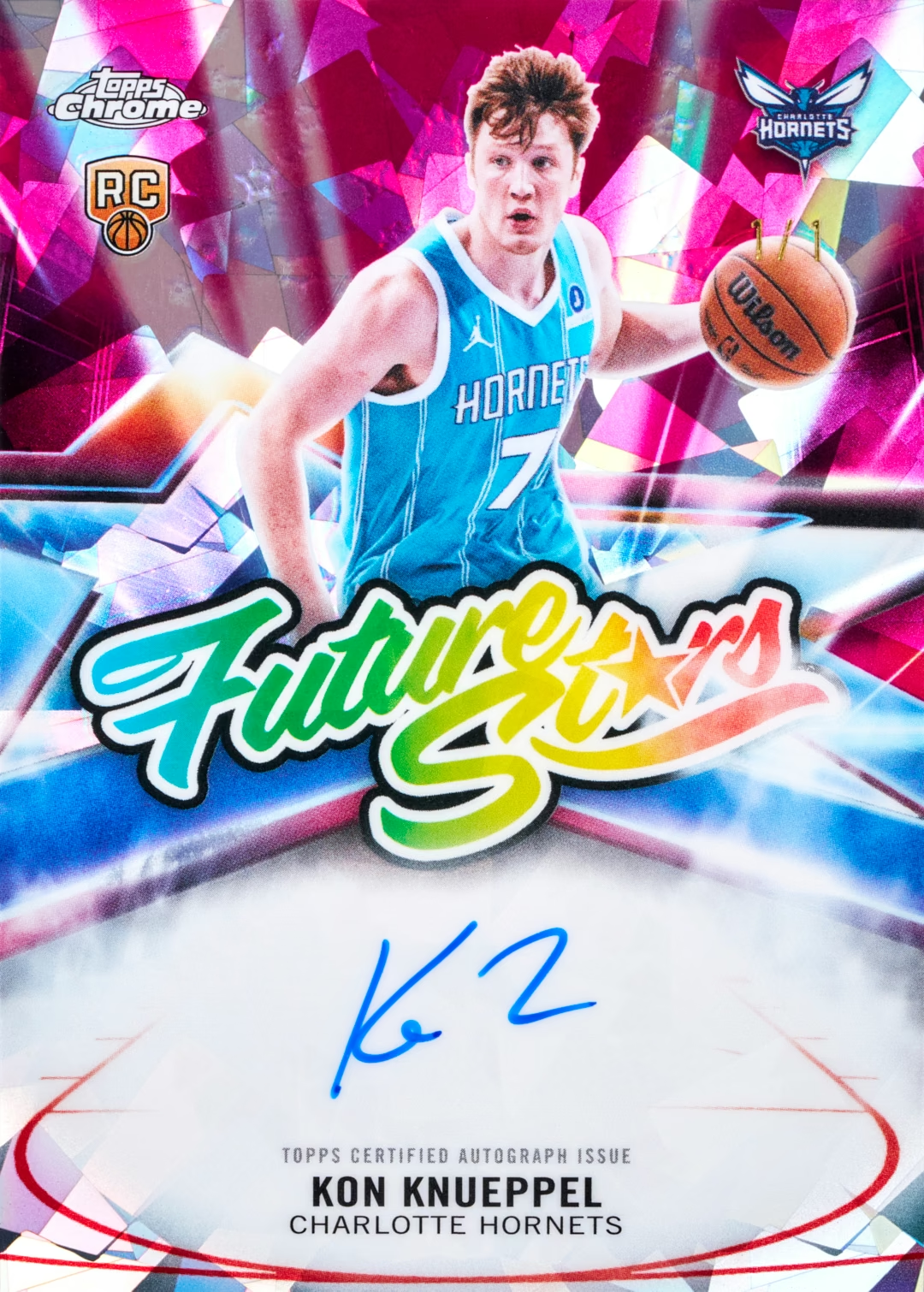
  • Future Stars Autographs

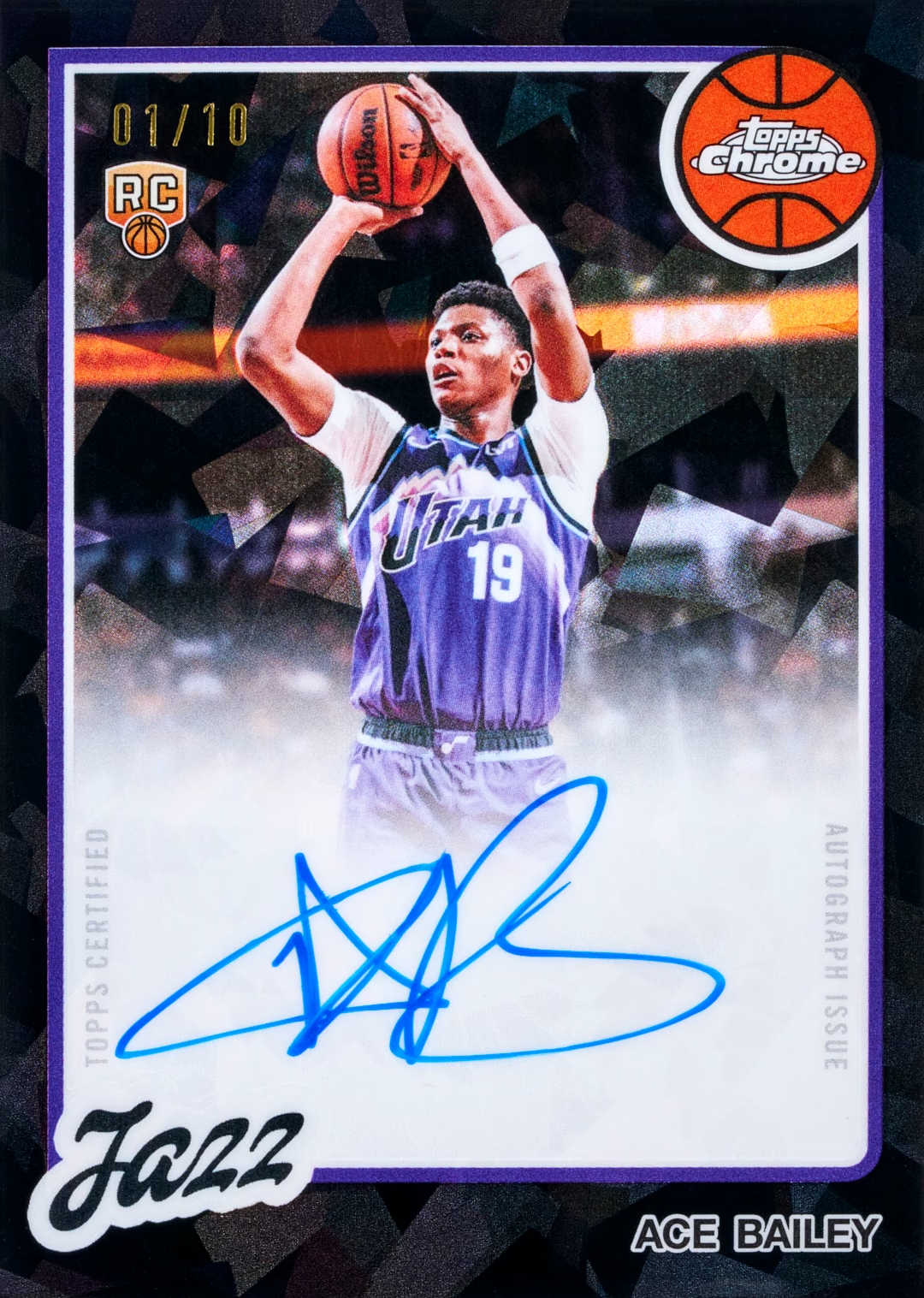
The Sapphire autograph parallel structure shown by Topps runs through Gold, Orange, Black, Red and Padparadscha 1 of 1 versions. The one-per-box guarantee does not guarantee one of the rarer colors. It only guarantees an autograph from the product’s autograph content.

The families also serve different collector interests. Future Stars is rookie-focused. The 1980-81 design connects current players, rookies and legends to a historical Topps basketball format. Havoc Marks and the main Topps Chrome Autographs checklist carry their own subject lists. A buyer should check the exact names in each family instead of treating “one autograph” as a single uniform outcome.

When a color or serial number matters, our sports-card parallels guide shows how to separate a named parallel, stated pack odds and an actual print run.

What does the official odds sheet say?

Topps’ official Sapphire odds sheet is the right source for pull-frequency claims. It lists Base Sapphire at 1:1, with base parallels stepping from Purple at 1:6 packs and Gold at 1:9 to Orange at 1:17, Black at 1:42, Red at 1:84 and Padparadscha at 1:418.

For inserts, Topps lists Sapphire Selections at 1:11 packs and Infinite Sapphire at 1:160. With only eight packs in a box, even a comparatively approachable insert odds line should not be rewritten as a box guarantee.

The autograph-family odds vary by family and color. For example, the sheet lists Gold Topps Chrome Autographs more frequently than Gold Future Stars Autographs. Those ratios help describe the product mix, but they do not reveal the identity or market value of the autograph in an unopened box.

Topps also states that checklists and odds reflect the intended configuration at production time, while actual contents and odds may vary. That qualifier belongs beside any serious discussion of the numbers.

How did the Topps EQL drop work?

Topps used EQL rather than a first-come checkout race. According to the Topps EQL FAQ, an entrant signs in, supplies shipping and payment details, verifies the entry and submits it during the launch window.

Topps says entries are limited to one per person per product. EQL uses multi-step verification and deduplication signals intended to slow bots and duplicate entries. Entering is free, and Topps says no card hold is placed simply for entering. Payment information is collected so an order can be processed if the entry is selected; customers are charged only if selected and the order is successfully processed.

Kyle and Ralph each followed that process for the September 3 launch and received a not-selected result. Our separate editorial, How a $1,799 box becomes a secondary-market commodity, examines what those two misses—and four total misses across two different EQL releases—show about buyer access without pretending they reveal the selection odds. We are not estimating the number of entries, the number of boxes, the selection rate or the sellout speed because Topps did not publish those figures on the official pages reviewed for this article.

Is the Sapphire box worth $1,799.99?

The factual answer is what the money buys: 32 cards, one autograph, access to this Sapphire checklist and a chance at the listed parallels and inserts. Whether that package is “worth it” is a collector decision, not a manufacturer fact.

Hammy’s opinion: for a buyer focused on card count, predictable value or a specific player, $1,799.99 is difficult to justify. The box concentrates nearly eighteen hundred dollars into eight packs. A guaranteed autograph reduces one kind of uncertainty, but it does not guarantee a player, color, serial number, condition or market value that supports the box price.

The case is more understandable for a high-end sealed collector who specifically wants this configuration, or for an experienced breaker who values the opening itself and can comfortably absorb the full cost without needing a hit to make the purchase work. Even then, “possible” should not be confused with “probable.” The rarest outcomes are the reason the box commands attention, not a description of the average box.

For a collector targeting one rookie, star or autograph signer, waiting for singles offers more control. A buyer can choose the exact player, card family, parallel and condition rather than accepting the full 32-card variance of a sealed box.

We are not assigning a same-day resale premium to sealed boxes. Early asking prices are not completed sales, and a small number of launch-day transactions can be a poor basis for a durable value claim. If secondary-market boxes or singles begin trading, use exact completed sales and keep asking prices separate.

What should collectors do after the EQL result?

If you were selected, save the Topps order confirmation and compare the box you receive with the official configuration before opening. Decide whether you want the sealed product or the opening experience before launch-day excitement makes the decision for you.

If you were not selected, there is no need to chase the first secondary-market ask. Recheck the official checklist, identify the cards you actually want and wait for verifiable sales evidence. The cost of one box can buy a very different collection of singles.

Hammy does not currently have 2025-26 Topps Chrome Updates Basketball Sapphire available. You can browse the Hammy shop for cards and sealed products that are actually listed, with availability shown on each item. The shop link is not a claim that this Sapphire release is in stock.

Official Topps sources

Bottom line

2025-26 Topps Chrome Updates Basketball Sapphire is a $1,799.99, 32-card box with one autograph. That makes it an unusually expensive and concentrated rip. The official checklist supplies the possible names; the odds sheet supplies the pull frequencies; neither supplies a guaranteed financial result.

Kyle and Ralph entered the EQL launch and neither was selected, so there is no Sapphire box for sale here today. The useful next move is to read the official documents, decide whether the opening itself is worth the full cost and avoid pricing the box as though its best possible card were already inside.

The Supply Yard

See what Hammy has now.

Browse cards, packs, and sealed boxes with the buying status shown plainly.

Shop the Supply Yard