The Workbench
2026 Topps Chrome Samurai Japan Baseball: Ohtani and Oh’s 1/1 Dual Autograph
A national-team collection joins Ohtani’s emotion, Ichiro’s batting ritual and Sadaharu Oh’s legacy, with distinct photographs and ambitious insert artwork.
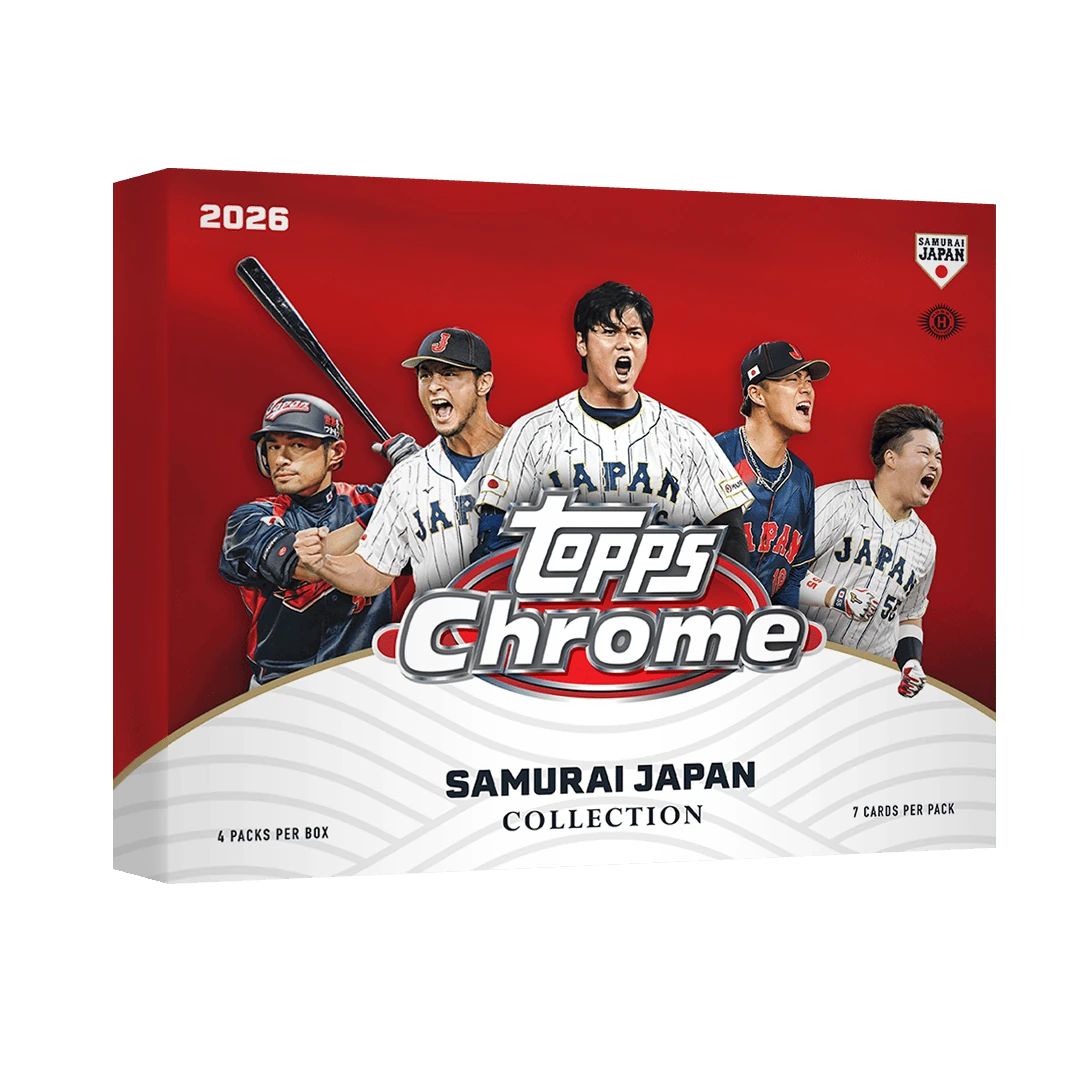
Shohei Ohtani and Sadaharu Oh share a 1/1 dual autograph in 2026 Topps Chrome Samurai Japan Baseball. The pairing gives this national-team collection its grandest card, but the ordinary photographs deserve attention too. Ohtani roars in a pinstriped Japan uniform, Yu Darvish coils into his delivery, and Seiya Suzuki charges out of the batter’s box. The release has room for both the showcase signature and the baseball moment. Official Topps card previews
October 16 release and the $150 Collector’s Box
The release date is October 16, 2026, following Topps’ August 26 preorder launch. The US Collector’s Box launch price is $150. Two formats serve different parts of this collection: the four-pack Collector’s Box opens the full insert program, while the Single Pack Box offers one seven-card pack. Topps release and format guide, US launch price
| Collector’s Box | Contents |
|---|---|
| Packs | 4 |
| Cards per pack | 7 |
| Numbered parallels | 2, each /250 or lower |
| Inserts | 1 |
| Autographs | 1 in 10 boxes, on average |
The two numbered parallels give the Collector’s Box a defined focus even when its autograph chase does not land. For someone following Ohtani through the base photographs, that means the numbered-card portion of the opening is built into the format; the signature is an additional possibility. The insert allocation also matters here because the illustrated Samurai Spirit and Neon Nights designs take the release far beyond its restrained base frame. Collector’s Box contents
Two base photographs, then a separate Ohtani short-print chase
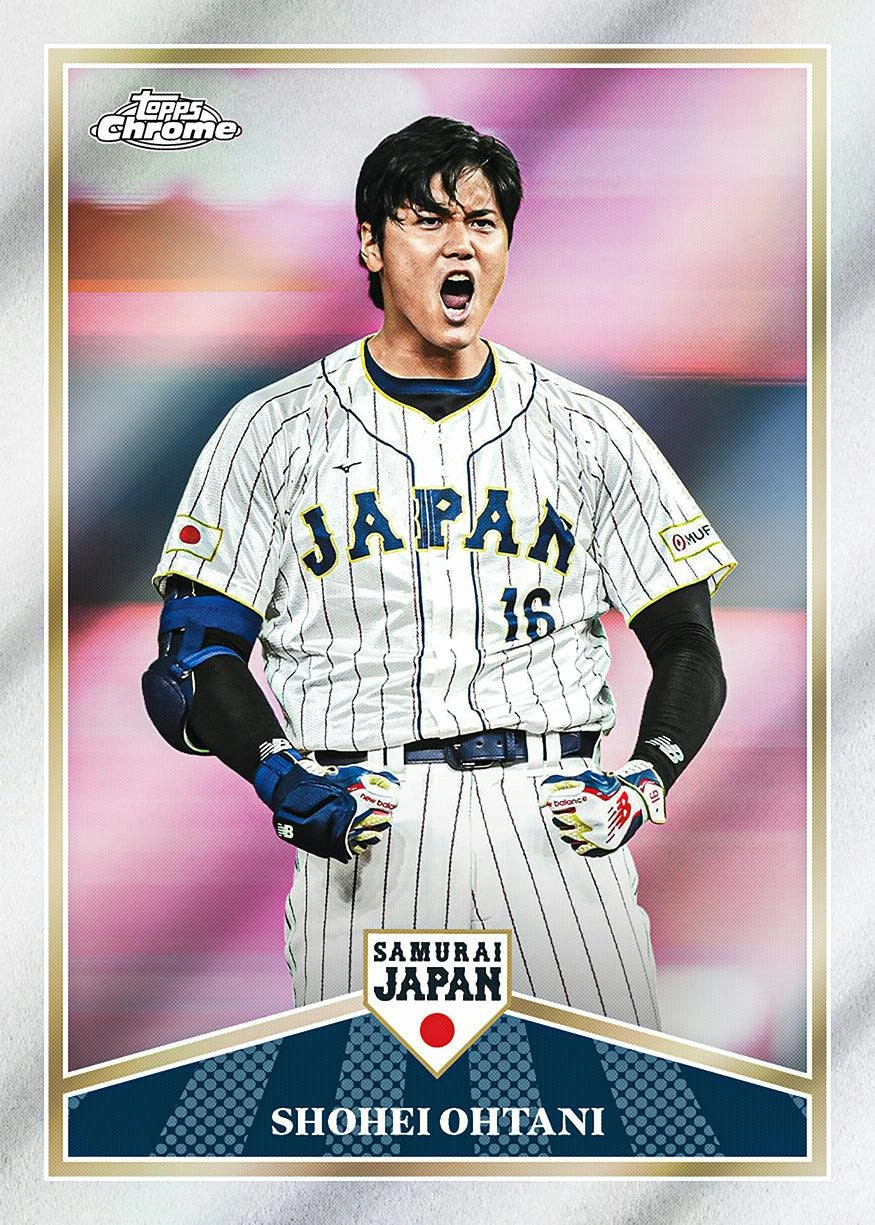
The regular base checklist gives 37 people two cards apiece, for 74 cards. The second group uses different photography, making the paired entries meaningful for a player collection. Ohtani’s regular entries are 8 and 45; his separate short prints are 75SP and 80SP. Those four entries give an Ohtani collector distinct checklist targets before choosing a Refractor color. Official checklist
Ohtani’s preview makes the emotional photograph do the work. His clenched hands and open mouth fill a tall window, with the Japan shield below his waist and a quiet silver border around the scene. Darvish’s card uses that same space for a compact pitching motion, his glove stretching left while his bent leg anchors the lower half. Suzuki’s running pose pushes toward the right edge. The consistent frame lets three very different kinds of movement belong together.
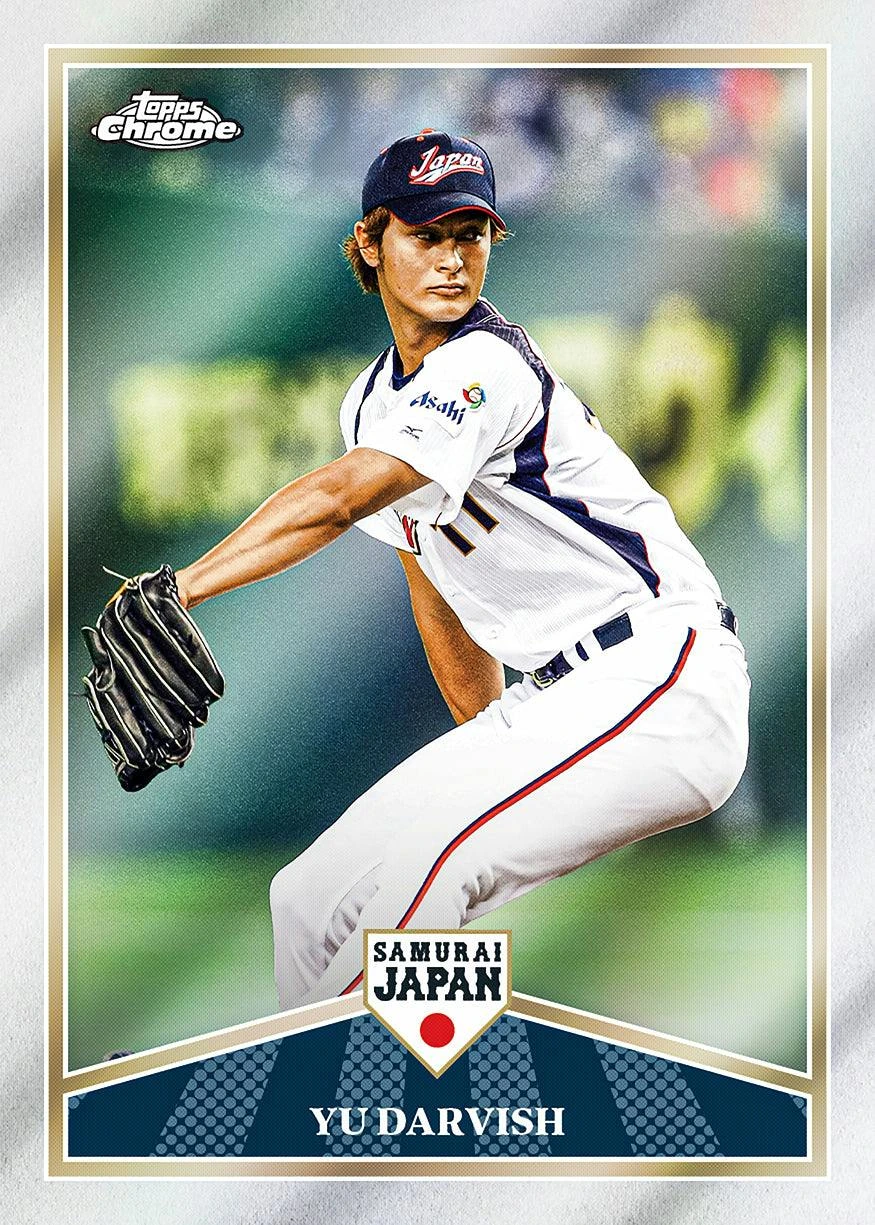
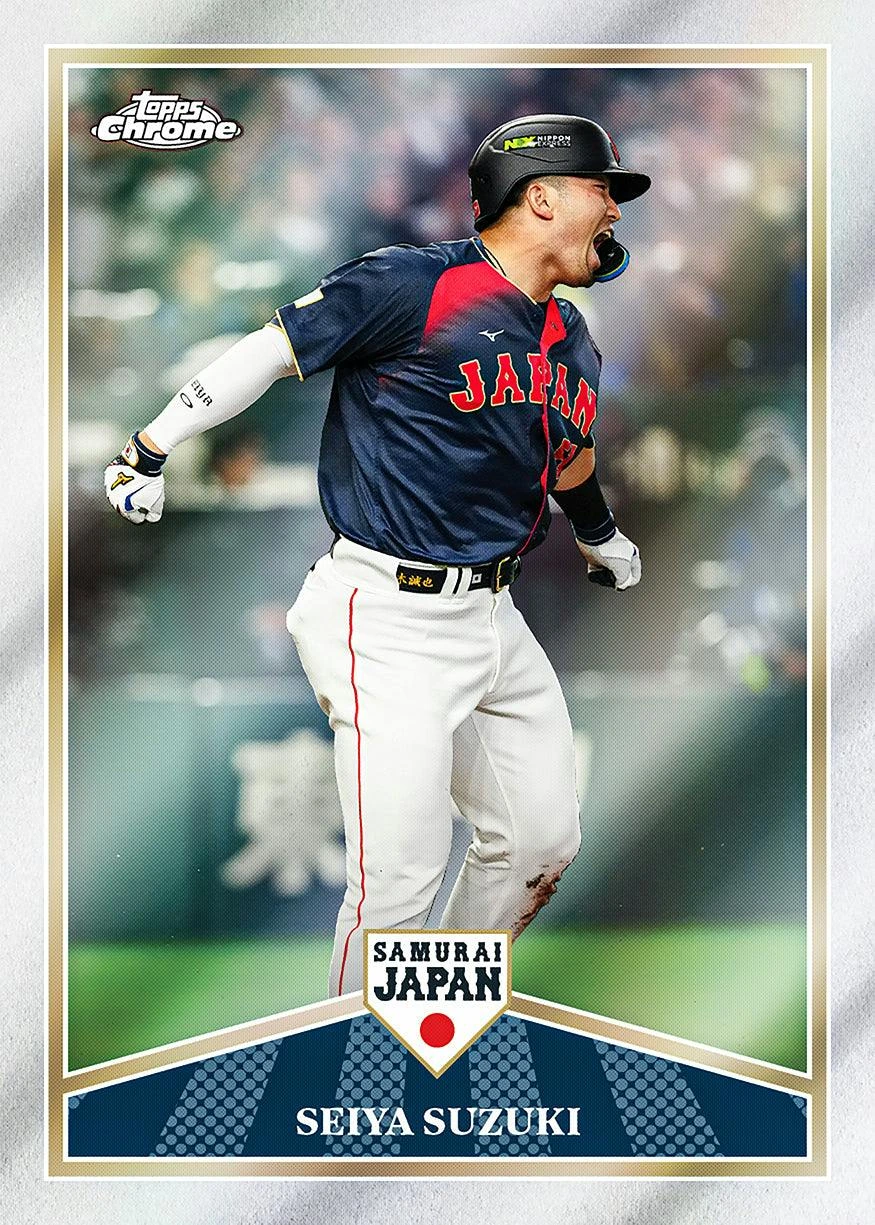
There are six short-print entries representing five people, with Ohtani occupying two spots. Ichiro, Yamamoto, Sasaki and Oh receive the other entries. It is a concentrated extension of the base collection around several of the program’s headline names, rather than a second broad roster. Base short-print checklist
Ohtani and Oh: a dual autograph with a reason to exist
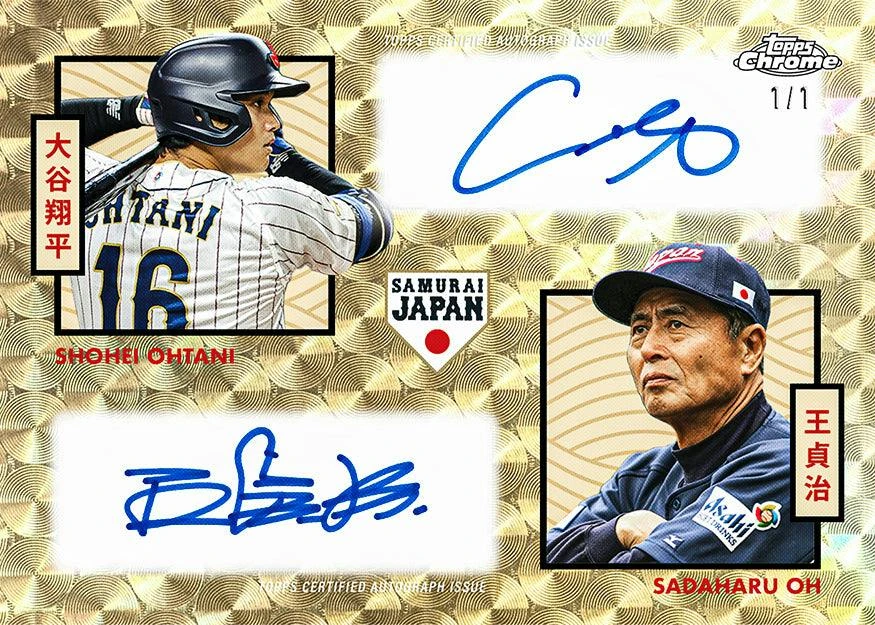
Oh managed Japan’s 2006 championship team; Ohtani earned the 2023 tournament MVP award. Their shared card connects the program’s first World Baseball Classic title with its two-way modern star. This is a national-team pairing with a real historical thread, and the Japan uniforms make that connection immediate. Oh’s championship role, Ohtani’s tournament MVP
The horizontal Generational Greats preview balances Ohtani’s batting photograph at upper left against Oh’s dugout portrait at lower right. Each signature gets a wide white space diagonally opposite its player. The gold Superfractor pattern links the four areas without consuming the writing, and the small Samurai Japan shield sits between them. It is a busy idea organized into a readable card, with both men given enough space to matter. Topps identifies the dual autograph as a single Superfractor copy. Topps collection overview
The unsigned Generational Greats set also pairs Ichiro with Seiya Suzuki and Yamamoto with Darvish. Those combinations extend the cross-generation idea into outfield and pitching collections. The checklist assigns a dual-autograph entry specifically to Ohtani and Oh, so the signed centerpiece has its own identity within the broader paired-player set. Generational Greats checklist
Ichiro’s ritual and Yamamoto’s layered Samurai Spirit
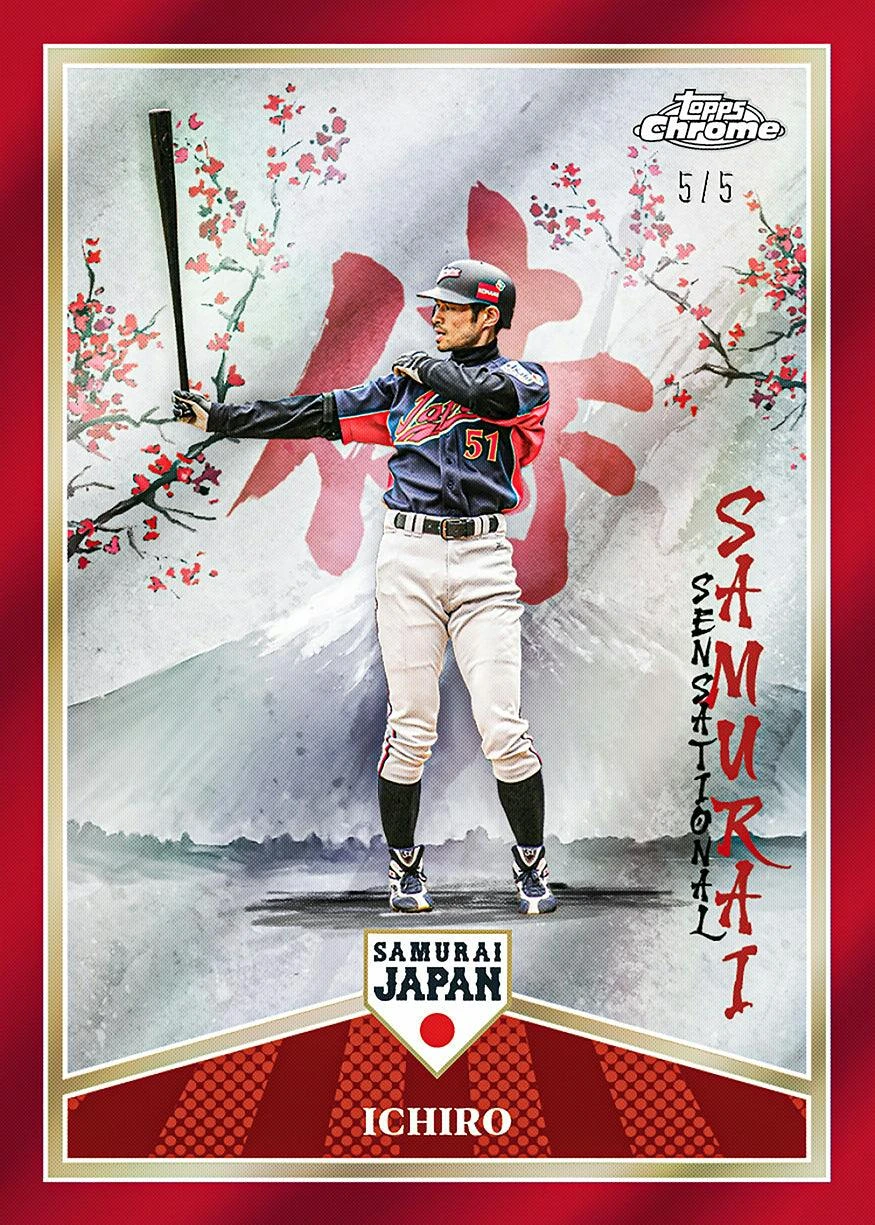
Ichiro’s Sensational Samurai Red Refractor uses a recognizable batting preparation pose: the upright bat, extended arm and steady gaze all remain clear against a pale mountain scene. Blossoming branches occupy the upper corners, while the red frame picks up the lettering and background accents. The result feels deliberately composed around Ichiro’s stance. His slender figure does not have to compete with a giant player name or a second portrait.
Yamamoto’s Samurai Spirit Superfractor takes the opposite approach, combining a large portrait with a smaller pitching figure amid curling blue-and-white waves. His name runs vertically down the right side, and a red circular motif holds the central portrait apart from the gold background. The pitcher’s extended stride crosses the lower half, giving the card a second direction of movement. It is a vivid choice for a Yamamoto collection because it shows both his face and his delivery in one composition. Official insert previews
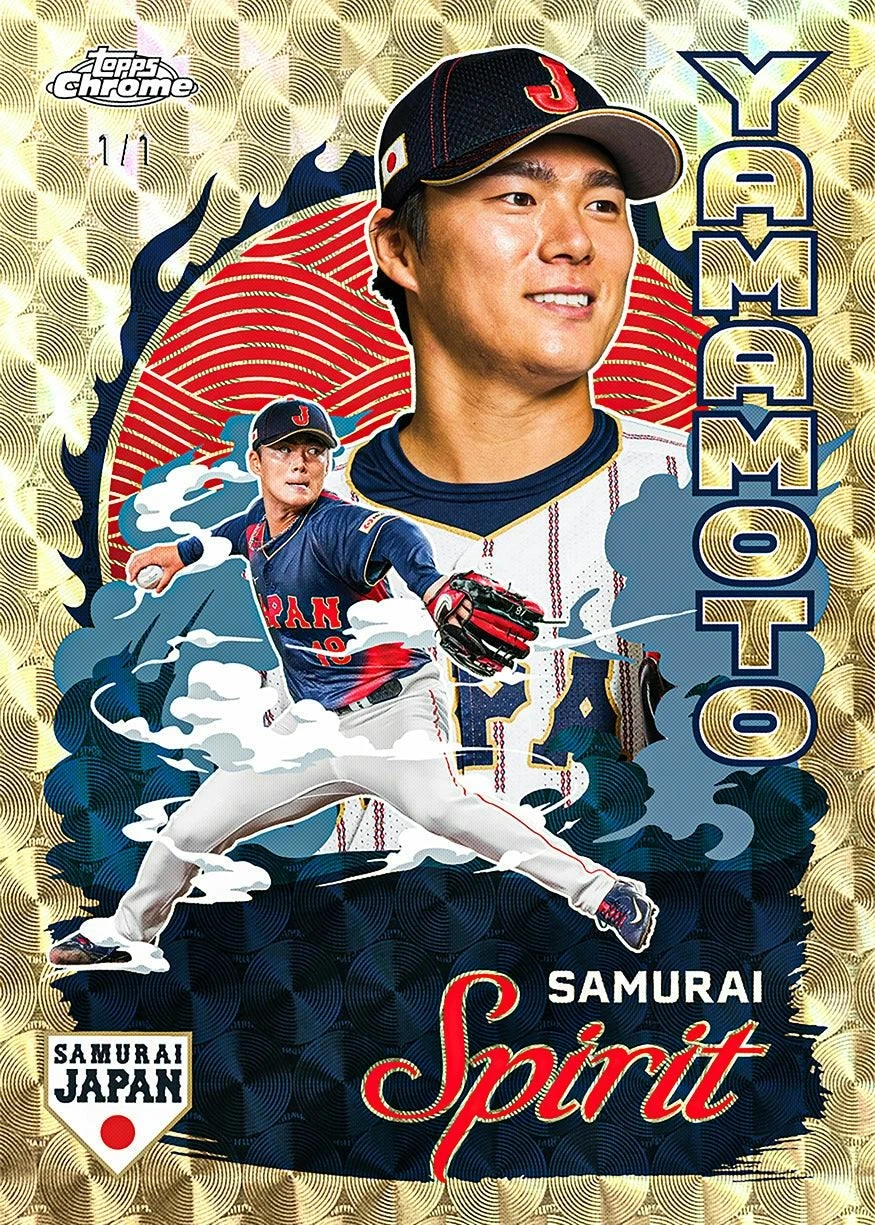
Topps describes Samurai Spirit as five subjects with 50 copies of each design, plus a separate Superfractor 1/1 per subject. Yamamoto therefore has a tightly limited illustrated target alongside his base and short-print photographs. The Superfractor shown here is the gold one-of-one treatment, which matters when comparing its appearance with the regular insert. Samurai Spirit configuration
Murakami’s Neon Nights makes the scene part of the card
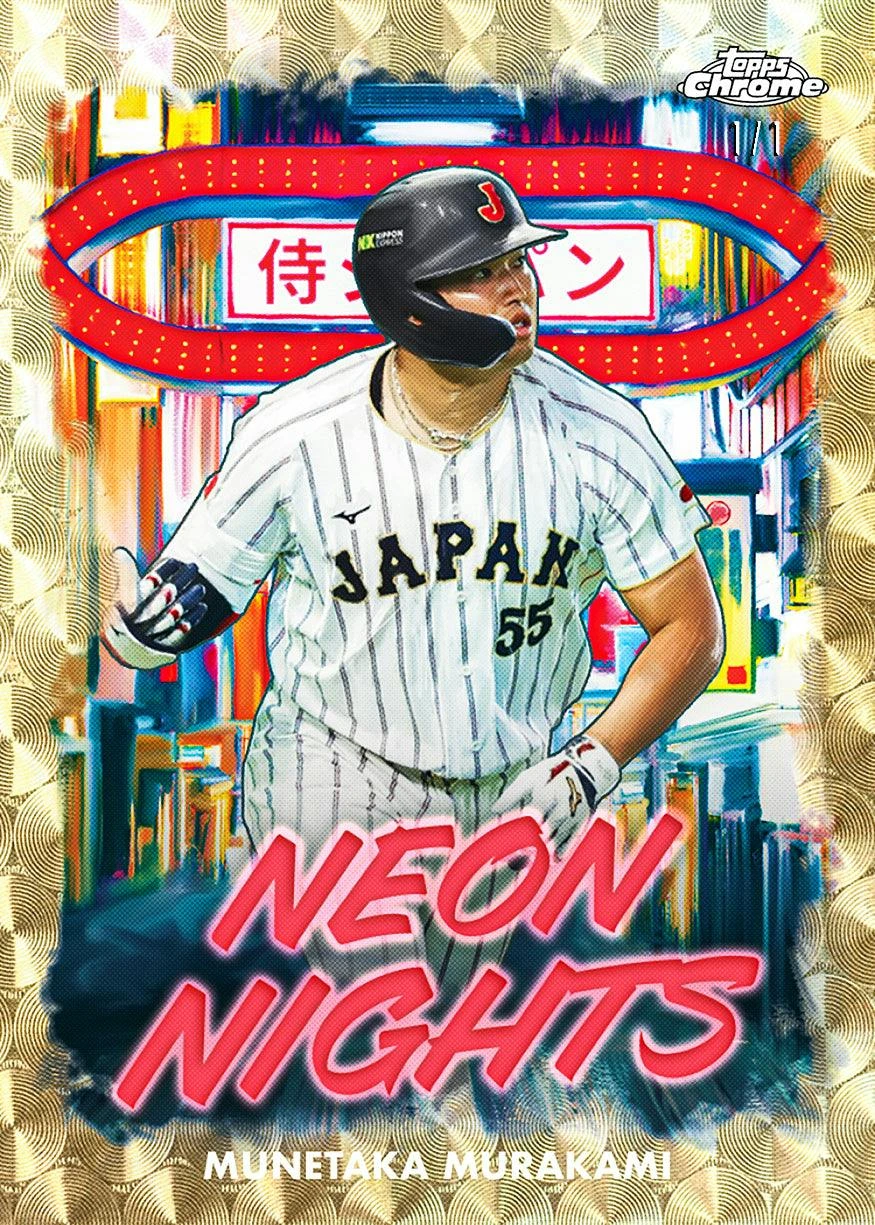
Munetaka Murakami’s Neon Nights fills the card with illuminated signs, narrow buildings and a bright red marquee. Murakami looks upward after his swing, with the bat trailing to the left. His white uniform cuts through the colorful architecture, and the oversized pink title sits below him rather than across his face. The gold Superfractor border is only one layer of a design that would already be lively without it.
This is the strongest contrast to the base photography in the preview group. The base frame preserves a ballpark moment; Neon Nights builds an illustrated environment around the player. Murakami’s batting follow-through fits that vertical arrangement especially well, carrying the eye from the foreground lettering up toward the sign above his helmet. Topps describes the insert’s setting as the energy of a night out in Tokyo. Neon Nights design
Sasaki’s autograph leaves the pitching motion intact
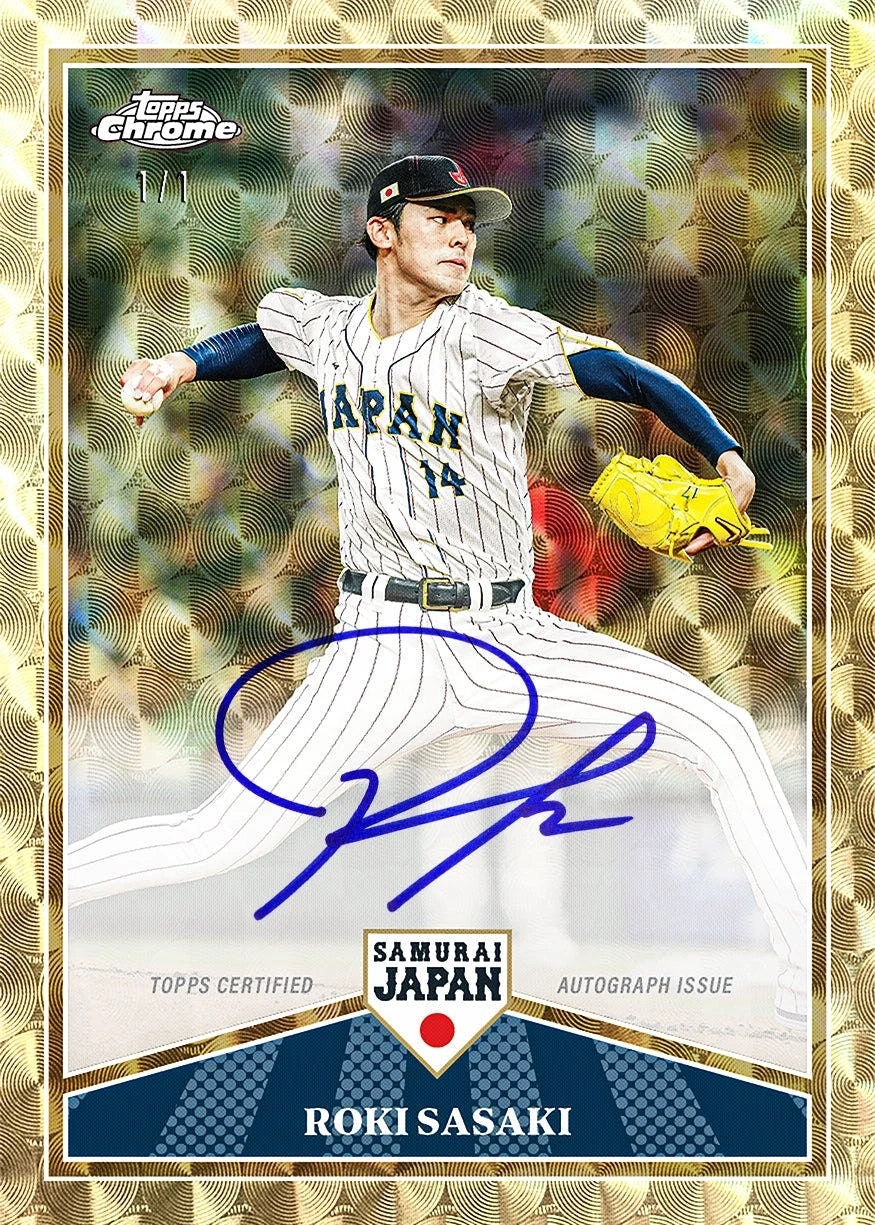
Sasaki’s Base Autograph Superfractor stretches the signature across the lower half while keeping his throwing arm, bright yellow glove and turning torso visible above it. The blue ink has enough white behind it to stay readable against the gold pattern. This is a particularly effective use of the base layout: the autograph follows beneath the pitching photograph, and the player still looks like a pitcher in motion.
Topps describes the base autograph program as primarily sticker-signed, with selected on-card redemptions. The preview alone does not identify which signing method a final Sasaki card will use. That distinction is useful for autograph collectors comparing the actual cards at release, especially when the appeal here is the relationship between the signature and that large pitching photograph. Autograph format details