The Workbench
2026 Topps Museum Collection: Framed Autos and Big Relics
Framed autographs, game-worn memorabilia and a 100-card base set lead Topps Museum Collection Baseball, scheduled for October 7.
We update this release guide as verified product details develop.
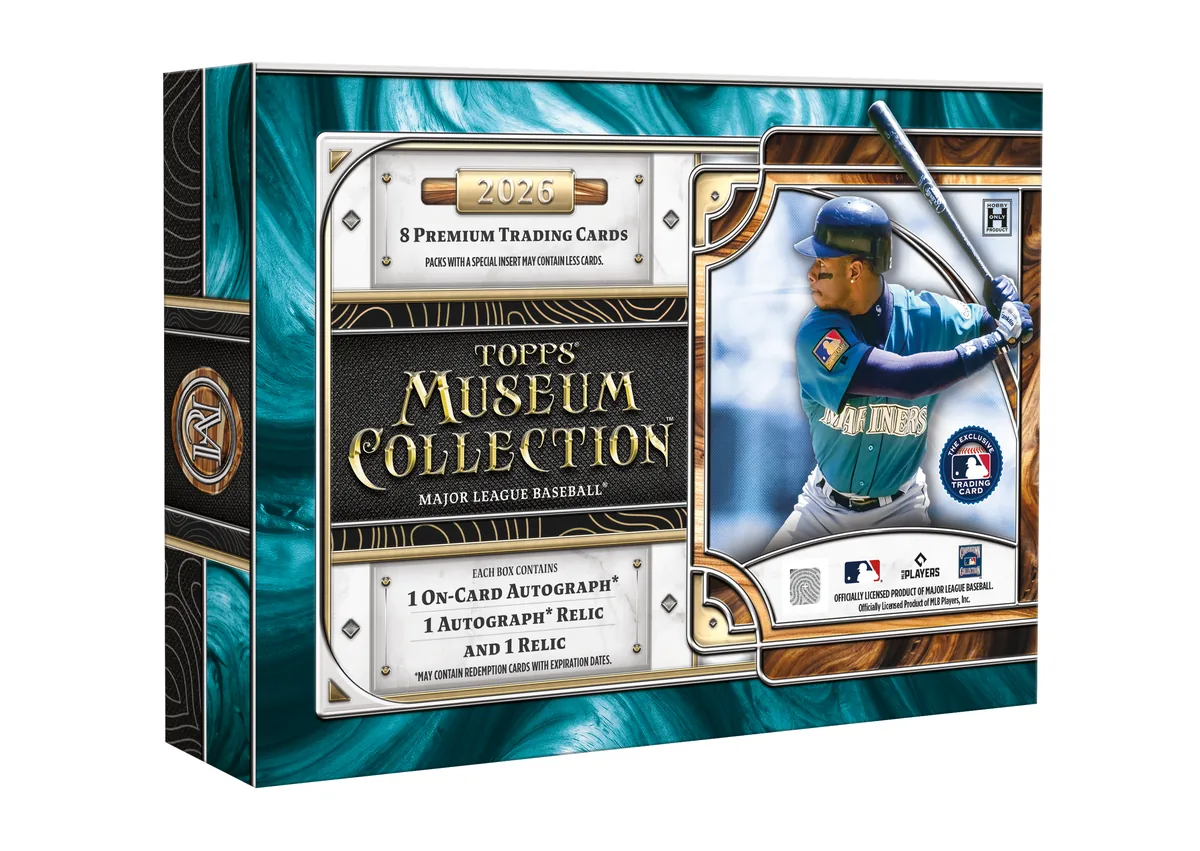
Framed autographs are supposed to feel like objects, not merely another signed card in a stack. That is the appeal at the center of 2026 Topps Museum Collection Baseball, which is scheduled for October 7. The early checklist points toward a release built around signatures and substantial memorabilia, with a 100-card base set underneath it. Checklist Insider's release guide
Museum is most compelling when the card's construction is part of the reason to own it. A frame can give the signature a focused, display-ready setting. A bat-nameplate piece can carry wood grain and lettering that make the material recognizable at a glance. Those are very different kinds of cards, but each gives a player collection more character than a routine base parallel.
The scheduled release and Hobby configuration
Checklist Insider lists an October 7, 2026 release date. The listed Hobby configuration is one pack of eight cards per box, with one on-card autograph, one autograph relic and one relic. The same source reported that Topps Hobby presales opened at $409.99 on September 8. That is an opening presale figure, not a current price or a completed-sale comparison. Checklist Insider's configuration and price report
| Detail | 2026 Topps Museum Collection Baseball |
|---|---|
| Listed release date | October 7, 2026 |
| Hobby box | One eight-card pack |
| Listed box contents | One on-card autograph, one autograph relic and one relic |
| Reported opening Hobby presale | $409.99 on September 8 |
| Base set | 100 cards |
An eight-card box makes format preference matter. A collector drawn to framed signatures is buying into a different visual idea than someone looking for a relic with a large, identifiable piece of equipment. Before chasing a box or a single, decide which of those finished-card qualities belongs in the collection. That keeps the focus on the card rather than on an advertised hit count.
Framed autographs are the signature chase
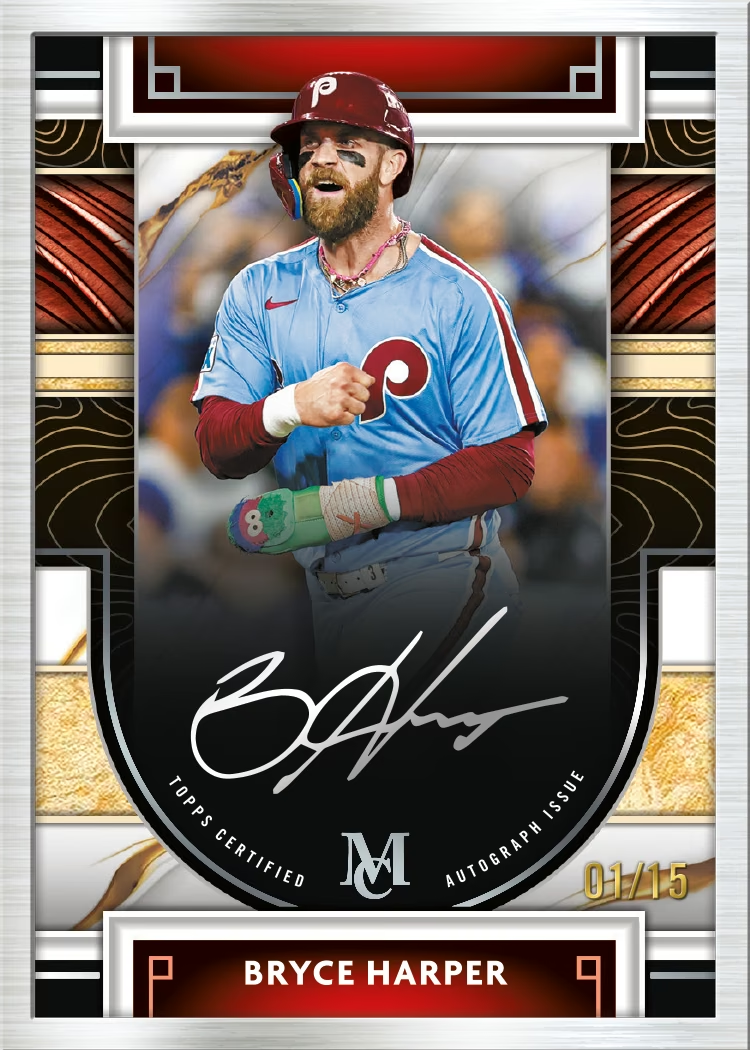
Museum Framed Autographs are among the release's featured hits, with multiple frame colors at different rarity levels. The companion Museum Framed Autograph Patch cards use the same broad approach in a substantially scarcer format. Checklist Insider's checklist rundown
The framed look creates a useful boundary around a signature. It directs attention to the ink and gives the card a firmer presence in a display than an autograph dropped into a busy design. For a player collector, that is the deciding detail: the best framed example should make the autograph easy to see and let the border support the player rather than compete with him.
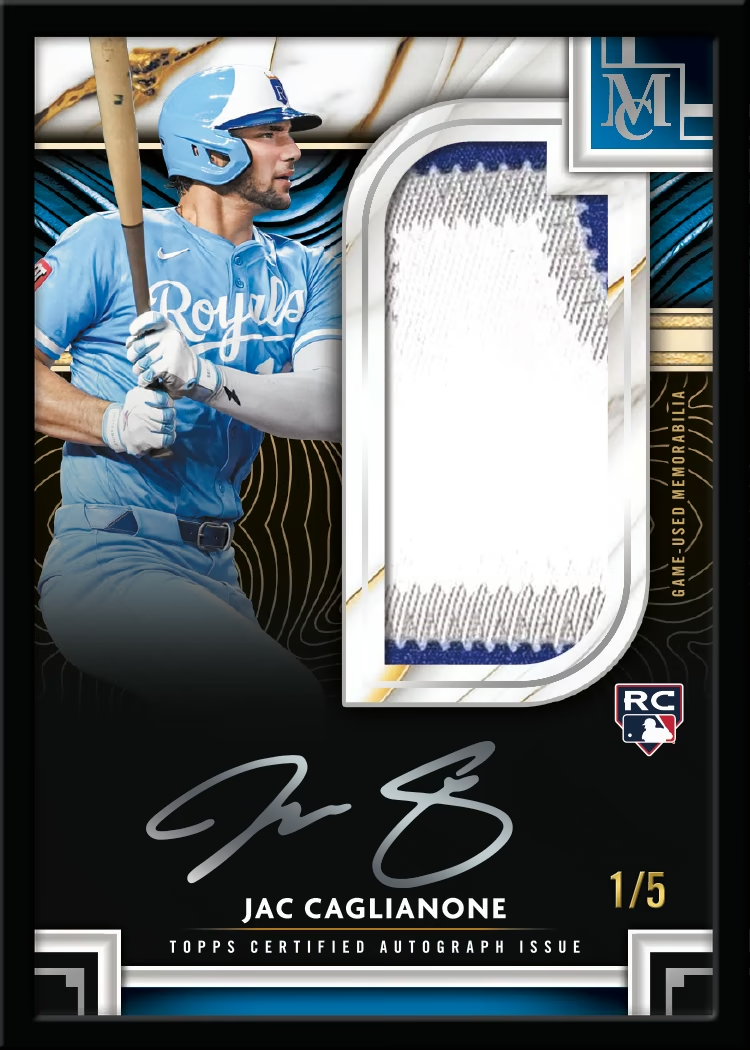
The framed patch version is worth treating as its own card rather than a framed autograph with an extra feature. The exact patch, the size and shape of its window, and the amount of room left for the signature all change the finished presentation. A collector choosing a single should look at those details closely; two cards from the same family can have very different visual balance.
The relic cards to study closely
The checklist rundown names several relic families that give the material a real role in the design. Momentous Material features game-worn memorabilia. Single-Player Primary Pieces Triple Relics brings together three game-used pieces. Jumbo Bat Nameplate Relics use parts of game-used bats, while Museum Memorabilia can feature large pieces such as jersey numbers, laundry tags, MLB silhouetted-batter logos and team logos. Checklist Insider's relic overview
| Card family | What makes it interesting |
|---|---|
| Momentous Material | Game-worn memorabilia |
| Single-Player Primary Pieces Triple Relics | Three game-used pieces on one card |
| Jumbo Bat Nameplate Relics | A piece of a game-used bat nameplate |
| Museum Memorabilia | Large memorabilia elements, including jersey numbers, laundry tags and logos |
| Lifetime Members Relic Autographs | Autograph-relic cards centered on milestone-club achievements |
The bat nameplates have especially clear visual logic. Grain, lettering and the shape of the wood make the source material immediately legible. The most satisfying examples will be the ones where that piece is framed cleanly and still leaves the player and card design with room to breathe. Museum Memorabilia cards deserve the same attention: a jersey number, tag or logo is a materially different collecting object from a plain swatch.
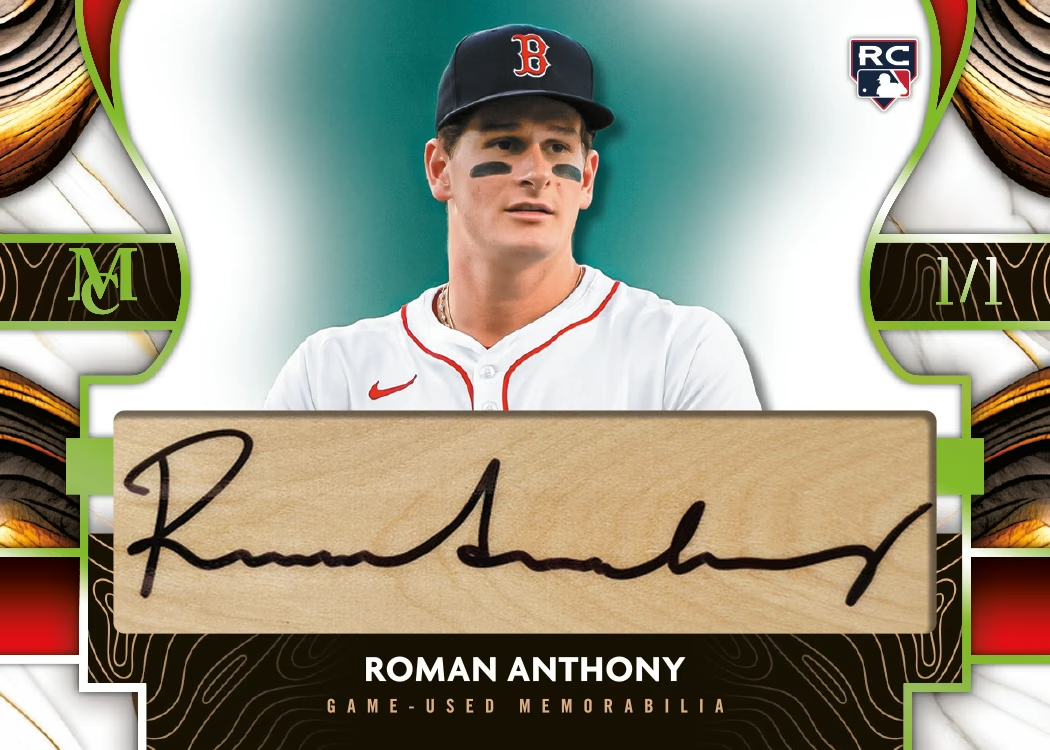
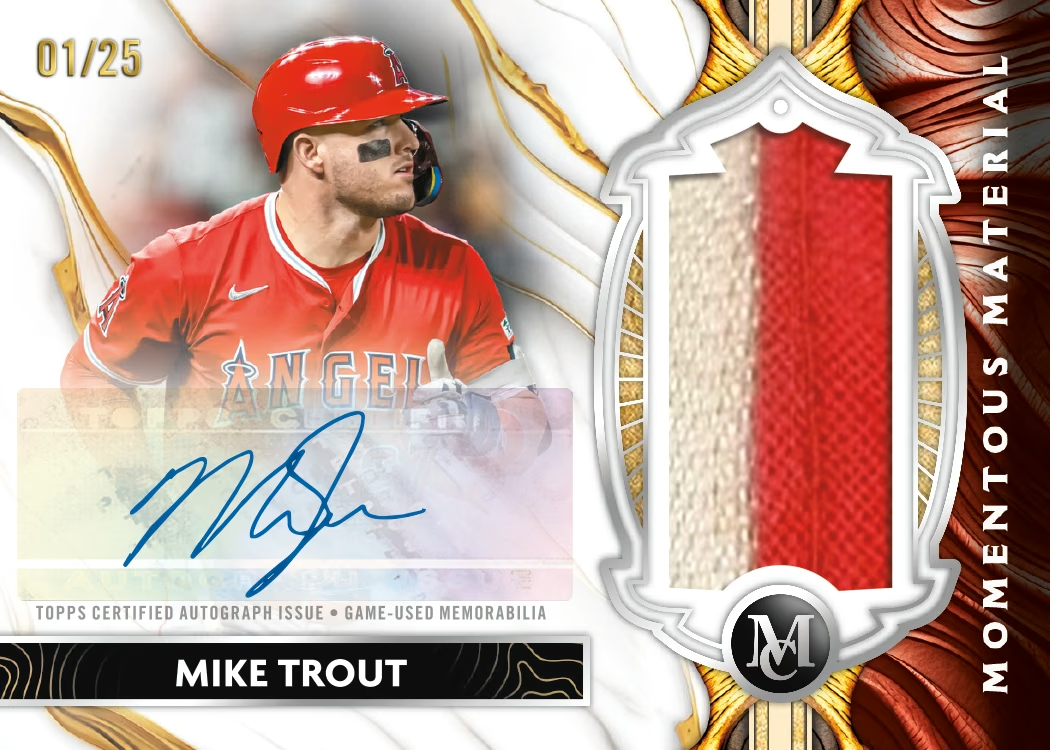
A multicolor patch or a complete letter can have stronger visual appeal than a plain swatch of the same size. When comparing singles, look at the exact piece in the card, how the window frames it and whether the autograph has room to stand on its own. Two cards with the same player and serial-number tier can look very different.
The base set and parallel ladder
The 100-card base checklist gives the release a clear collecting foundation beneath the hits. Its listed parallel ladder runs from Gold /275 through Pink Sapphire /199, Sapphire /150, Amethyst /99, Ruby /75, Amber /60 and Turquoise /50, then reaches Blue Topaz /25, Black Diamond /10, Diamond /5, Emerald 1/1 and Printing Plates 1/1. Checklist Insider's base-set listing
That range creates more than a serial-number hierarchy. The named colors give a player collector a way to choose a version with a particular look, while the lowest-numbered parallels are naturally much harder to find. The checklist is labeled subject to change, so collectors should confirm the exact parallel and serial-numbering on the final card before treating a checklist entry as settled.
Choose the format you would keep
The clearest path into 2026 Museum Collection is a focused one. Framed autographs fit collectors who want the signature to carry the card. Bat nameplates and Museum Memorabilia suit collectors who want the equipment itself to be visible and meaningful. Triple relics are the natural choice when a larger arrangement of game-used material is the attraction.
There is no need to force those preferences into one ranking. A framed autograph and a relic-heavy card offer different pleasures, and the best choice is the one that adds something specific to a player, team or autograph collection. Start with the exact design and material you would be happy to keep on display, then use the box configuration and parallel ladder as context for the chase.
Shop this guide on eBay
Hammy earns from qualifying purchases through these eBay links. Buy on eBay from the seller shown in each listing.
Explore on eBay
Targeted searches for the cards and releases Hammy covers. Search results may include other formats or variants; match the listing to the card or box you want.
eBay search · Sealed wax
2026 Topps Museum Collection
Search on eBay