The Workbench
Bam Adebayo Opulence Emerald Rookie 2/5: Five Copies, First-Year Opulence
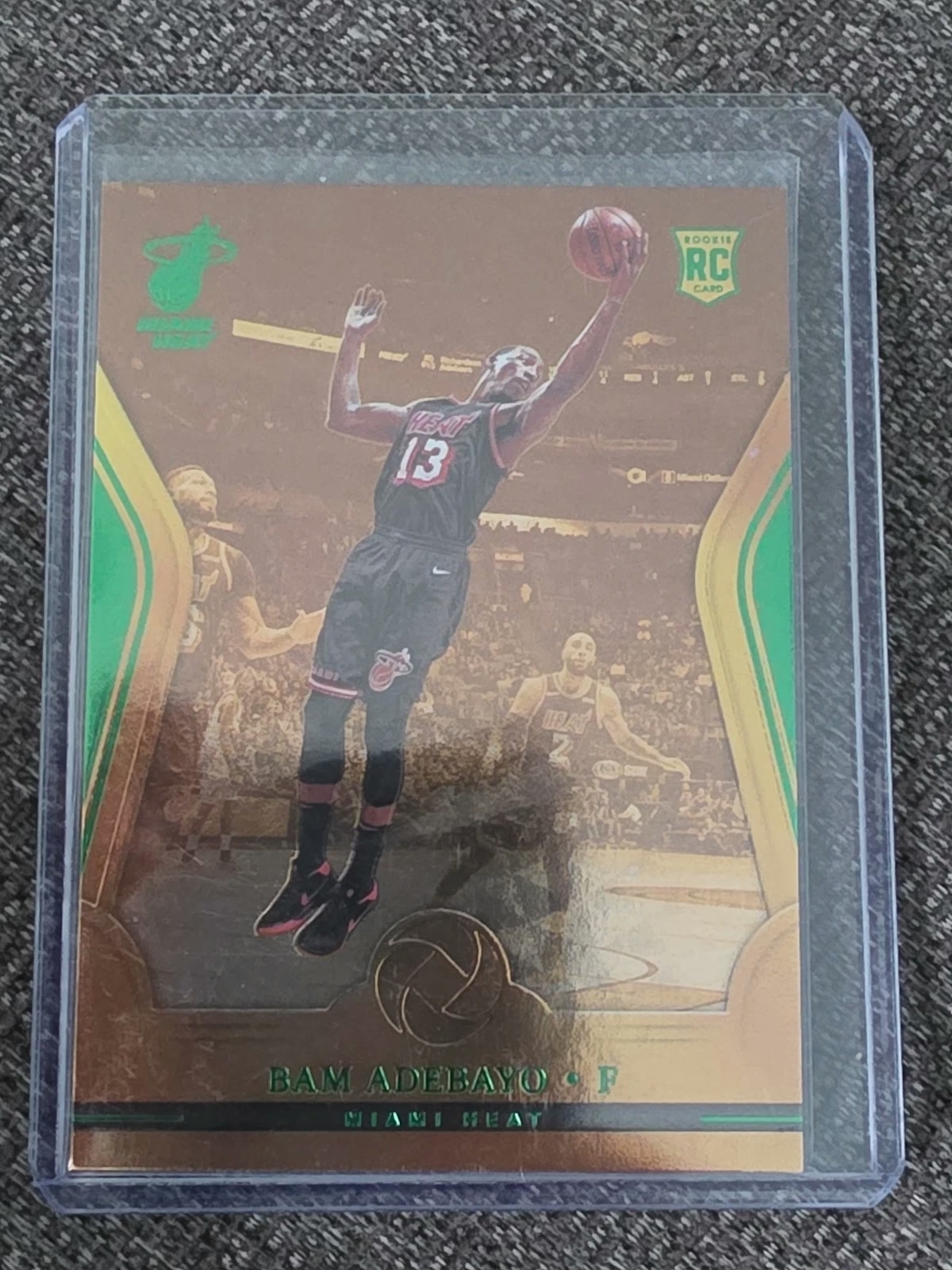
Hammy’s 2017–18 Panini Opulence Bam Adebayo #95 Emerald rookie 2/5 brings a five-copy parallel to the debut of Panini’s luxury basketball line.
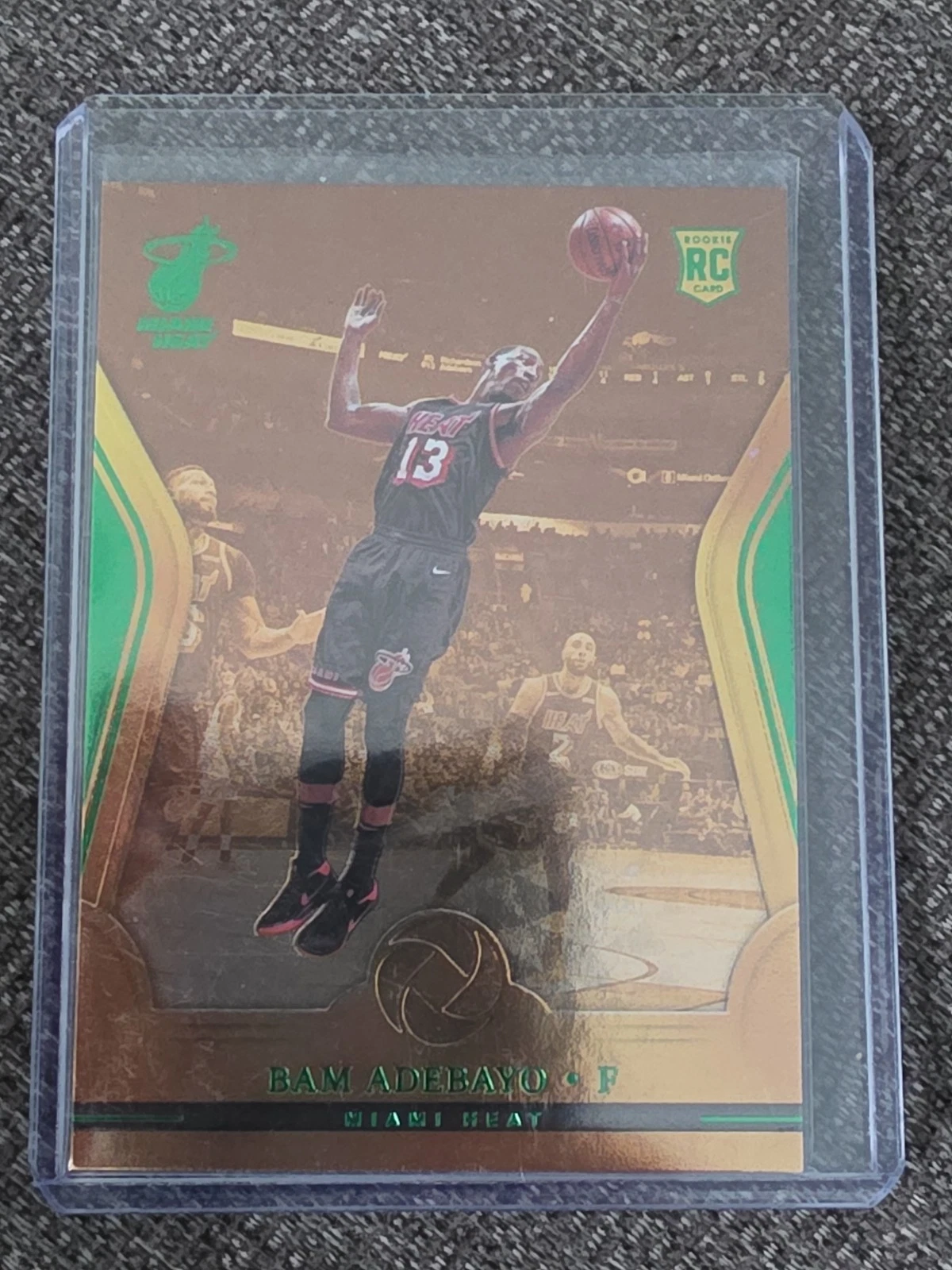
Bam Adebayo's rookie season and Panini Opulence's first basketball release meet in one sharply defined card: Hammy's 2017-18 Opulence #95 Emerald, serial numbered 2/5. It is a Miami rookie in a luxury product, finished in green and limited to five copies of this version.
That combination gives the card a real place in an Adebayo collection. It is not trying to be an autograph, a patch, or a catch-all substitute for every Bam rookie. It is a scarce, design-forward rookie from the opening year of a high-end line - a focused choice for a collector who wants an early Bam card with a distinct identity.
See Hammy's Bam Adebayo Opulence Emerald 2/5 and its full-size photographs.
A rookie in Opulence's opening season
Panini introduced 2017-18 Opulence Basketball as a new luxury release with familiar influences: the gilded look of Gold Standard and the booklet pedigree of Preferred. The product arrived in September 2018, but it carried the 2017-18 season designation, putting Adebayo's #95 in the same rookie-year window as his NBA debut. Panini's release gallery.
The box format helps explain the setting for a card like this. Panini described a 10-card box with an average of seven autograph or memorabilia cards, two base cards, and one parallel numbered to 25 or less; it also said every base card was numbered to 79. Its product preview makes clear that Opulence was built as a premium release from the start, not a standard-volume rookie product with a luxury name attached afterward.
That matters because an Emerald does more than add a serial number. The green treatment changes the visual character of the card while the low-numbered stamp separates it from the already-numbered base presentation. For a collector who likes a rookie card to look special in a case, the finish and the product's first-year status are central to the appeal.
Bam's rookie-year place in a collection
Miami selected Adebayo 14th overall in the 2017 NBA Draft. Since then, he has built the kind of career that gives a first-season card added weight: the NBA lists him as a three-time All-Star, a two-time Olympic gold medalist, and a multiple-time All-Defensive selection. His NBA biography also records his role as a long-running fixture for the Heat.
That career context is why this card reads differently now than it did when Opulence first reached hobby shops. It remains a rookie, but it is also tied to a player whose calling card has been complete two-way basketball: rebounding, playmaking from the frontcourt, defense, and a durable Miami identity. A Bam collection can take many directions, from mainstream rookie issues to signed cards and team-focused pieces. This one earns its space through its first-year product connection and the five-copy Emerald format.
For collectors who enjoy comparing the shapes of a player's rookie portfolio, Opulence adds a different tone from the more familiar chromium and entry-level releases. The design is intentionally dressier, and the serial number is part of the card's face rather than an afterthought. Our Bam rookie-card guide provides broader context for the main Bam rookie-card options.
The exact Emerald in Hammy's collection
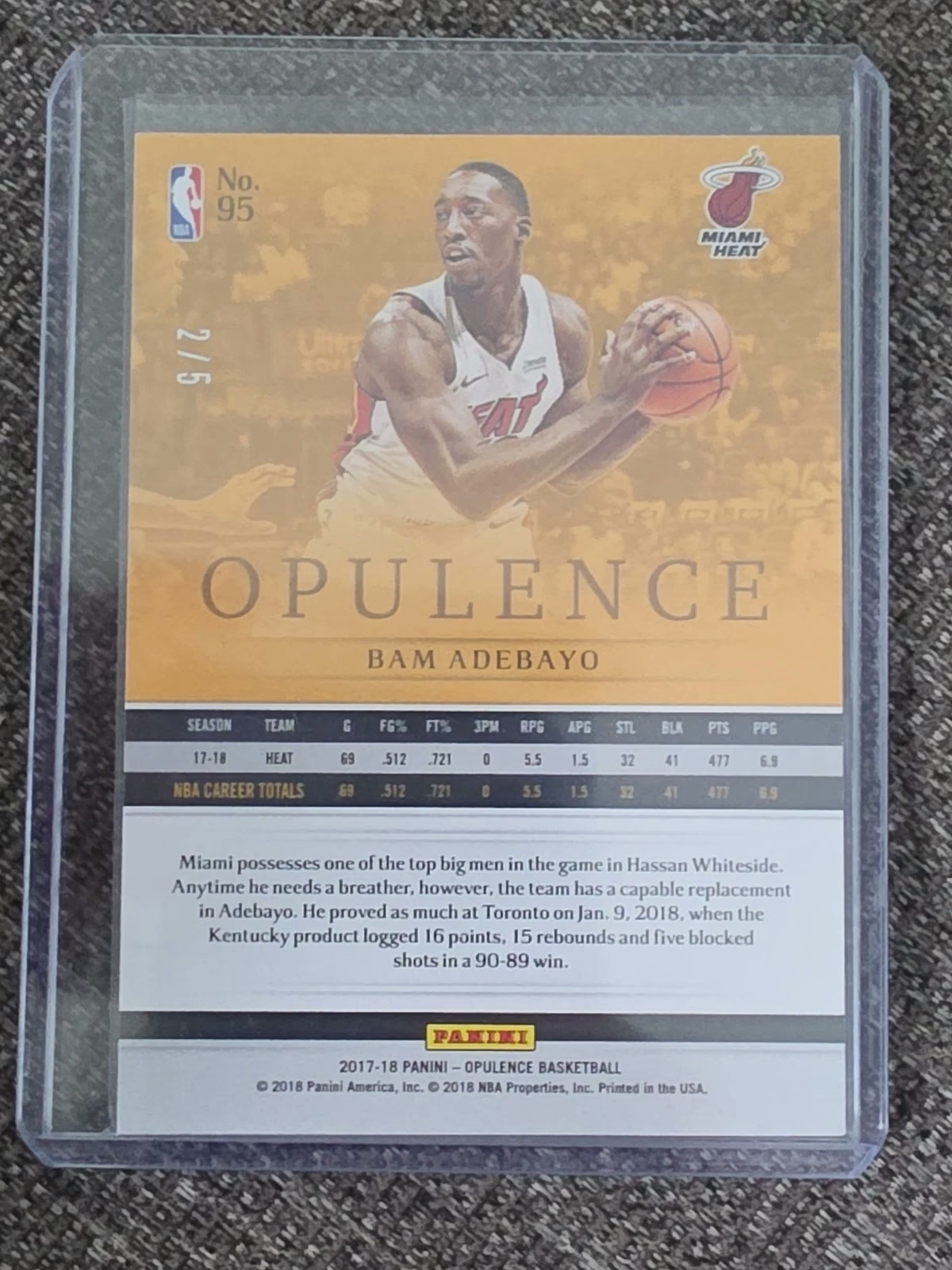
2017-18 Panini Opulence Basketball #95 Bam Adebayo, Emerald parallel, serial numbered 2/5.
| Detail | Hammy's card |
|---|---|
| Team | Miami Heat |
| Season | 2017-18, Adebayo's NBA rookie year |
| Card number | 95 |
| Parallel | Emerald /5 |
| Serial number | 2/5 |
| Autograph / memorabilia | Unsigned; no memorabilia |
| Format | Raw and ungraded |
The 2/5 stamp is the card's most useful piece of identity. It identifies this exact copy within the five-card Emerald run, while the front supplies the color and presentation that make the parallel immediately recognizable. The card is unsigned and has no memorabilia component, so the eye stays on the Miami image, the Emerald framing, and the rookie-season connection.
The supplied front and back photographs are worth studying before making any card decision. They show the exact card offered here, including its serial-number stamp and the information on the reverse. Hammy's copy is raw and ungraded; review the high-resolution images and the product page's current condition description for the particulars of this individual card. Raw cards are not assigned a numerical grade, and photography is the best way to make your own call on the copy in front of you.
Why an Emerald /5 stands out
Low serial numbering is most useful when it serves a card's collecting identity, and this one does. An Emerald /5 is not simply a smaller number attached to a rookie card; it brings a clear color match to the luxury design and a run small enough that each copy is a specific version rather than an interchangeable placeholder. The 2/5 here is a detail that stays meaningful when the card is stored, displayed, or revisited years later. Our parallel guide explains how those numbered versions fit together.
It also gives a collector a straightforward target. A player collector can choose it for Adebayo's rookie season. An Opulence collector can choose it for the debut product. A Miami-focused display can choose it for the Heat image and the green foil. Those are separate reasons, but they all point to the same card instead of requiring a speculative case for it.
Numbered parallels are best read as exact versions, not as automatic price conclusions. The relevant comparisons are matching 2017-18 Opulence #95 cards with the same parallel, along with condition and transaction state. An asking price is an invitation to buy, not proof of what the card has sold for. Our guide to sports-card values explains how to use completed sales without confusing them with current listings.
Current availability: Available for direct checkout.
A good card to own for the right collection
This is a card for a collector who values a precise rookie-year story: Bam Adebayo, Miami, the first Opulence Basketball release, and an Emerald serial number of 2/5. The appeal is tangible before any market discussion. It is a premium-looking rookie with a very limited run, from a player whose career has made his 2017-18 cards worth returning to.
Protect a raw card in a holder that fits its thickness, then let the design do its work. The Emerald is strongest as a card chosen on purpose - for its player, product, color, and limited version - rather than as a generic stand-in for a Bam rookie.
Sources
- Panini America: 2017-18 Opulence Basketball product gallery
- Panini America: opening the first Opulence Basketball release
- NBA: Bam Adebayo biography
Hammy's take: first-year Opulence, Bam's rookie season, and a five-copy Emerald parallel make this a clear, satisfying version to collect. Its story is already on the card: a premium debut set, an early Heat card, and a serial number that makes this exact copy easy to remember.
Shop this guide on eBay
Hammy earns from qualifying purchases through these eBay links. Buy on eBay from the seller shown in each listing.
Explore on eBay
Targeted searches for the cards and releases Hammy covers. Search results may include other formats or variants; match the listing to the card or box you want.
eBay search · Single card
2017-18 Bam Adebayo
Search on eBayeBay search · Single card
2017–18 Opulence Bam Adebayo #95 Emerald /5
Search on eBay